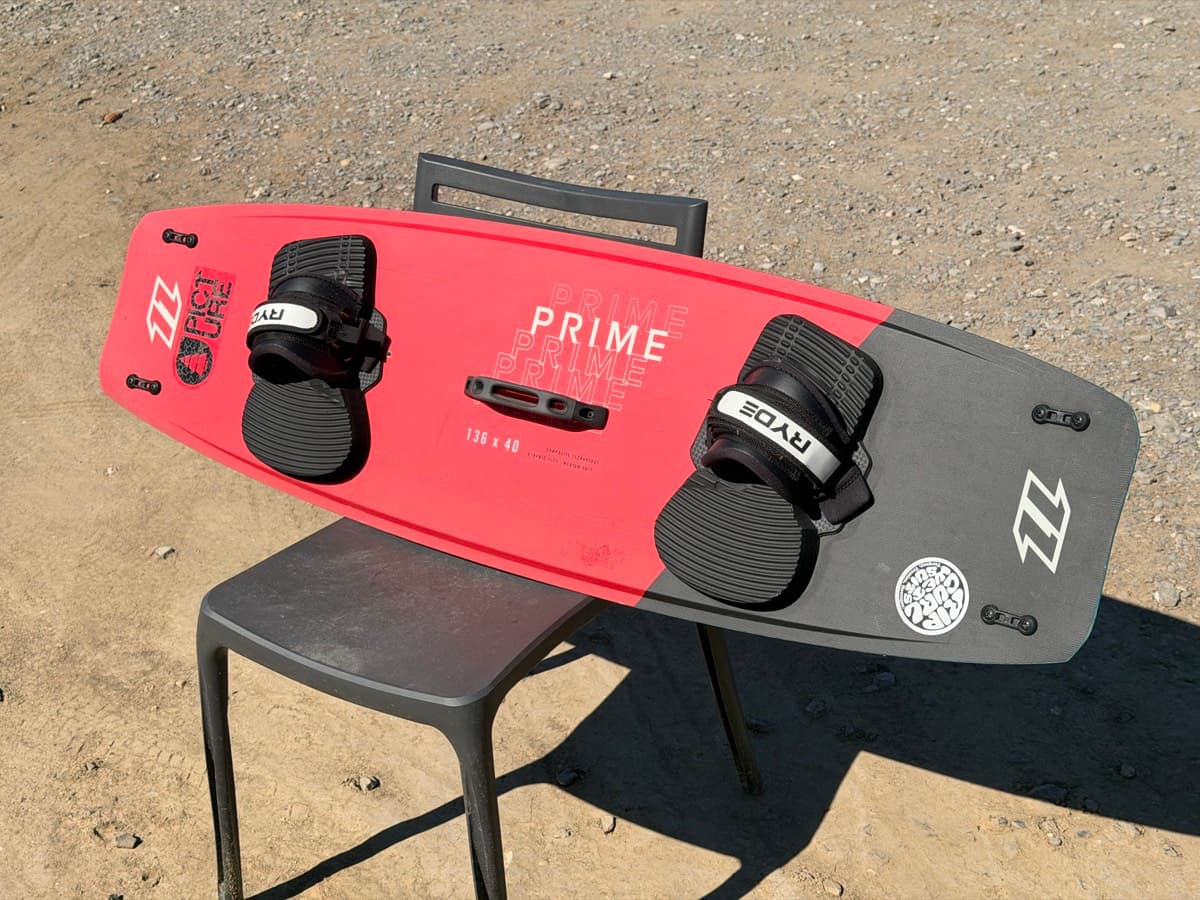
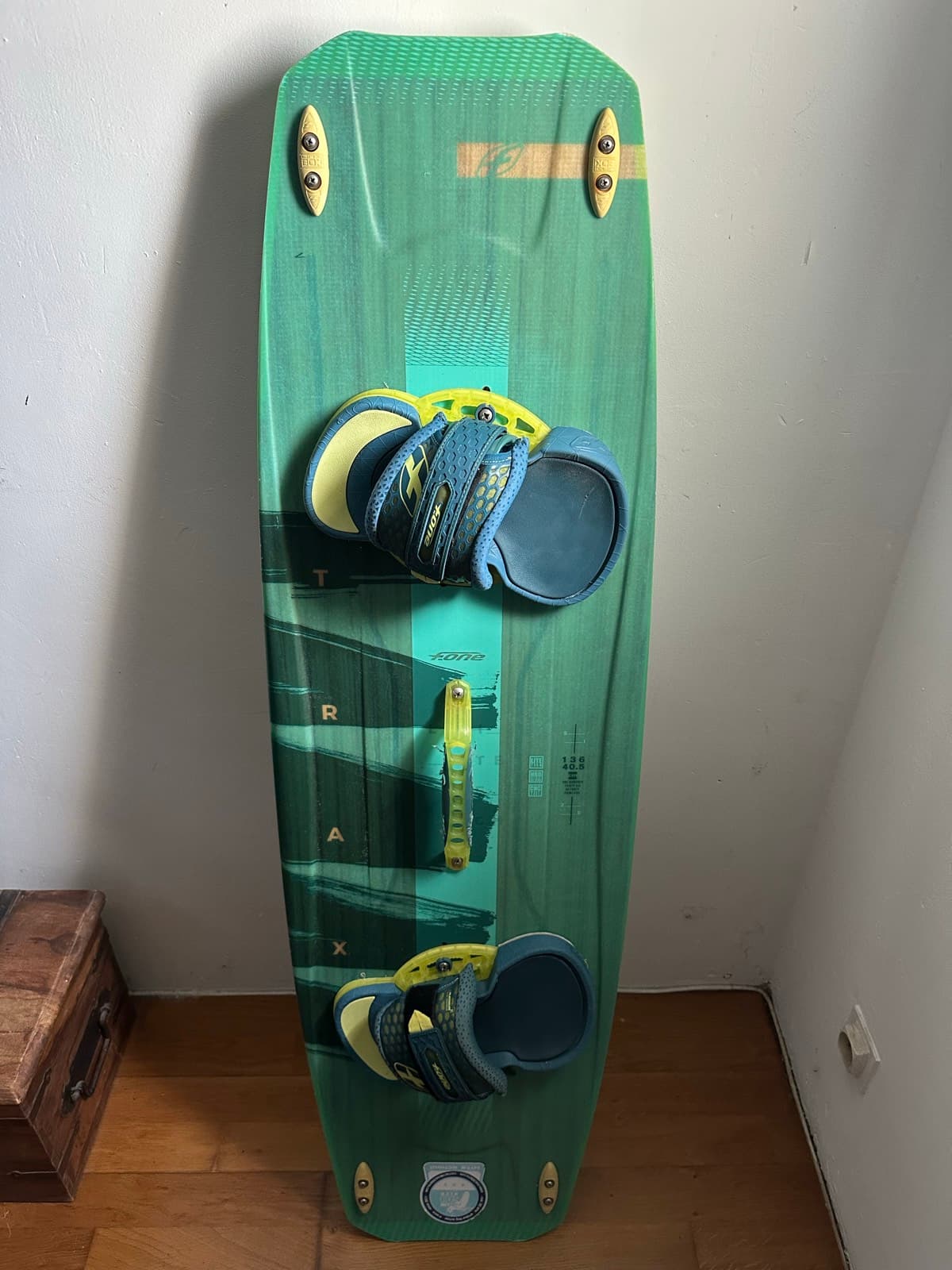
The twintip is the most common kiteboard. Symmetrical, it glides in both directions: no need to turn it around to change direction.
Size
| Weight | Beginner | Advanced |
|---|---|---|
| Less than 65 kg | 136 to 140 cm × 41 to 42 | 132 to 136 cm × 39 to 41 |
| 65 to 85 kg | 140 to 145 cm × 42 to 44 | 136 to 140 cm × 41 to 42 |
| More than 85 kg | 145 to 150 cm × 44 to 46 | 140 to 145 cm × 42 to 43 |
A larger and wider board starts in less wind, goes upwind more easily, and forgives mistakes. A smaller board is more lively and comfortable in choppy conditions.
Rocker (the curve)
- Little rocker: the board starts quickly and goes fast, ideal for freeride and light wind.
- A lot of rocker: more comfortable in chop and easier for landings, typical of freestyle.
Flex (the softness)
- Soft: comfortable, absorbs chop and landings.
- Stiff: more pop for jumps, more precise, but more tiring.
Programs
- Freeride: versatile, comfortable, easy.
- Big air: built to handle very high landings.
- Freestyle / park: stiff, more rocker, often with boots.
- Light wind: large and flat, to get going in very little wind.
Straps or boots
Straps (footpads) are easy to put on and release your feet in case of a fall: the right choice for 95% of riders. Boots provide better hold for advanced freestyle.
Carbon or wood construction: carbon is lighter and more responsive, while wood is softer and often more durable.