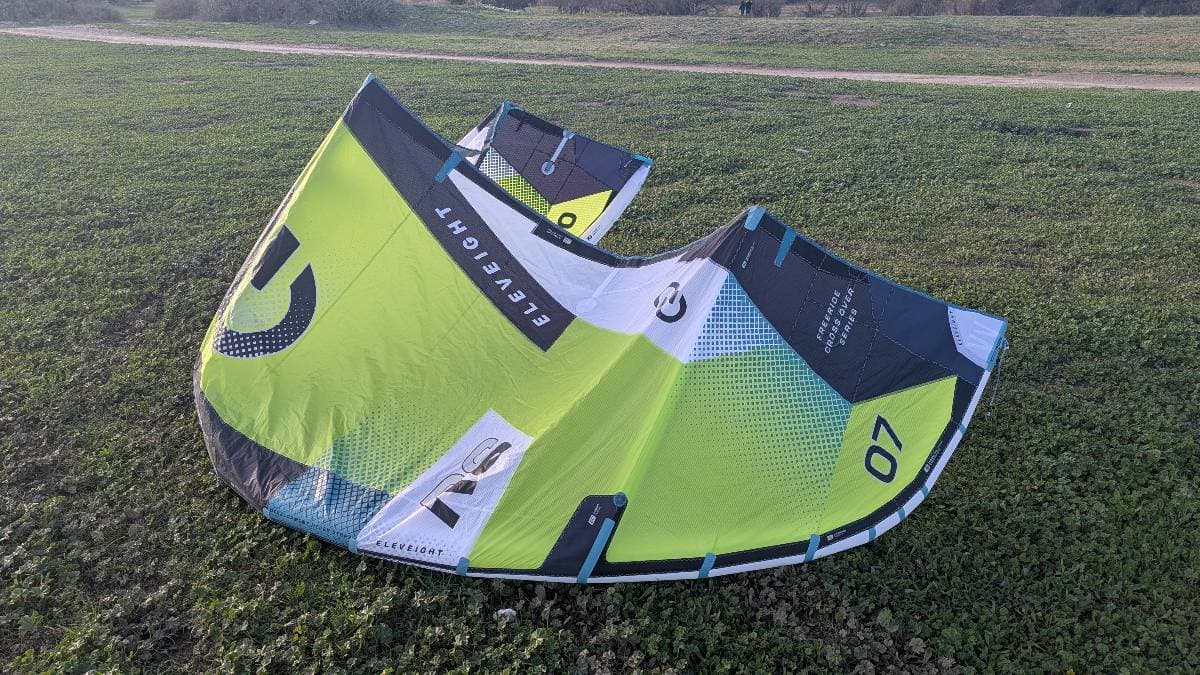
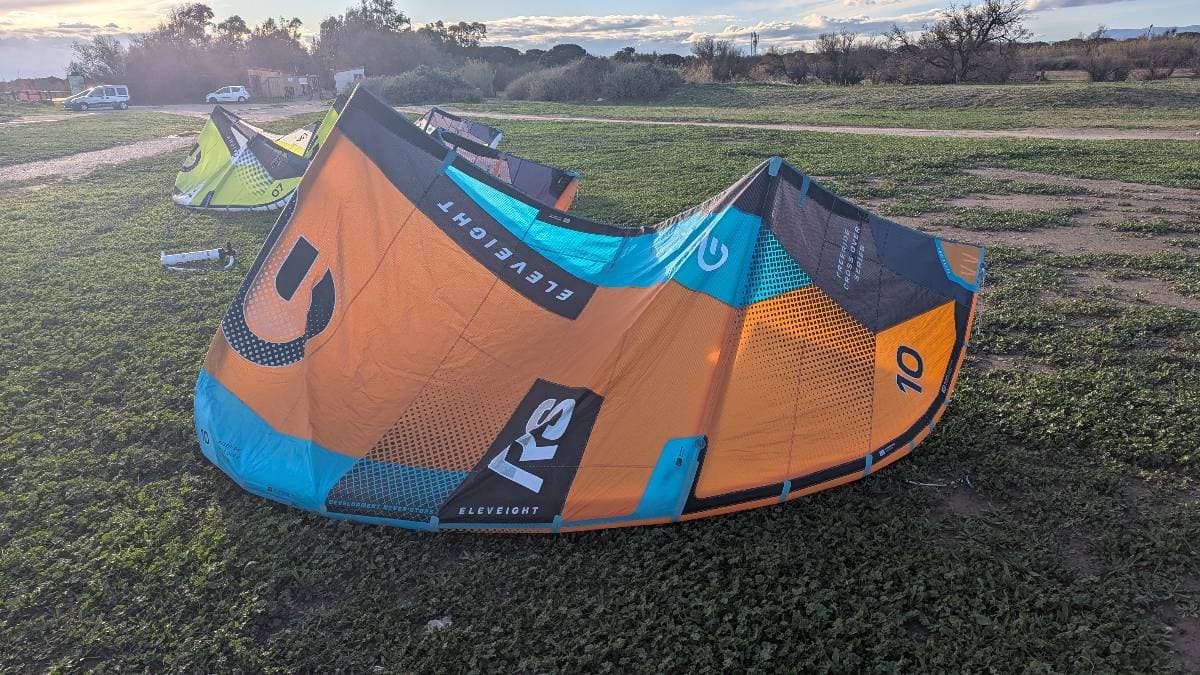
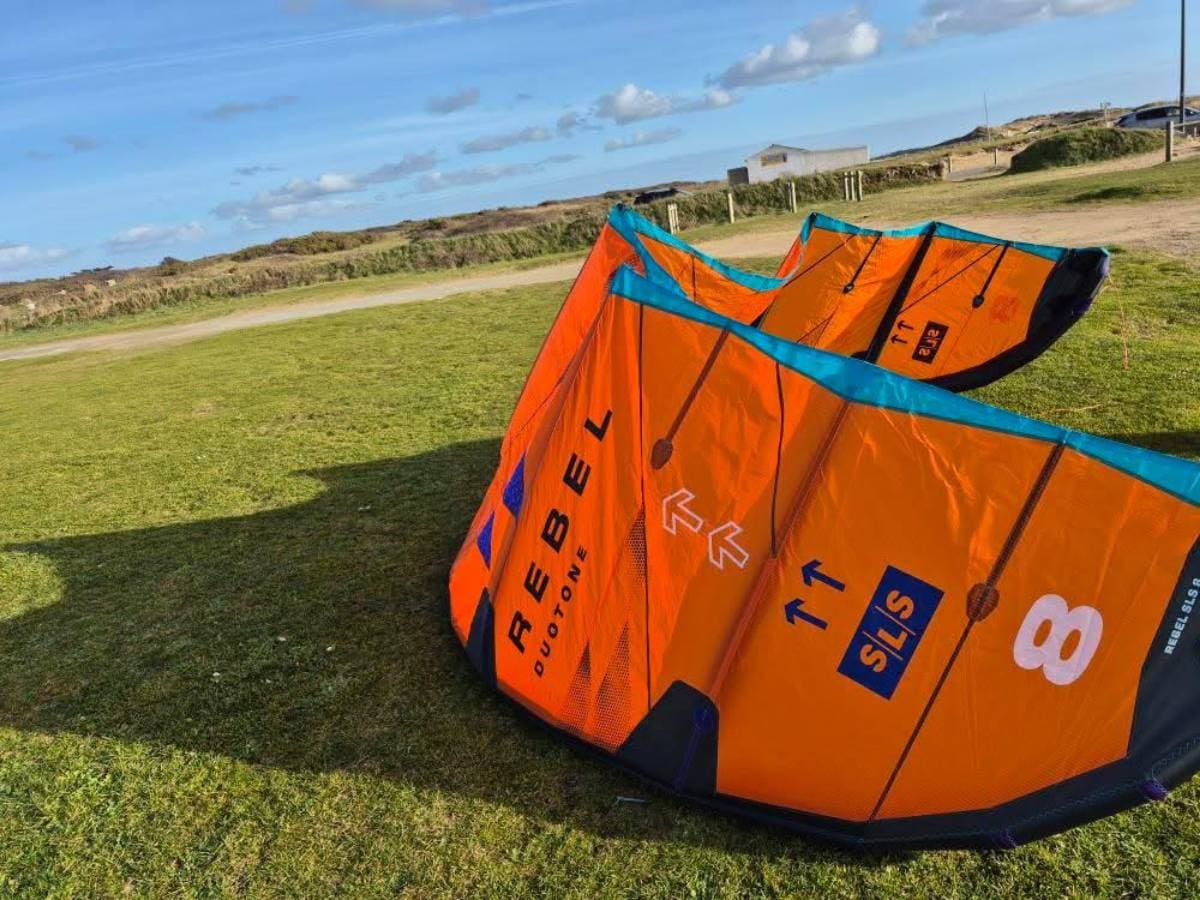
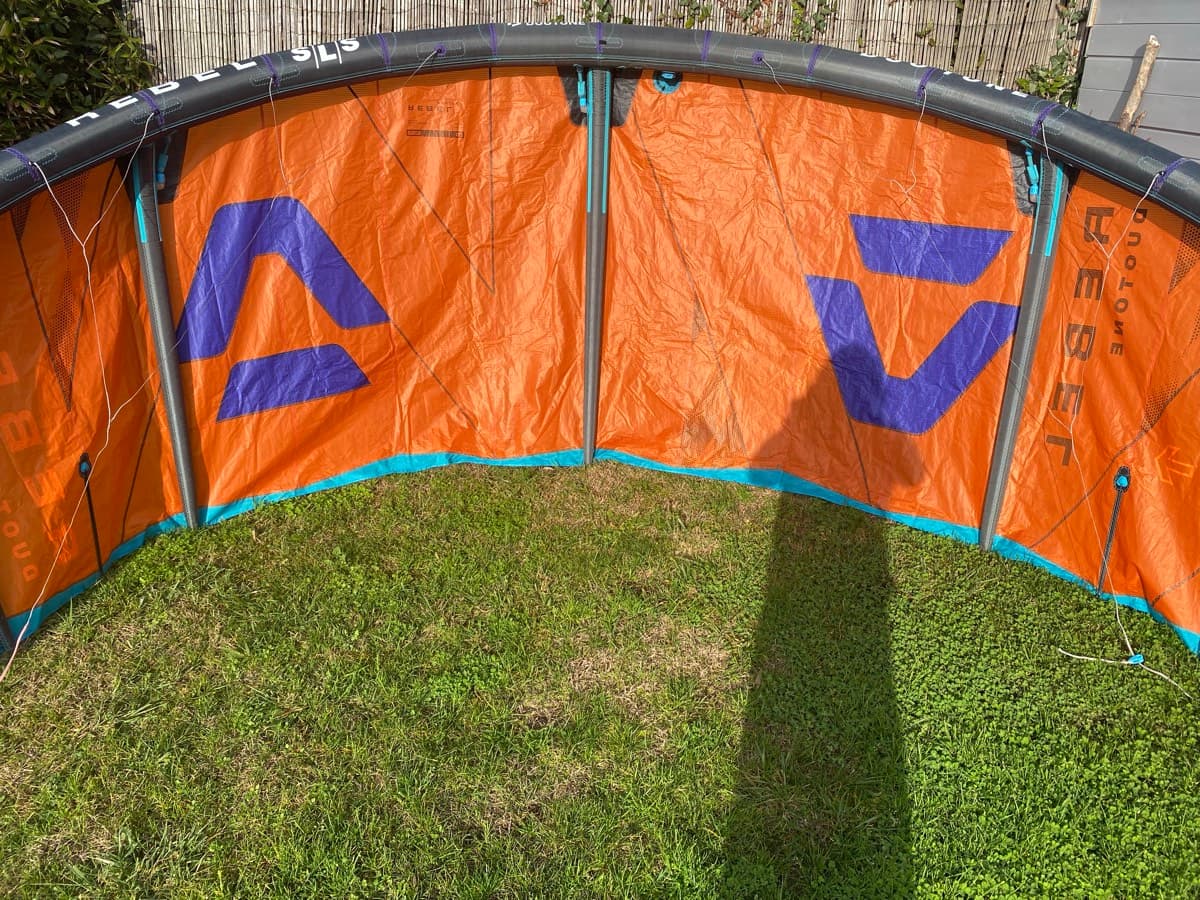
All inflatable kites look similar from a distance, but their shape (the profile, the number of struts, the position of the bridles) completely changes their behavior. Here are the main categories.
Freeride
The all-around kite. Stable, easy to relaunch, with good depower and a wide range of use. It's the best choice for starting, progressing, and riding without hassle. Many experienced riders stick to freeride their whole life.
Big air
Designed for jumping high and long: strong relaunch (lift), hang time, a firmer bar, and a kite that can handle strong winds. Often more technical, reserved for riders who already master jumping.
Freestyle (C-shape)
More of a "C" profile, very responsive kite with pop and slack for unhooked tricks (without being attached). Less depower and a more demanding relaunch: for advanced riders.
Wave (surf kite)
Made for surfing waves: it turns quickly, stays in the air even when the lines slack (drift), and is forgotten while you surf. Also useful for strapless.
Light wind (light wind)
Large kites (12 to 17 m²) that fly in very light winds. Pair it with a big board or a foil.
Foil and single skin
- Foil kite (with cells): no bladders, very effective in light wind, especially in kitefoiling and racing.
- Single skin: a single layer of fabric, ultra-light and compact, ideal for foiling and traveling, less versatile.
Quick Comparison
| Type | Level | Strengths | Limitations |
|---|---|---|---|
| Freeride | All | Easy, stable, versatile | Less pure performance |
| Big air | Advanced | Jumping, hang time | More physical |
| Freestyle | Advanced | Pop, unhooked | Little depower |
| Wave | Intermediate to advanced | Drift, maneuverability | Less jumping |
| Light wind | All | Light wind | Bulky in strong wind |
| Foil / single skin | Intermediate to advanced | Efficiency, lightness | Less easy relaunch |
For your first kite, aim for a recent freeride model under 5 years old: safety and depower have improved a lot.