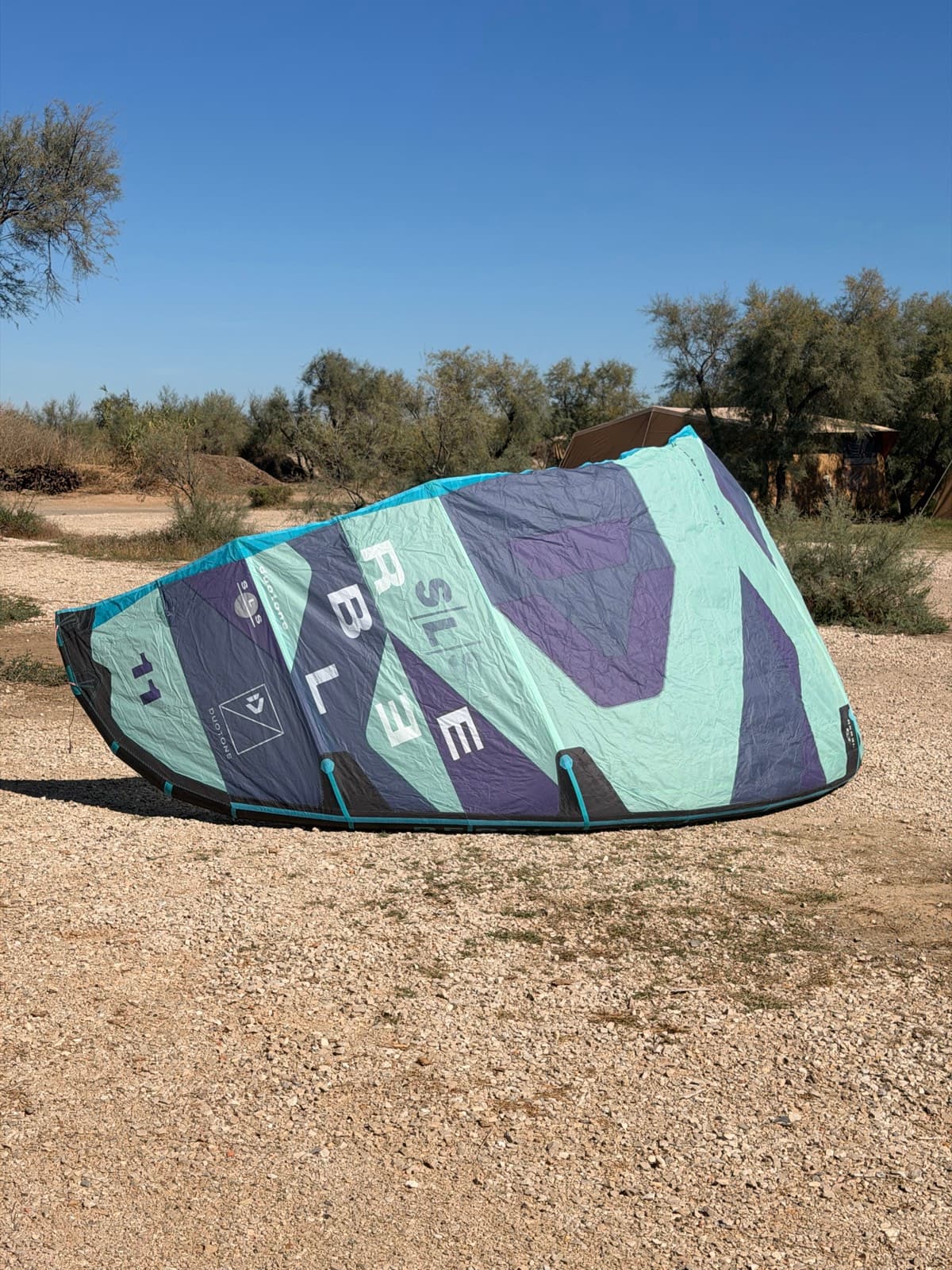
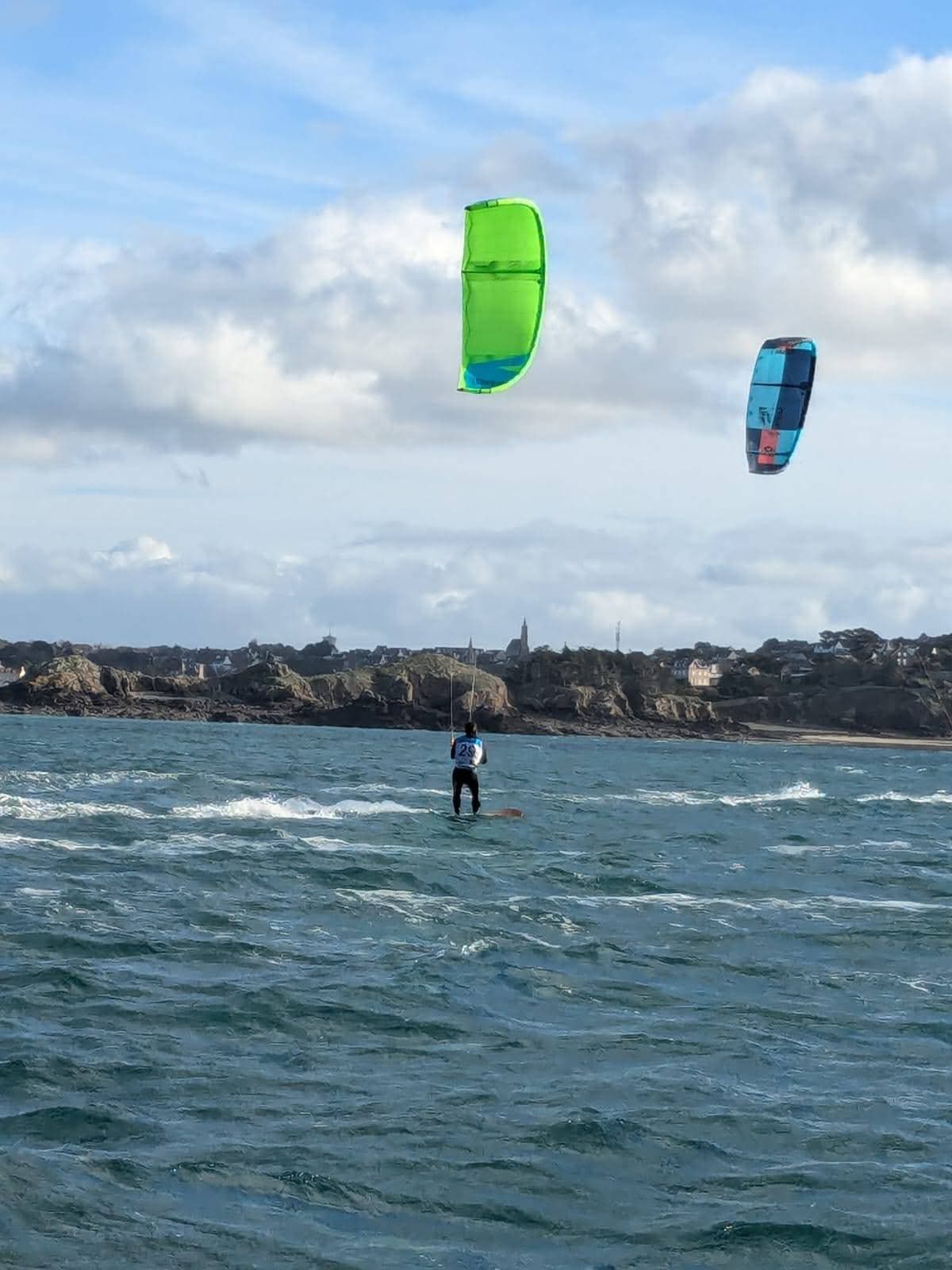
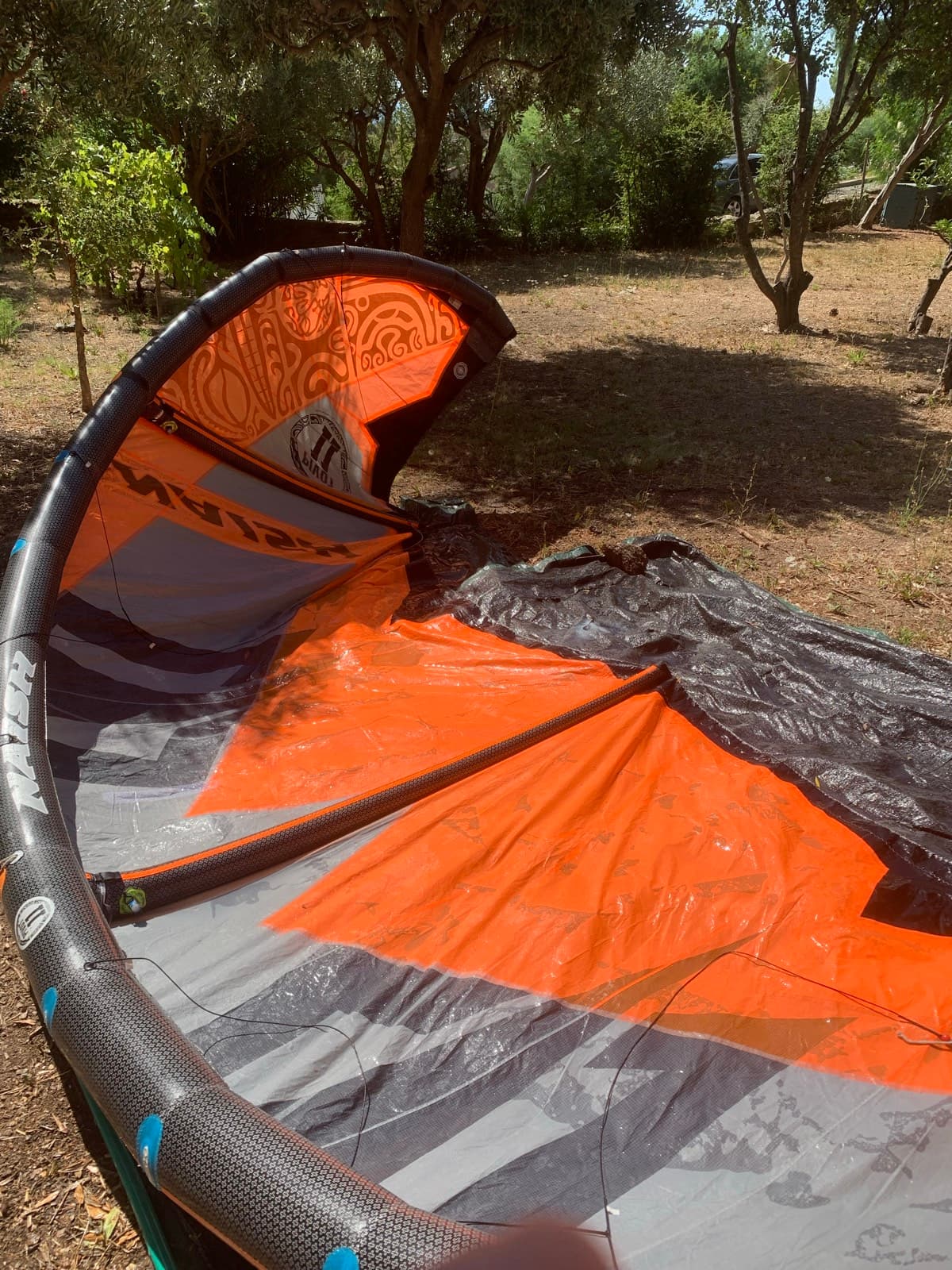
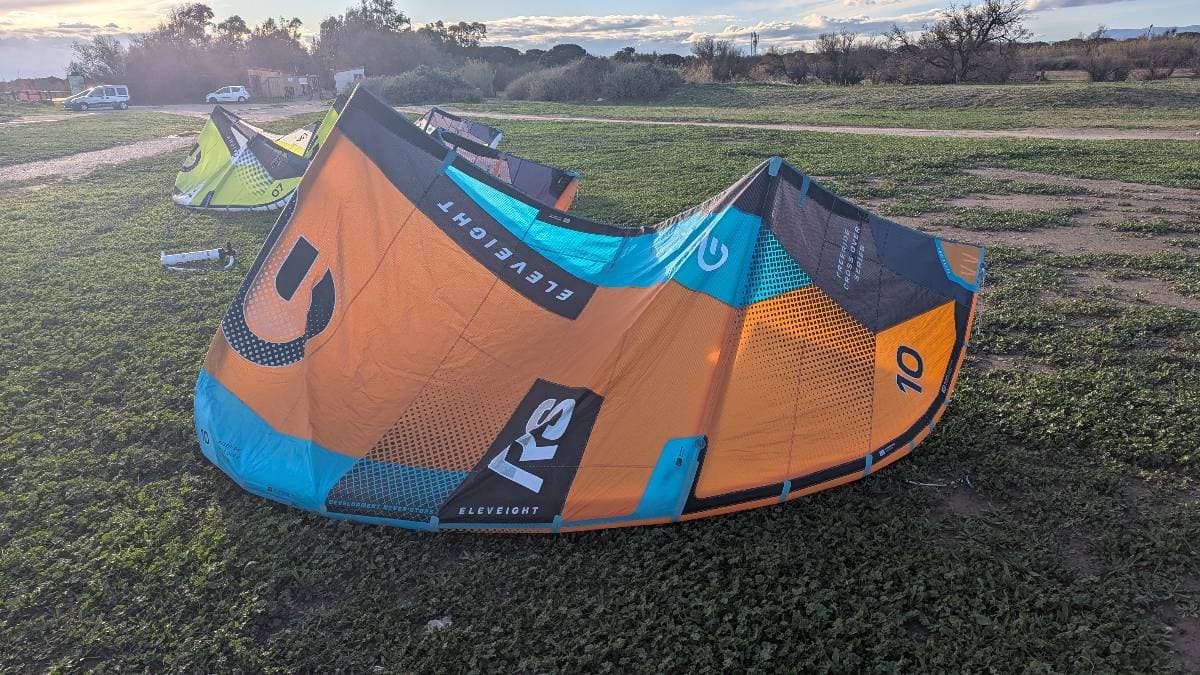
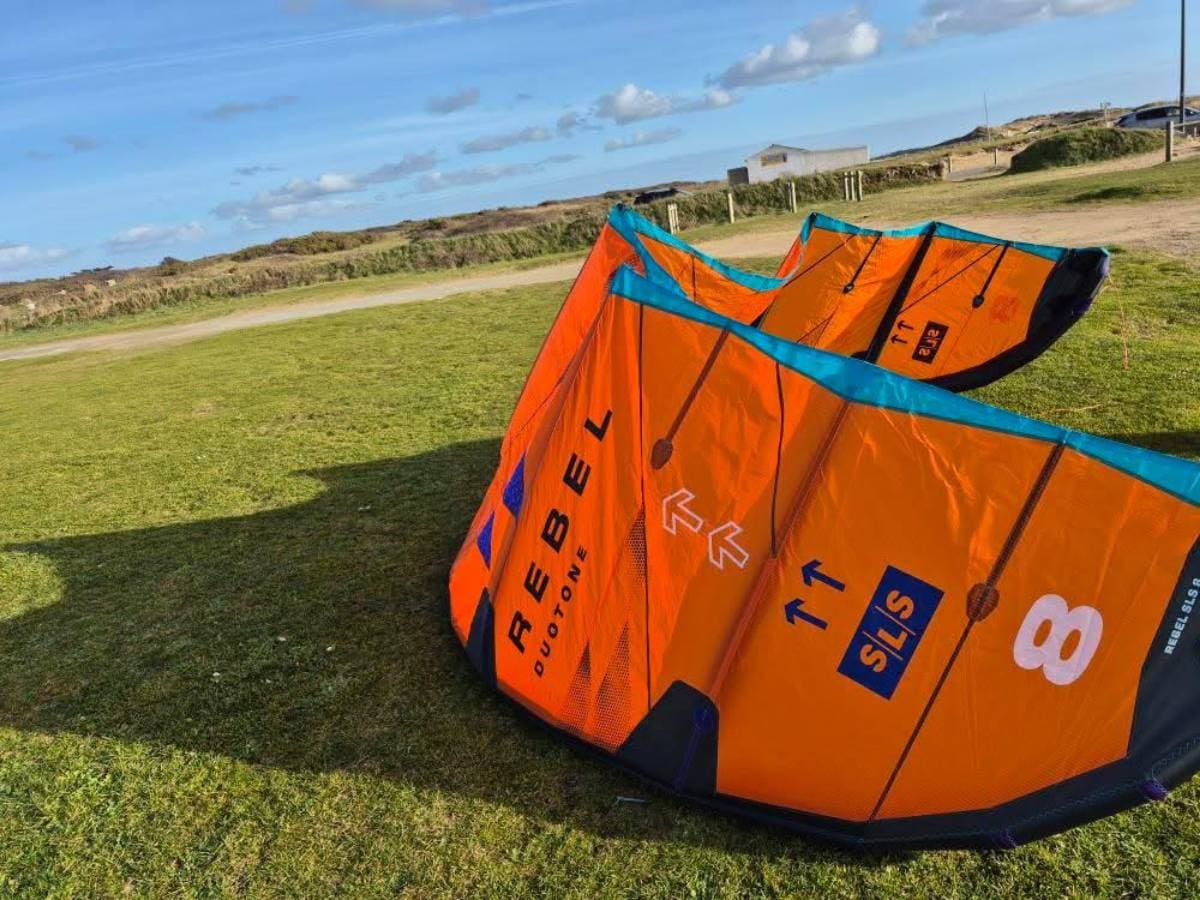
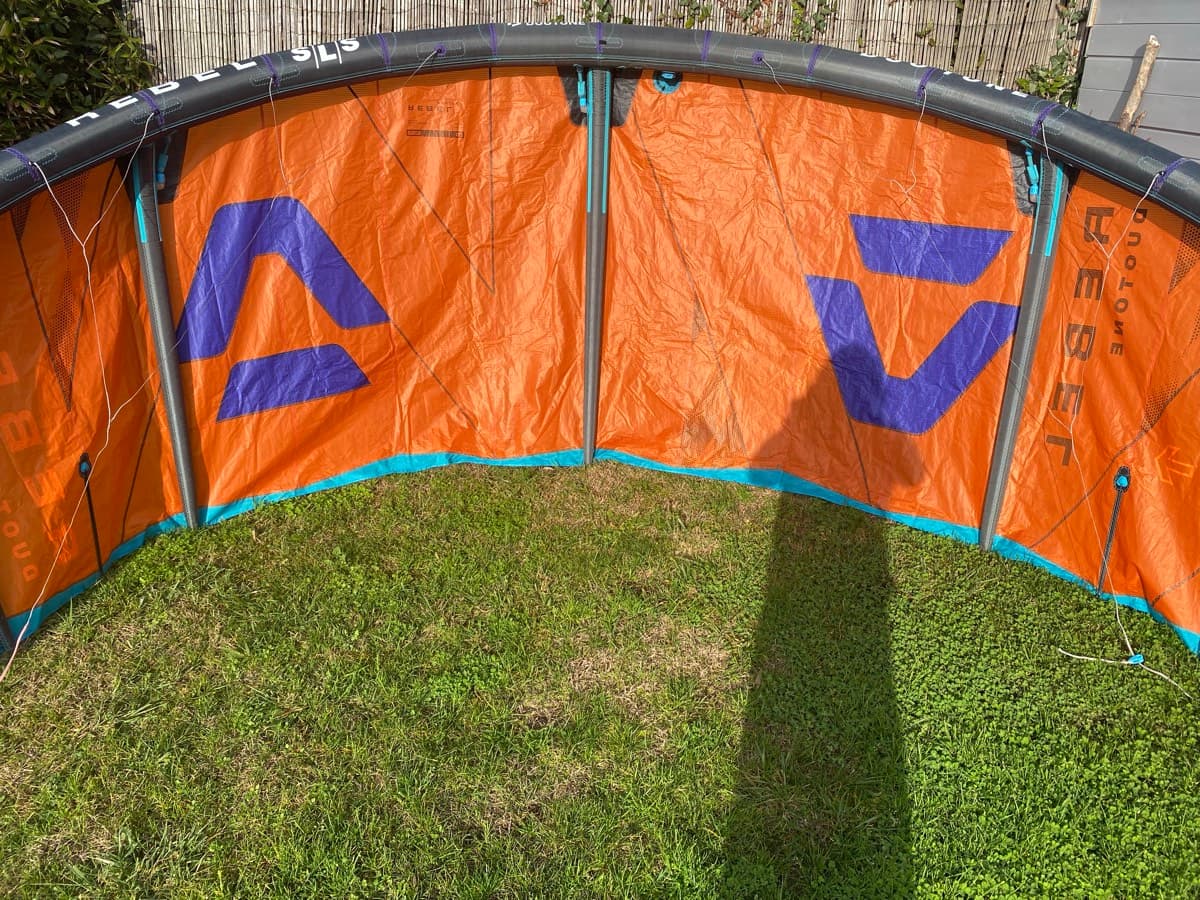
The right size mainly depends on your weight and the wind strength, then on your board and your level. A kite that is too big is dangerous, while a kite that is too small will leave you struggling.
The Basic Rule
Size (m²) ≈ weight (kg) ÷ wind (knots) × 2.2 for a twintip. Example: 75 kg in 18 knots, 75 ÷ 18 × 2.2 ≈ 9 m².
- In surf / strapless, add about 10% (the board is harder to get going in light wind).
- In foil, subtract 30 to 40%: the foil requires much less power.
- A beginner should stick to one size smaller rather than larger.
Which size for you?
Suggested size
9m²
8 to 10 m²
Indicative: each model has its own range, check riders' reviews on low end and depower.
Reference Table (twintip)
| Wind | 60 kg | 75 kg | 90 kg |
|---|---|---|---|
| 12 to 15 knots | 10 to 12 m² | 12 to 14 m² | 14 to 17 m² |
| 15 to 20 knots | 8 to 9 m² | 9 to 11 m² | 11 to 12 m² |
| 20 to 25 knots | 6 to 7 m² | 7 to 8 m² | 9 to 10 m² |
| 25 to 30 knots | 5 m² | 6 m² | 7 to 8 m² |
Building Your Quiver
Most riders cover the essentials with two kites spaced 3 to 4 m² apart, for example, 9 and 12 m² for 75 kg. A third, smaller kite (7 m²) opens up strong winds. Check the wind statistics of your favorite spots on Kiteloopers to know which range you encounter the most.
Gusts Matter
Choose your size based on the average wind, but also look at the difference with the gusts. If gusts are more than 10 knots above the average wind, go for the smaller of the two possible sizes.
These values are indicative. Each model has its own range: check the model sheets and rider reviews on low-end performance and depower.