
Overview
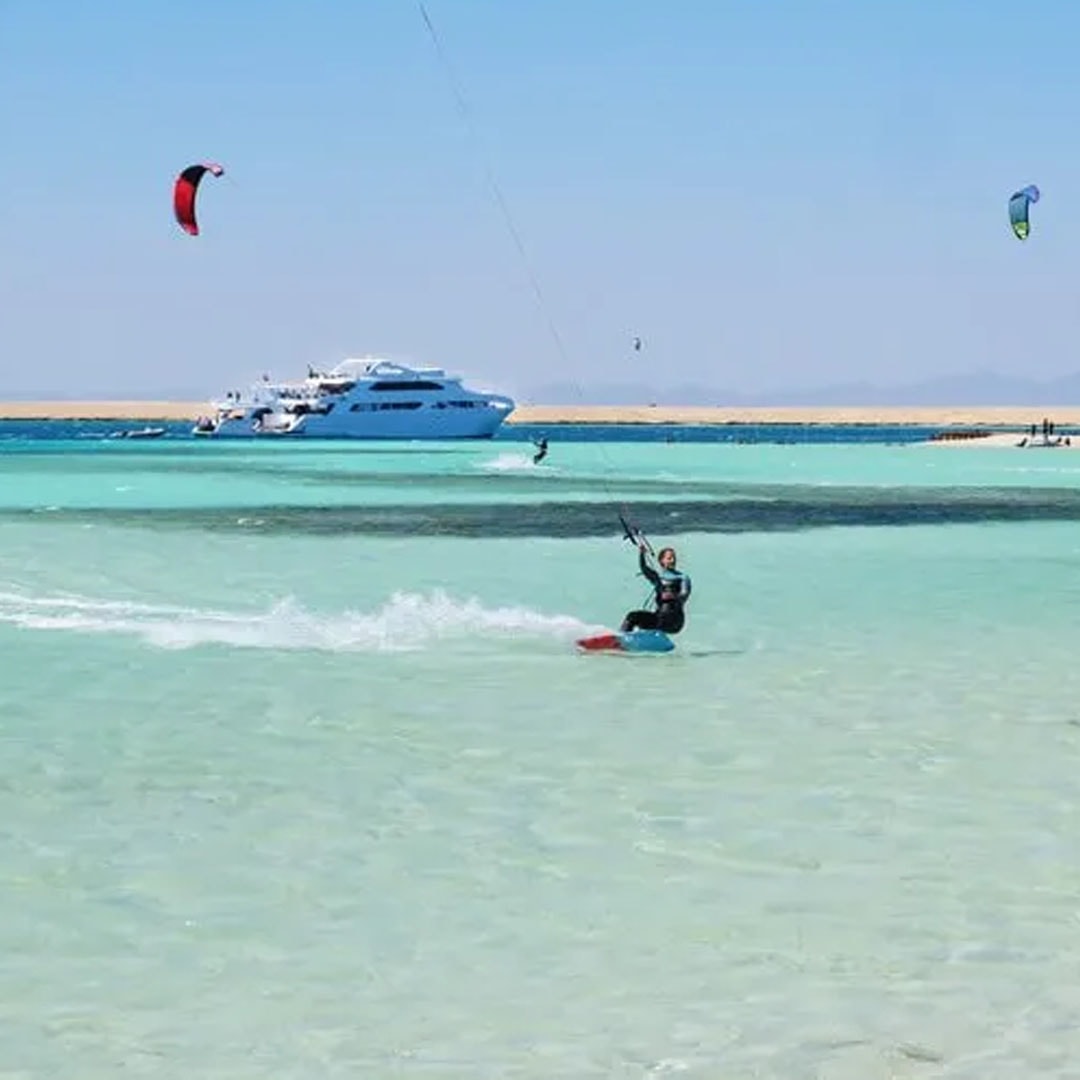
Egypt has become the go-to kite destination for Europeans who want reliability, proximity and comfort. The secret: Red Sea thermal wind that kicks in almost daily from April to October at 18-28 knots, created by the contrast between hot desert air and cooler sea. El Gouna is the international hub with hundreds of stations, Mangroves Bay (shallow, perfect flat) and 5-star clubs. Hurghada offers more spots (Makadi, Abu Soma, Sahl Hasheesh), stronger raw wind and tighter prices. Soma Bay is the premium spot with its vast bay and all-inclusive resorts. Dahab, on the Sinai, appeals to riders seeking a more roots vibe and an iconic lagoon. Egypt isn't a wave paradise (except for Safaga and Ras Sudr near Sinai). It is however arguably the world's best place to learn and progress: predictable conditions, warm water, shallow lagoons, structured international schools, fair prices. Kite-foil has boomed here thanks to the steady wind.