France
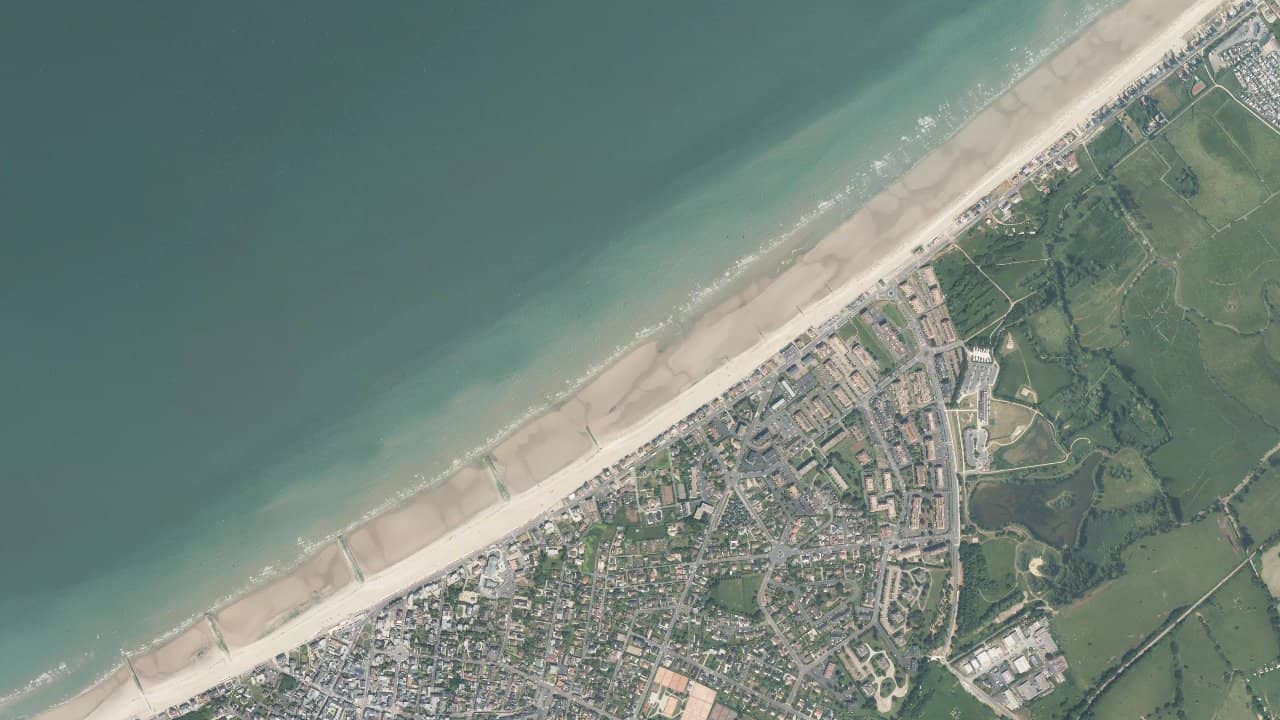
The beach of Villers-sur-Mer, located on the Normandy coast in Calvados, offers a large stretch of sand bordered by preserved dunes. It is a kitesurf spot appreciated by locals for its generous space, ideal for progressing safely.
Close to Cabourg and Houlgate, it attracts riders looking for a natural setting without too many people. The Cercle Nautique de Villers-sur-Mer offers lessons and equipment on site.
The area is marked for kitesurfing, with a friendly atmosphere and conditions suitable for beginners as well as intermediates[1][3][4][5].
The wind data shown here comes from ERA5 (via Open-Meteo) over 4 years, reprocessed to reflect realistic conditions.
👉 Average wind has been calibrated to avoid the usual underestimation of models.
👉 Gusts have been corrected by a median ratio to avoid unrealistic extreme values.
👉 Each day is summarized by the median wind (P50) observed during useful hours (8am–8pm), then classified into wind ranges.
👉 The weighted mode mixes average wind and gusts to best reflect felt wind.
The spot works mainly at low tide where the immense beach frees up a large navigation area with shallow water. The launch is directly from the sand, easy and without major obstacles. The launch area is wide, at the center of Jean Moulin beach, marked to avoid bathers in season.
The dominant wind comes from NW to W, side-on perfect for the east-west oriented beach, allowing for freeride or freestyle sessions. With a wind of 244° (about WSW), it is side-shore starboard, ideal for light waves or flat depending on the tide. At high tide, the water rises quickly and reduces the navigable area, making the spot technical.
The best navigation areas are to the north of the beach, near the dunes, to avoid the family sector. Be cautious of fishermen and walkers; respect the markers. In summer, the NW thermal strengthens in the afternoon for long sessions[1][3][5].
Ideal conditions are a side-on NW 15-25 knots wind at low tide, for a smooth water surface and a large riding area. Avoid too onshore E winds that make takeoff difficult.
The water state is generally chop with established wind, turning flat at low tide in sheltered areas. Small waves form with side-on wind from the W or SW.
At high tide, the chop increases with the current, making navigation more physical[1][3].
The currents are moderate but can intensify at high tide near the central channel. At low tide, they are negligible on the large beach.
The tides are significant in Normandy, with a high coefficient making changes rapid; check the schedules to avoid dangerous areas[1].
Opt for sizes from 9 to 12 m² in typical Normandy conditions, smaller (7-9) in strong winter winds. Beginners prefer 11-12 for safety on this vast beach.
The wind regime is regular due to the proximity of the English Channel, with dominant NW and W side-on for the beach. In summer, a thermal sets in from the northwest in the afternoon, force 15-25 knots.
No specific local name, but Atlantic depressions generate side-off winds from the southwest in winter, up to 30 knots and more[1][3].
The Normandy climate is oceanic, with mild temperatures in summer around 20°C and cool in winter around 8-10°C. The seasons are marked by frequent rains, but the summer months offer more stability for kitesurfing.
It is potentially windy all year round, with a peak in autumn and winter when storms bring strong winds[1].
The depth is gradual with a clean sandy bottom. You can stand up to 100-150 meters from the shore at low tide, perfect for first glides.
Water temperatures range from 10-12°C in winter to 17-20°C in summer. A 5/4 mm wetsuit is mandatory most of the time, 4/3 in the warm season.