France
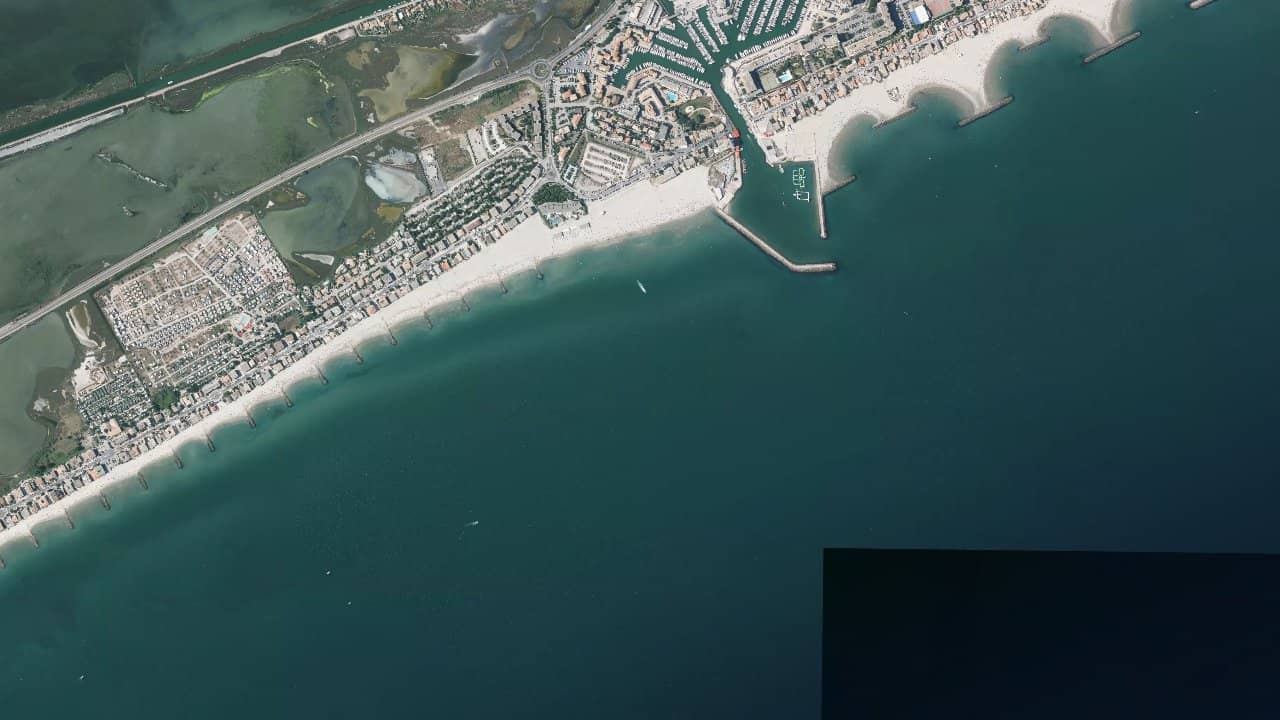
The Roquilles beach in Mauguio, located near Montpellier in Occitanie, is a must-visit spot in the region for kitesurfers. It is a less crowded place than the nearby Grande Motte, offering a more tranquil atmosphere while benefiting from regular wind conditions. The spot has a 200-meter linear sandy area well-equipped for launching and landing.
This spot is known for its consistent waves and works particularly well with south and southeast winds. The area is certified and approved by the French Sailing Federation, ensuring safe and supervised practice conditions. It is a place rich in history as kitesurfing was born between Carnon and Grande Motte in the mid-1990s.
The wind data shown here comes from ERA5 (via Open-Meteo) over 4 years, reprocessed to reflect realistic conditions.
👉 Average wind has been calibrated to avoid the usual underestimation of models.
👉 Gusts have been corrected by a median ratio to avoid unrealistic extreme values.
👉 Each day is summarized by the median wind (P50) observed during useful hours (8am–8pm), then classified into wind ranges.
👉 The weighted mode mixes average wind and gusts to best reflect felt wind.
The Roquilles mainly work with southeast to southwest winds. With southeast winds, the shorebreak can be significant and the water surface often becomes choppy with waves breaking randomly due to the sandy bottom. With southwest winds, conditions are more consistent with more predictable waves. The spot also works with thermal winds from the south and with tramontane (northwest), although the latter is difficult to exploit in the bay.
Launching is done from the main beach with easy access. A navigation channel is established during the summer season and should only be used to reach and leave the shore, with navigation occurring beyond 300 meters. The area for preparing kites is not very wide and can be crowded with tourists in summer. A row of wooden stakes protects the dunes, located about a line length from the beach, which must be strictly respected.
West and southwest winds are rare but offer the best riding conditions as they are very consistent. The water surface is not protected from the swell coming from the open sea, resulting in a lot of waves that break randomly, particularly with southeast winds.
Ideal conditions are met with a consistent west or southwest wind, although these directions are rare. These winds provide the best riding conditions with regular and predictable waves. The thermal wind from the south and the marine wind from the southeast also allow for regular practice, although conditions are less optimal from the southeast with a choppy water surface.
The water surface at Roquilles is not protected from the swell coming from the open sea, which creates a lot of waves that break randomly, particularly due to the sandy bottom. With southwest winds, the waves are more consistent and predictable. With southeast winds, the water surface often becomes choppy with a significant shorebreak. It is a wave spot appreciated by riders looking for dynamic conditions.
The current is generally weak at this spot. However, a navigation channel is established during the summer season where the current can be stronger. It is important to respect designated navigation areas and not venture beyond authorized zones.
The recommended kite sizes depend on the wind conditions. For summer thermal winds (south) and marine winds (southeast), kites of 9 to 11 square meters are generally appropriate. For stronger west and southwest winds, kites of 7 to 9 square meters will be more suitable. Experienced riders can adjust their equipment according to the specific conditions of the day.
The dominant wind regime is the thermal wind from the south, particularly active in summer, and the marine wind from the southeast. The tramontane (northwest wind) blows side-on at this beach but is infrequent. West and southwest winds are rare but offer the most consistent conditions and the best riding sessions.
The region enjoys a Mediterranean climate with hot summers and mild winters. Weather conditions allow for kitesurfing year-round, although the best sessions generally occur outside the summer season to avoid tourist crowds.
The depth is gradual with a sandy bottom characteristic of this coastal area. You can stand a good distance from the shore, making it easier to launch and learn. The depth increases gradually, allowing for safe practice for all levels.
The water temperature in the Mediterranean varies with the seasons. In winter (December to February), the water is colder, generally between 8 and 12°C, requiring a thick wetsuit. In spring and autumn, temperatures range from 12 to 18°C. In summer (June to September), the water warms up to 20-24°C, allowing for more comfortable practice with a thin wetsuit or no wetsuit.