France
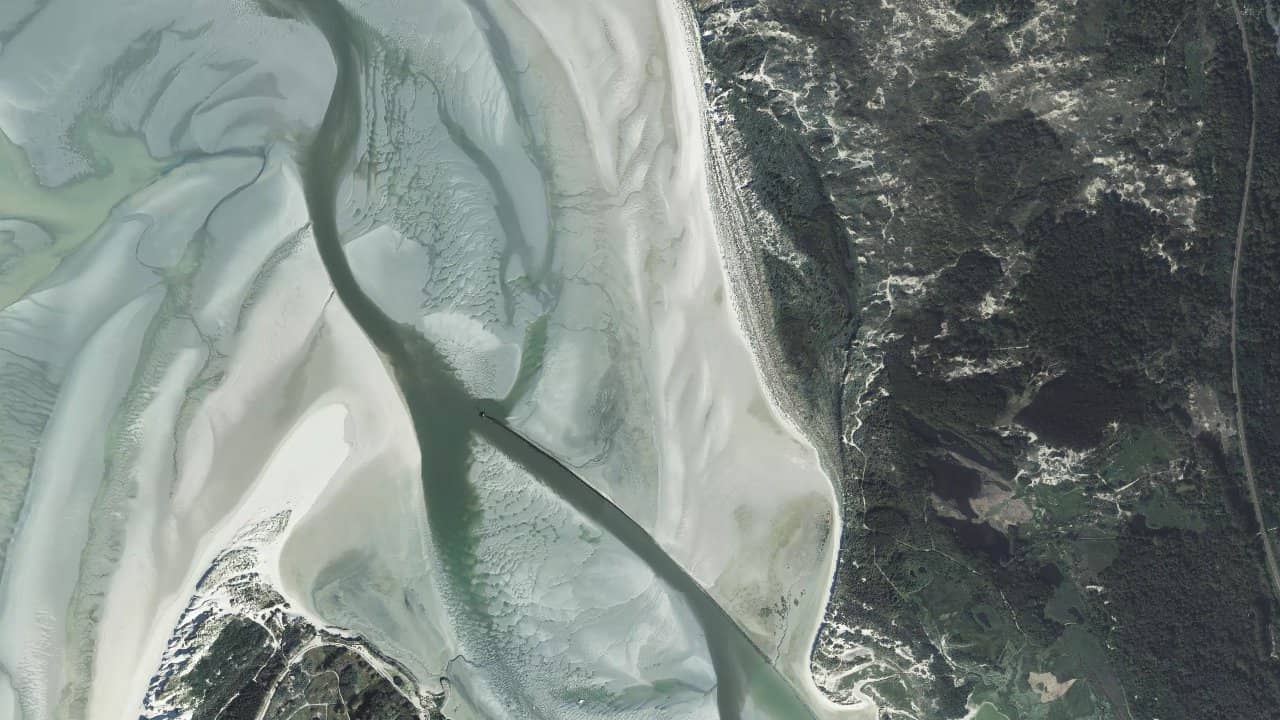
At the mouth of the Canche, between wild dunes and a protected estuary, the Canche Bay is one of the most technical and appreciated spots on the Opal Coast for its ability to offer exceptional flat conditions when the tide is favorable. This classified natural site, located in close proximity to Le Touquet, contrasts sharply with the neighboring open sea: here, the water is calmer, the setting is preserved, and navigation takes place in an almost lagoon-like atmosphere. It is a sought-after spot for progression, freestyle, and clean sessions, provided that timing is well mastered.
The wind data shown here comes from ERA5 (via Open-Meteo) over 4 years, reprocessed to reflect realistic conditions.
👉 Average wind has been calibrated to avoid the usual underestimation of models.
👉 Gusts have been corrected by a median ratio to avoid unrealistic extreme values.
👉 Each day is summarized by the median wind (P50) observed during useful hours (8am–8pm), then classified into wind ranges.
👉 The weighted mode mixes average wind and gusts to best reflect felt wind.
Navigation takes place in a semi-closed estuarine area, heavily dependent on the tide. The spot mainly works at high tide and around high water, when the depth becomes sufficient for navigation. The dominant wind blows from the west to southwest, arriving side to slightly side-onshore in the bay. The water surface then becomes flat to slightly choppy, protected from the swell by the natural configuration of the estuary. At low tide, vast areas quickly become exposed and make navigation impossible.

Wind from the west to southwest, between 12 and 22 knots, with a rising tide providing sufficient depth.
Water surface flat at high tide, quickly becoming impractical as the water level drops. The bottom is sandy and even, with no waves or swell in the navigable area.
Current present and directly linked to the tide and the flow of the Canche. At high tide, the current remains moderate and manageable. At low tide, the flow seaward accelerates and requires exiting the water quickly.
The most commonly used kite sizes range from 9 to 13 m² depending on the size and wind strength. Light wind oriented kites are particularly suitable.
Wind predominantly from the west to southwest, with typical intensities between 12 and 22 knots. The wind is often cleaner and more consistent than on the exposed beach of Le Touquet, thanks to the protective effect of the bay.
Temperate oceanic climate, with mild and sunny summers and cool, windy winters. The bay often enjoys more comfortable conditions than the neighboring open sea, especially on windy days. The optimal period extends from spring to autumn.
Shallow depth, sandy bottom, you can stand in a large part of the area at high tide.
Water temperature ranges from 8–10°C in spring to 18–20°C in summer. Full wetsuit recommended outside of peak summer.