France
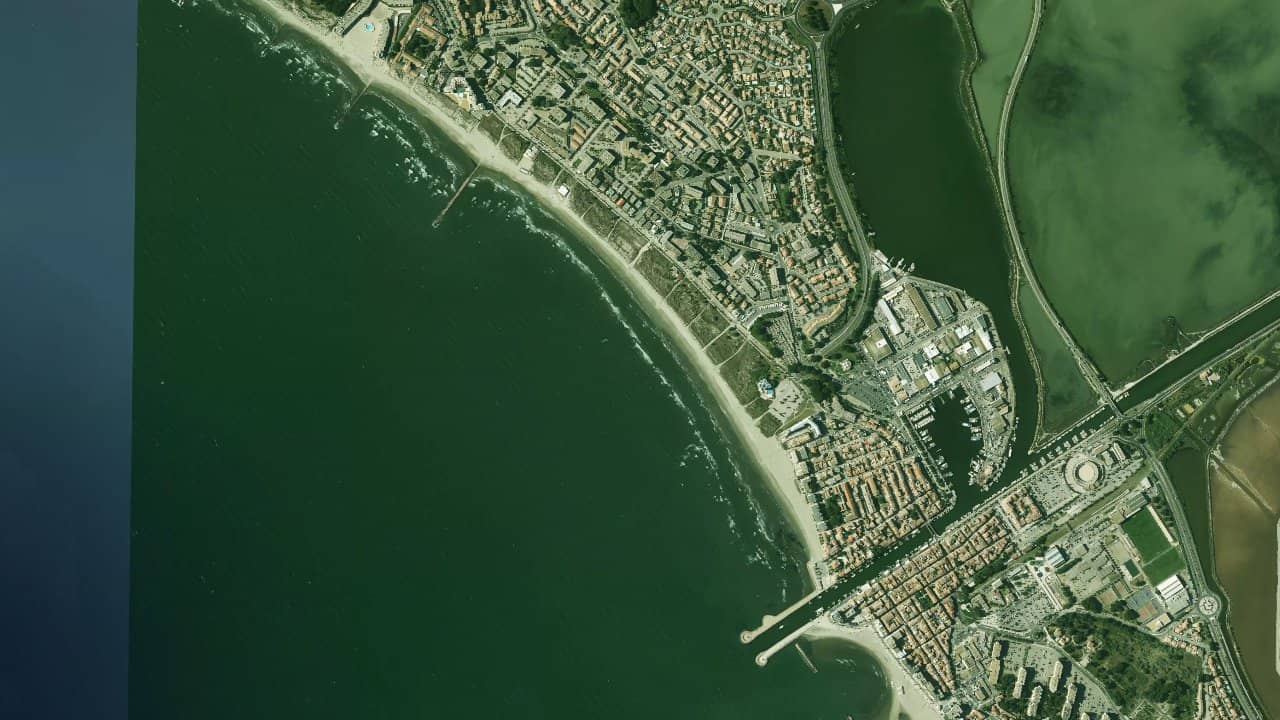
The Boucanet beach, located in Grau-du-Roi between La Grande Motte and the city center, is the ideal backup spot when the other beaches of Port Camargue are overcrowded. It is a place appreciated by experienced riders for its versatility and authentic local atmosphere. In the evening, the beachside huts come alive and offer a well-deserved break after a good session.
As the only spot on the right bank of Grau-du-Roi, Boucanet stretches for nearly 3 kilometers of fine sand. The beach is quite wide in the north and gradually narrows towards the south. It is a versatile spot where all levels can ride, from beginner to expert, with conditions suitable for different riding styles.
The wind data shown here comes from ERA5 (via Open-Meteo) over 4 years, reprocessed to reflect realistic conditions.
👉 Average wind has been calibrated to avoid the usual underestimation of models.
👉 Gusts have been corrected by a median ratio to avoid unrealistic extreme values.
👉 Each day is summarized by the median wind (P50) observed during useful hours (8am–8pm), then classified into wind ranges.
👉 The weighted mode mixes average wind and gusts to best reflect felt wind.
Boucanet mainly works with west and northwest winds, which come in side-on to the beach. These directions bring beautiful waves in the large bay without dikes, ideal for freeride and big jumps. In sustained west winds, the water surface transforms with a big swell that delights riders seeking thrills.
The spot also works with south and southeast winds, offering great flexibility depending on weather conditions. In west wind, it is possible to ride up to the sandbank at the tip of Espiguette to find a perfectly flat playground, ideal for freestyle.
Particular attention in the evening: the wind tends to shift to north-northeast and creates significant wind shadows hitting the buildings along the edge of the spot. It is recommended to return to the shore at the end of the day to avoid issues. Launching is easy from the beach, with accessible entries at 47 and 50 for people with reduced mobility. The spot is closed during the summer period (July-August) for kitesurfing.
The ideal conditions are a strong west wind that brings regular waves and powerful swells. Northwest wind also works very well, creating perfect side-on conditions for riding. In strong winds, the spot becomes 'on fire' with waves over 3 meters, ideal for freeride and big jumps. South and southeast winds offer an interesting alternative when west conditions are not present.
With west and northwest winds, the water surface offers beautiful waves that break along the beach, creating magnificent ramps for jumps. The spot generates powerful swells with sustained west winds, with waves that can exceed 3 meters. The dikes create flat zones with north wind, ideal for freestyle. The beach is wild but frequented, with an expanse that makes it a great playground for all riding styles.
The current is generally weak at Boucanet, making it an accessible spot. However, one must remain vigilant during maneuvers on the beach, particularly in areas where the dikes create flat zones with north wind. The gradual depth allows for good current management for riders of all levels.
The recommended kite sizes vary according to wind conditions. In sustained west and regular northwest winds, kites of 9 to 12 square meters are ideal for most riders. In lighter winds, kites of 13 to 15 square meters allow for maintaining navigation. Experienced riders can use smaller kites (7-9 m²) in strong winds for more control and maneuverability.
The dominant wind regime is the mistral, a powerful wind coming from the Rhône valley towards the southeast. West and northwest winds are the ideal conditions for Boucanet, bringing consistency and power. These winds are particularly strong and steady, allowing for quality sessions even with smaller kites. The wind can reach significant strengths, creating waves of over 3 meters in strong winds.
Grau-du-Roi enjoys a Mediterranean climate with regular wind conditions throughout the year. The region is very often windy thanks to the mistral that comes from the Rhône valley and ends its course on the continent at this precise location. The beaches are accessible in all seasons, making it an ideal destination for riders looking for reliable conditions.
The depth is gradual with a sandy bottom, making it a very accessible spot. You can stand in the first 30 meters from the shore, providing good safety for beginners and kitesurfing schools. The beach stretches for nearly 3 kilometers, offering plenty of space for navigation and learning. The sandbank at the tip of Espiguette also offers a perfectly flat playground for freestyle.
Water temperatures in the Mediterranean vary by season. In winter (December to February), the water is cool, around 8-10°C, requiring a thick wetsuit. In spring (March to May), it gradually warms up to 12-15°C. In summer (June to August), the water reaches 20-24°C, allowing for riding with a thin wetsuit or without. In autumn (September to November), temperatures gradually drop from 20°C to 12°C.