France
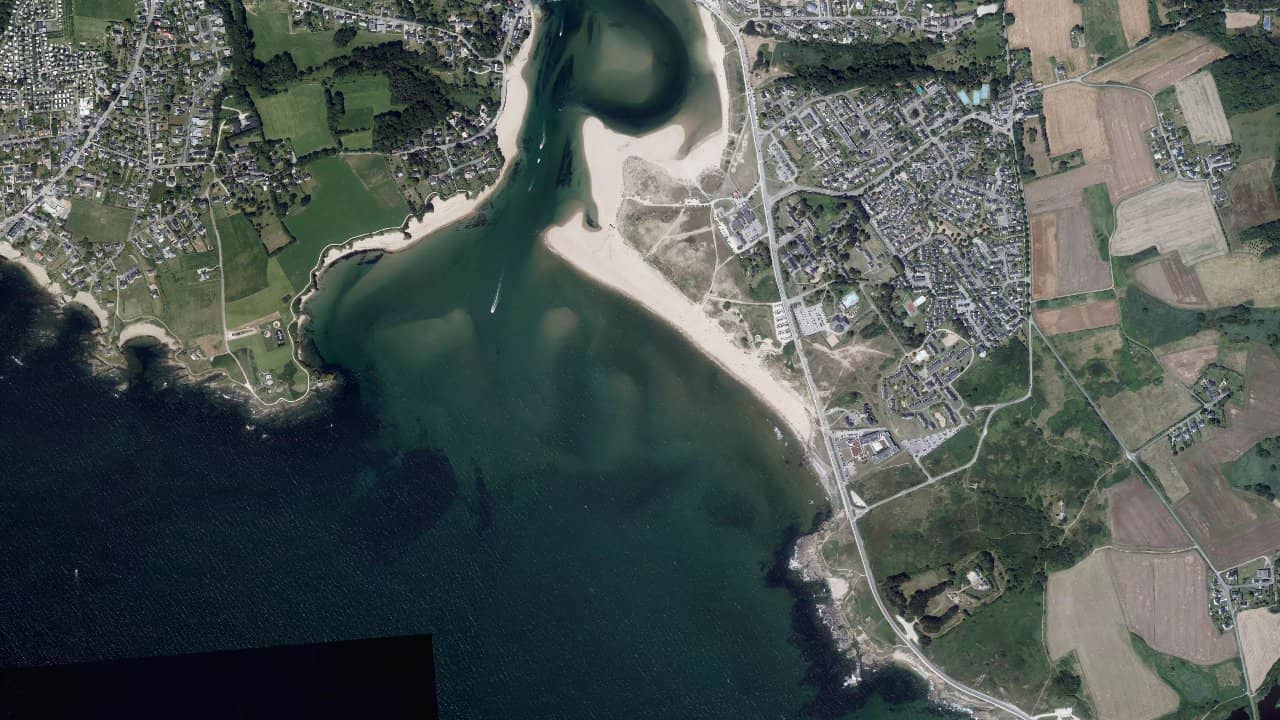
The Falaise beach in Guidel is located at the mouth of the Laïta, in southern Brittany, a few kilometers from Lorient. It is a spot renowned for accommodating all levels, from beginners to advanced riders, thanks to its long, consistent waves and preserved natural setting.
With its 800 meters of beach and marked sandbanks, Falaise offers a true playground for kitesurfing and surfing. The spot benefits from a good exposure to swells and easy access to navigation areas, making it one of the most popular spots on the southern Breton coast.
The wind data shown here comes from ERA5 (via Open-Meteo) over 4 years, reprocessed to reflect realistic conditions.
👉 Average wind has been calibrated to avoid the usual underestimation of models.
👉 Gusts have been corrected by a median ratio to avoid unrealistic extreme values.
👉 Each day is summarized by the median wind (P50) observed during useful hours (8am–8pm), then classified into wind ranges.
👉 The weighted mode mixes average wind and gusts to best reflect felt wind.
The Falaise beach primarily works with southwest, south, and southeast winds. With a thermal west wind in summer, the wind will be side-shore at Falaise, offering more stable conditions than the neighboring Fort-Bloqué. The spot has more space at high tide, allowing for better circulation and a clearer takeoff area.
Navigation is possible at all tides, although the spot is particularly surfable from low tide to mid-tide for surfing. The launching area is well-defined and accessible. In the summer (from July 1 to August 31), kitesurfing is regulated in the municipality, with swimming areas marked by yellow buoys where kiting is strictly prohibited. The rest of the year, access is free.
Note that the mouth of the Laïta (the “basin”) is prohibited for kitesurfing in July and August. The beach offers a natural setting with its dunes and an unobstructed view of the island of Groix.
Ideal conditions occur with a southwest to south wind, providing an optimal side-shore angle. A moderate to strong wind force (12 to 20 knots) allows for good glide and regular waves. Westerly thermals in the summer also offer very interesting conditions, particularly in the late afternoon.
The Falaise beach offers varied conditions depending on the tides and swell conditions. The water surface features regular and predictable waves, ideal for initiation and training. The marked sandbanks create multiple wave peaks, allowing everyone to find their area. The sandy bottom contributes to relatively safe and predictable conditions.
The main current to watch for is located at the mouth of the Laïta river. This current can be strong and requires special attention during launching and landing. Outside of this area, the current is generally moderate. Tides play an important role in the dynamics of the spot, with a gradual depth that varies according to the coefficient.
The recommended kite sizes depend on wind conditions and the rider's weight. For moderate winds (12-16 knots), a kite of 12 to 14 m² is appropriate. For stronger winds (16-20 knots), a kite of 9 to 12 m² will be more suitable. Beginner riders will benefit from a slightly larger kite to facilitate takeoff and stability.
The dominant wind regime at Falaise comes from the southwest, south, and southeast. During the summer, westerly thermals are frequent and provide consistent conditions. The wind is generally more stable and side-shore at Falaise than at other spots in Guidel, making it an excellent choice when onshore conditions prevail elsewhere.
Guidel enjoys a typical oceanic climate of southern Brittany. Temperatures are moderate year-round, with mild winters and temperate summers. The region experiences good exposure to Atlantic disturbances that regularly generate swell and wind.
The depth at Falaise beach is gradual with a sandy bottom. You can stand up to about 50 meters from the shore, providing a large safe navigation area. The depth varies with the tides, with deeper areas at high tide and more accessible sandbanks at low tide.
The water temperature in Guidel varies with the seasons. In winter (December to February), the water is cold, around 8-10°C, requiring a thick wetsuit. In spring (March to May), it gradually rises to 10-14°C. In summer (June to August), the water reaches 15-17°C, allowing for more comfortable practice. In autumn (September to November), the temperature drops from 17°C to 10°C.