
France
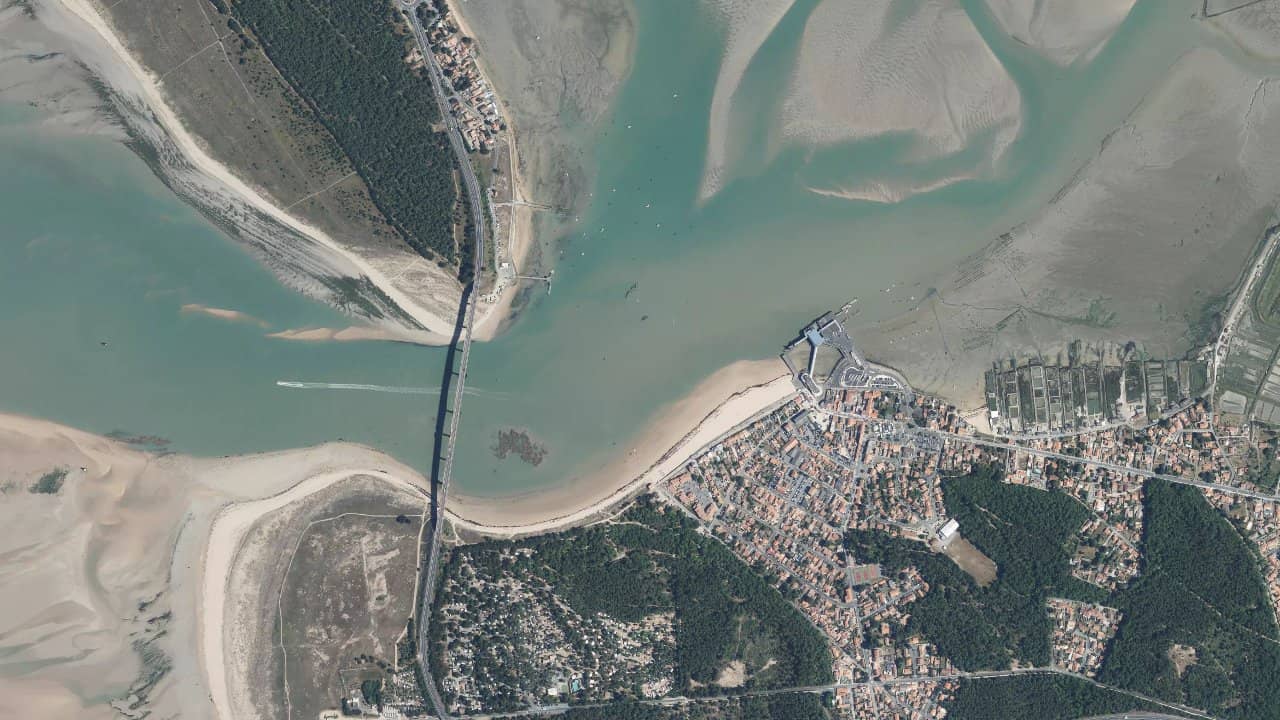
The Grande Côte beach in Fromentine, located at the foot of the Noirmoutier bridge in Vendée, is considered the best spot in the region. With its hundreds of meters of curved foreshore and exceptionally wide dune, this beach offers an ideal setting for kitesurfing. It is a very accessible spot, with easy parking and a welcoming atmosphere.
Fromentine is primarily the ultimate learning spot in Vendée. The water is shallow, the water surface is naturally flat at low tide, and the conditions are generally progressive and safe for beginners. Experienced riders also appreciate this spot for its versatility and varied possibilities depending on the conditions.

The wind data shown here comes from ERA5 (via Open-Meteo) over 4 years, reprocessed to reflect realistic conditions.
👉 Average wind has been calibrated to avoid the usual underestimation of models.
👉 Gusts have been corrected by a median ratio to avoid unrealistic extreme values.
👉 Each day is summarized by the median wind (P50) observed during useful hours (8am–8pm), then classified into wind ranges.
👉 The weighted mode mixes average wind and gusts to best reflect felt wind.
The spot primarily works with Northwest, West, Southwest, and South winds. These directions offer a very favorable side-shore to side-on wind regime. The tide plays a crucial role in Fromentine: at low tide, the water surface becomes perfectly flat with numerous sandbanks forming natural pools ideal for learning. At high tide, when the swell becomes too significant, it is possible to shelter to the east of Noirmoutier Island to benefit from its protection and navigate on a completely flat water surface.
A launch area is reserved for kitesurfers to the right of the beach access heading towards the bridge. It is strongly discouraged to navigate in the channel out of the Fromentine port, located to the right of the water surface towards the bridge, as this channel is frequented by ferries heading to Île d'Yeu. Beginners should prioritize low tide, ideally 3 hours before to 3 hours after low tide, to benefit from the best conditions.
Waves can be found on the left side of the water surface during West and Southwest swells, offering an option for riders looking for a bit more relief. The current can be strong during high coefficients: at high tide, it pushes towards the bridge (north), while at low tide, it pushes towards Notre-Dame de Monts (south).
The ideal conditions in Fromentine are met with a Northwest to West wind blowing between 12 and 18 knots, associated with a low tide or rising tide. These conditions offer a flat water surface, stable and side-shore wind, and manageable currents. Late afternoon sessions are generally more interesting than in the morning.
At low tide, the water surface is perfectly flat with numerous sandbanks forming natural pools. This is the ideal condition for learning and flat sessions. At high and low tide, the water surface generally remains flat to slightly choppy depending on wave conditions. At high tide, the water surface can become more agitated, but it is possible to find shelter to the east of Noirmoutier Island for flat conditions.
The current in Fromentine is directly linked to the tidal cycles. At high tide, the current pushes north towards the bridge, while at low tide, it pushes south towards Notre-Dame de Monts. The current can become strong during high tidal coefficients, requiring particular vigilance. This is why beginners must absolutely avoid high tide periods with strong coefficients.
The recommended kite sizes depend on the tidal and wind conditions. With a wind of 12-15 knots, a kite of 12 to 14 m² is appropriate. With stronger wind of 15-18 knots, a kite of 10 to 12 m² is sufficient. Beginners should prefer larger kites to facilitate takeoff and control in shallow water.
The dominant wind regime in Fromentine comes from the West to Northwest, particularly in autumn and winter. These Atlantic winds bring a consistency appreciated by riders. The spot also works with Southwest and South winds, offering good seasonal versatility. Wind conditions are generally more stable in the late afternoon and early evening.
Fromentine enjoys a typical temperate oceanic climate of the Vendée Atlantic coast. Winters are mild but windy, while summers remain cool with regular sea breezes. The spot works year-round, with particularly interesting conditions in spring and autumn when low-pressure systems bring consistent wind.
The depth in Fromentine is gradual with a sandy bottom. At low tide, one can stand in a large part of the water surface, making the spot particularly safe for learning. The depth gradually increases as you move away from the shore, reaching 2 to 3 meters at low tide about 100-150 meters from the shore. At high tide, the depth can reach 4 to 5 meters in navigable areas.
The water in Fromentine is cold in winter, with temperatures around 8-10°C from December to February, requiring a thick wetsuit (5/4 mm or more). In spring, the temperature gradually rises to 12-14°C in April-May. In summer, the water reaches 16-18°C in July-August, allowing for a thinner wetsuit or a shorty. In autumn, the temperature gradually drops from 16°C in September to 10°C in November.