
Fréjus
Plage Caouanne
France · Provence-Alpes-Côte d'Azur
Fréjus
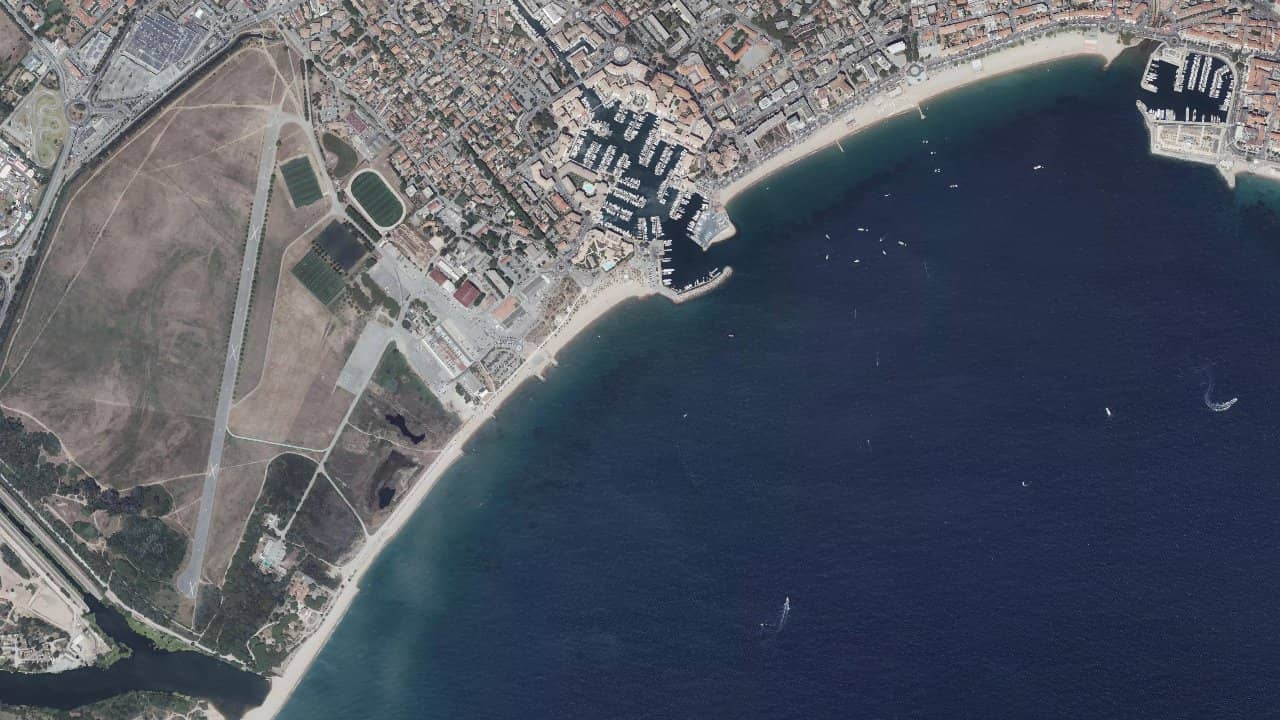
The Caouanne beach in Fréjus, Provence-Alpes-Côte d'Azur, is located near the mouth of the Argens, at the end of the Base Nature François Léotard. It is a popular spot for kitesurfers due to its thermal wind in summer and easy access from the parking lot. Exposed to the Mediterranean trade winds, it offers a friendly atmosphere between sea and sky.
Close to Saint-Aygulf, this beach is part of the areas dedicated to kiting in high season, with clear markings for safety. Locals appreciate the balance between stable navigation and proximity to amenities. Usable all year round, it attracts riders of all levels.
The natural setting, protected by a dike, makes sessions enjoyable even with small swells. It is an authentic place to progress or improve in twintip or foil.

 Open Windguru forecast
Climate stats — monthly averages
Historical averages by month — not a live forecast.
Location
Detailed information
The spot at Caouanne beach works ideally with winds from Northeast to Southwest, which are side-shore or side-on, offering perfect stability for navigation. With the summer thermal from the South, it is a gentle side-off pushing out to sea without risk, with speeds up to 20 knots. The East wind is onshore, so you need to press well on the board to move away from the shore and avoid the shore-break.
The navigation area is marked in summer by a channel of yellow buoys leading to 300 meters from the shore, bordered by prohibited buffer zones for swimming and navigation. The launch area is via this channel, and the take-off zone is dedicated to the north, on the beach of Esclamandes monitored by a beach marshal. In winter, free parking is just steps away, with direct access without marking.
The water state varies little with the tides in the Mediterranean, remaining flat to chop protected by the dike at the mouth. With Mistral (Northwest), it is dangerous offshore, completely avoid it. The best sessions are in thermal or East, with space for freestyle or light waves.
Kitesurfers reviews
Sources :zoomkite.com · frejus.fr · frejus-kitesurf.com · spots.universkite.fr