France
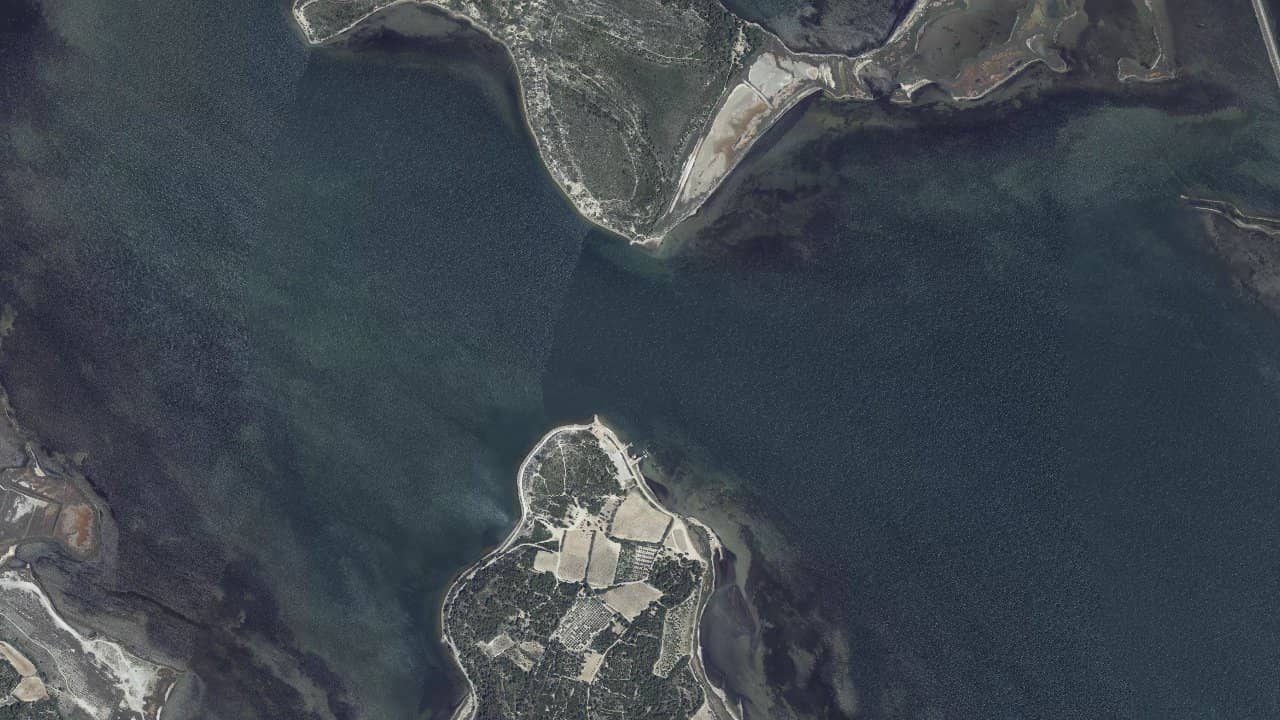
The Sigean lagoon, located in the heart of the Narbonnaise Regional Natural Park in Occitanie, is a spot for kitesurfing and windsurfing particularly appreciated for its exceptional setting. The Port-Mahon nautical base offers an isolated and dedicated environment for sliding sports, away from the crowds, with a stunning view of the village of Bages and the islands of the lagoon.
This spot mainly works with the tramontane, the local wind that regularly blows over the region. The pond offers ideal conditions for learning thanks to its shallow and calm waters, while allowing experienced riders to progress in a secure and well-supervised environment.
The wind data shown here comes from ERA5 (via Open-Meteo) over 4 years, reprocessed to reflect realistic conditions.
👉 Average wind has been calibrated to avoid the usual underestimation of models.
👉 Gusts have been corrected by a median ratio to avoid unrealistic extreme values.
👉 Each day is summarized by the median wind (P50) observed during useful hours (8am–8pm), then classified into wind ranges.
👉 The weighted mode mixes average wind and gusts to best reflect felt wind.
The Sigean lagoon mainly works with the tramontane, a northwesterly wind that regularly blows over the region. This wind creates side-shore to side-on conditions depending on the navigation areas, providing good stability for riders. The water surface is flat and protected, making it an ideal environment to start or progress without fear of big waves.
Launching is done directly from the Port-Mahon nautical base, with easy and secure access. The shallow waters allow for standing for a long time, which is particularly appreciated by beginners. The navigation area is well-defined and monitored by the kitesurfing school instructors. The spot is reserved for the school, ensuring organized and safe practice, without chaotic traffic from other riders.
In case of too strong a tramontane, the nearby Mateille pond can serve as a backup spot due to its shallow bottom suitable for extreme conditions.
Ideal conditions occur with a well-established tramontane blowing between 15 and 30 knots. These speeds offer a good balance between power and control, allowing for steady progression for beginners and exciting sensations for experienced riders. The northwesterly wind creates a favorable side-shore orientation for most navigation areas.
The water surface of the lagoon is flat and calm, particularly appreciated for learning and improvement. The absence of significant waves allows focusing on technique without having to manage rough sea conditions. Choppy water may be present in strong winds, but it generally remains moderate.
The current in the Sigean lagoon is generally weak to moderate, making it easy for all levels to practice. However, one must remain attentive to channel areas where the current can be stronger. Tides in this lagoon are not pronounced, which keeps conditions relatively stable throughout the day.
The recommended kite sizes vary according to wind conditions and the rider's level. For a moderate tramontane (15-20 knots), a kite of 12 to 14 m² is suitable for beginners. With stronger winds (20-30 knots), kites of 9 to 11 m² offer better control. Experienced riders can use smaller kites (7-9 m²) in strong winds.
The dominant wind regime is the tramontane, a northwesterly wind that regularly and forcefully blows over the Sigean lagoon. This local wind is predictable and offers regular and reliable conditions for kitesurfing. The tramontane can blow with speeds exceeding 30 knots, making it a renowned spot for riders seeking dynamic conditions.
The Sigean region enjoys a Mediterranean climate with mild winters and hot summers. Temperatures remain pleasant year-round, allowing for kitesurfing practically every month. Rainfall is moderate and mainly concentrated in autumn and winter.
The depth in the Sigean lagoon is gradual and shallow, which is a major asset for learning. One can stand easily at a comfortable distance from the shore, generally up to 2-3 meters deep in the launch areas. The bottom consists of mud and sand, providing good stability. This shallow depth allows beginners to progress confidently without fear of deep water.
The water temperature varies with the seasons. In winter (December to February), it is around 8-10°C, requiring a thick wetsuit (5/4 mm). In spring and autumn (March-May and September-November), it ranges between 12-18°C, allowing for a 3/2 mm wetsuit. In summer (June to August), the water reaches 20-24°C, making a thin wetsuit or shorty possible.