Royaume-Uni
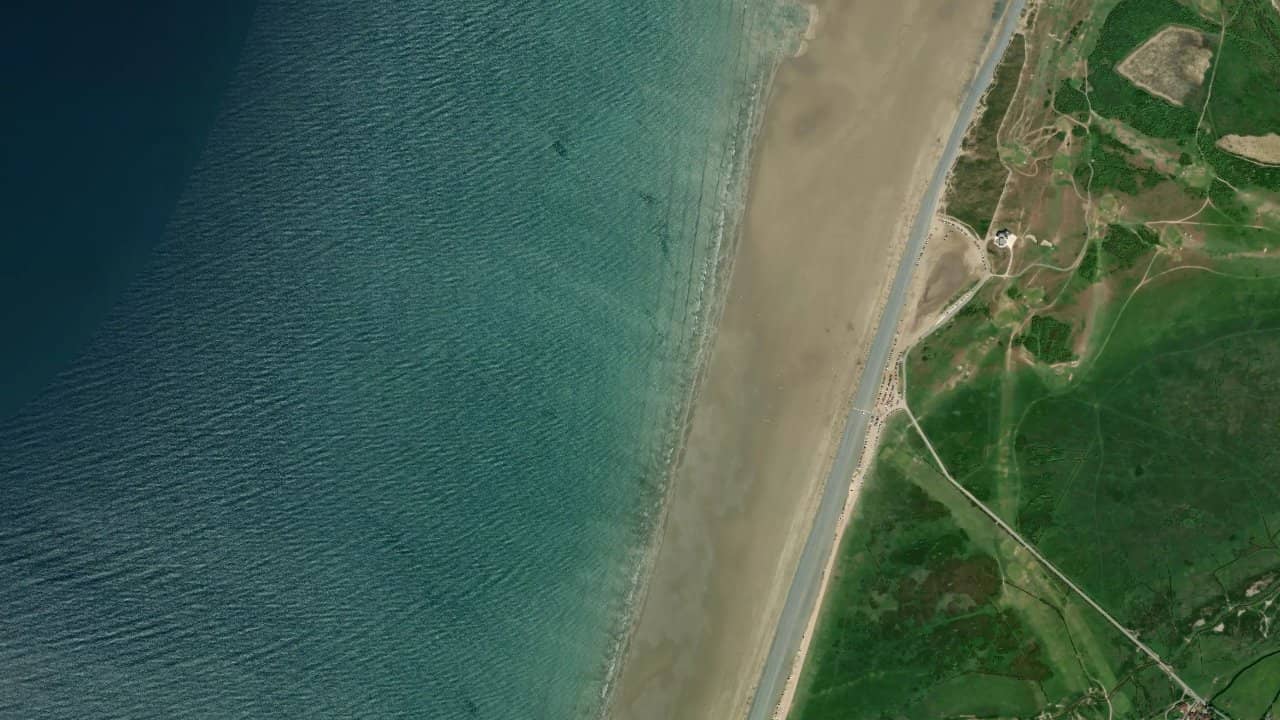
Northam Beach, in Westward Ho! in Devon, is a seaside spot appreciated for its large sandy beach and easy access from the resort. It is a place frequented by local riders when conditions align, with an open and fairly exposed setting.
The spot offers a fairly straightforward atmosphere, without complicated configurations, and the beach stretches widely facing the sea. For kitesurfing, Northam Beach is particularly attractive when the wind is well established and one is looking for accessible water in northern Devon.
Les données de vent affichées ici proviennent d’ERA5 (via Open-Meteo) sur 4 ans, retraitées pour refléter des conditions réalistes.
👉 Le vent moyen a été calibré pour éviter la sous-estimation habituelle des modèles.
👉 Les rafales ont été corrigées par un ratio médian afin d’éviter des valeurs extrêmes irréalistes.
👉 Chaque jour est résumé par le vent médian (P50) observé pendant les heures utiles (8h–20h), puis classé dans des plages de vent.
👉 Le mode pondéré mélange vent moyen et rafales pour refléter au mieux le vent ressenti.
The wind is generally side-shore to side-on depending on the exact orientation of the flow, with better quality when it comes from the W to NW sector, which corresponds to the most exploitable directions on this coastline. The spot operates on an exposed beach, with easy launching from the sand or from the developed access points by the beach.
The water conditions depend heavily on the tide and swell. At low tide, there is more space and a wider navigation area, but the bottom can become more technical near banks and water transit zones. At high tide, the usable beach area shrinks, launching becomes tighter, and the water can take on more chop if the wind strengthens at the same time as the sea.
The launch area must remain clear, as the beach is open and the space can be shared with walkers, bathers, and other users. The spot is mainly ridden in the freest part of the beach, staying away from very busy areas and sectors where return currents become marked. Experienced riders find an interesting playground when the wind is clean, but one must keep an eye on the tide and the rapid evolution of shore waves.
The best conditions come with a wind from W to NW, sufficiently steady to hold the kite without too many gusts. A well-established and clean flow provides the most interesting sessions, especially when it remains oriented side-shore or slightly side-on.
The spot becomes more enjoyable when the sea is not too formed and the tide leaves enough space to take off and return without constraint. Stable wind days, with moderate swell, are the most suitable for freeride and long navigations.
The state of the water is generally mixed, with a sandy base that can remain quite clean when the swell is moderate, but quickly turns into chop as the wind picks up. The spot is not known for perfect flat conditions all the time, but it can offer smoother areas at certain tide times.
When the sea comes in more, the water takes on a livelier aspect, with small shore waves and choppy trains that require commitment in the stance. In the best windows, one can find fairly rolling sections for clean navigation, but reading the spot remains important.
Currents can be strong in this area, especially near drainage zones and in the presence of swell or active tide. One must remain attentive to lateral drifts, as the open beach configuration favors rapid water movements in some places.
The tide strongly influences the reading of the spot. At low tide, water movements can strengthen and create more difficult areas to return, while at high tide the water often becomes more readable, but with less usable space depending on the level. Therefore, one must choose their session considering the coefficient and timing of the tide.
On this exposed spot, the most useful sizes often range between 7 m² and 11 m², with a very common base around 8 m², 9 m², and 10 m². In sustained wind, a 7 m² may be necessary, while in more moderate wind a 11 m² remains relevant.
The exact choice will depend on the rider's size, the tide, and the actual strength of the flow at the water's edge. With the indicated wind score, a versatile quiver of 8/9/10 m² covers a large part of the exploitable sessions.
The wind regime is dominated by Atlantic flows, with frequent passages from W to NW that offer the best sessions. On this type of open beach, the wind can become well established quickly after the passage of a disturbance, but it can also be gusty when the gradient is strong or when squalls circulate along the coast.
The cleanest days are often those when the flow remains steady for several hours, with a direction well aligned with the coastline. In this configuration, Northam Beach becomes significantly more exploitable for freeride and transitions, especially when the sea is not too loaded with swell.
The climate of northern Devon is oceanic, with conditions often changing throughout the day. Winters are cool, the interseasons are often the most interesting for wind, and summer generally remains milder but less consistent for kitesurfing.
The months of January and November stand out as the most favorable here, corresponding to a period more exposed to Atlantic depressions. In practice, this means more useful wind, but also more variability, a livelier sea, and sessions that require more reading of the conditions.
The depth is generally gradual on the beach, with a sandy bottom. One can often stand quite far out depending on the tide, which facilitates launching and returning to shore, but the exact distance varies greatly with the water level.
The bottom remains mostly easy to read, but some areas can become more technical as one approaches current sectors and water passages. Therefore, one must remain attentive at low tide when some banks and channels become more pronounced.
The water is cold in winter, often in a range that requires a thick wetsuit, gloves, and sometimes booties. In spring, the temperature slowly rises but remains cool compared to more southern spots.
In summer, the water becomes more bearable, even if it generally remains cool for a long session. Autumn quickly drops in temperature, making thermal gear important from the first serious depressions.