Spain
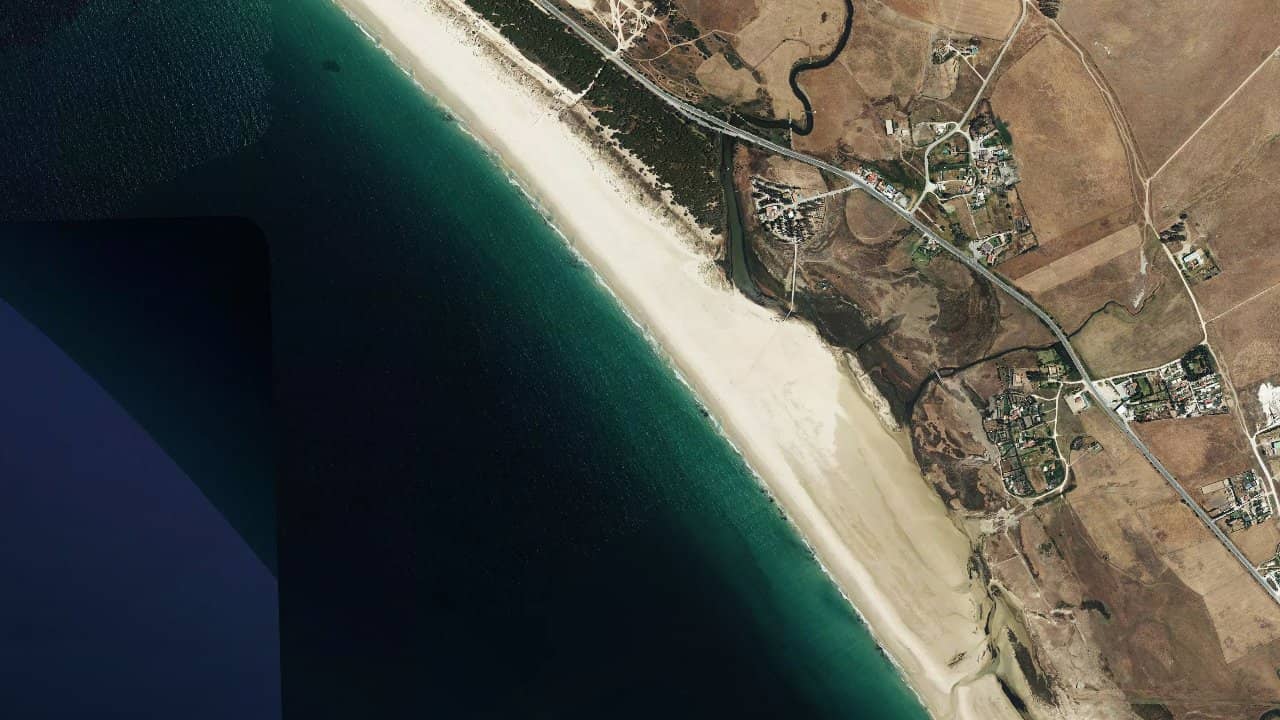
The La Charca lagoon is a unique spot in Tarifa, located on the Andalusian coast facing the Strait of Gibraltar. This lagoon naturally forms during the equinoxes of March and September, when the sea floods the beach and creates an exceptionally flat and sheltered water surface. It is a special place, favored by riders seeking smooth and safe conditions.
Located between Rio Jara and Los Lances Norte, La Charca offers a remarkable natural setting with its shallow waters and tranquil atmosphere. The spot benefits from the proximity of bars and restaurants in the area, making it a pleasant place to spend the day between sessions.
The wind data shown here comes from ERA5 (via Open-Meteo) over 4 years, reprocessed to reflect realistic conditions.
👉 Average wind has been calibrated to avoid the usual underestimation of models.
👉 Gusts have been corrected by a median ratio to avoid unrealistic extreme values.
👉 Each day is summarized by the median wind (P50) observed during useful hours (8am–8pm), then classified into wind ranges.
👉 The weighted mode mixes average wind and gusts to best reflect felt wind.
La Charca primarily operates during the equinoxes of March and September, when the sea floods the beach and creates a shallow lagoon. The wind is generally side-on to side-shore, providing stable and predictable conditions. The water surface is exceptionally flat, making it an ideal terrain for learning and technical progression.
Entry is directly from the fine sandy beach. The navigation area is well defined by the lagoon itself, creating reassuring natural boundaries. The bottom is sandy and gradual, allowing for a smooth entry into the water. Note: the spot is prohibited for navigation outside of equinox periods (March and September), as the lagoon only exists temporarily.
The ideal conditions at La Charca occur during the equinoxes of March and September, when the Levante or Poniente blows with a steady force between 12 and 20 knots. These periods offer stable and predictable wind, perfect for progressing safely on the flat water surface.
The water surface of La Charca is remarkably flat and smooth, especially during the equinoxes when the lagoon is formed. This absence of waves makes it an ideal spot for riders looking for smooth conditions. The water is generally clear and calm, creating a safe and predictable environment for kitesurfing.
The currents at La Charca are generally weak due to the protected nature of the lagoon. However, during the formation of the lagoon at the equinoxes, one must remain attentive to water movements related to exchanges with the open sea. The tidal range in the area is moderate, with level variations that influence the depth of the lagoon.
For La Charca, the recommended kite sizes vary according to wind conditions. With a moderate Levante (12-18 knots), a kite of 12 to 14 m² is appropriate. In stronger conditions (18-25 knots), a kite of 9 to 11 m² offers better control. Beginner riders will benefit from a slightly larger kite to facilitate takeoff and stability.
The wind regime at La Charca is dominated by the Levante, a powerful and steady east-northeast wind that blows on average 300 days a year in Tarifa. In summer, a thermal wind from Poniente (west-northwest) often complements the Levante, providing reliable wind conditions. The wind strength generally varies between 10 and 25 knots, with possible gusts during extreme conditions.
Tarifa enjoys a Mediterranean climate with mild winters and hot summers. Temperatures range from 10-15°C in winter to 25-30°C in summer. The region benefits from significant sunshine throughout the year, with rainfall concentrated in autumn and winter.
The depth at La Charca is gradual and shallow, which is one of its main characteristics. The bottom is sandy and even, allowing riders to stand in most of the lagoon. The maximum depth usually does not exceed 2 to 3 meters, creating a very safe environment for learning and progression.
The water temperature in Tarifa varies significantly with the seasons. In winter (December to February), it ranges from 12 to 14°C, requiring a thick wetsuit. In spring (March to May), it rises to 15-18°C. In summer (June to September), it reaches 20-23°C, allowing for riding with a thin wetsuit or none at all. In autumn (October to November), it gradually drops back to 16-19°C.