Royaume-Uni
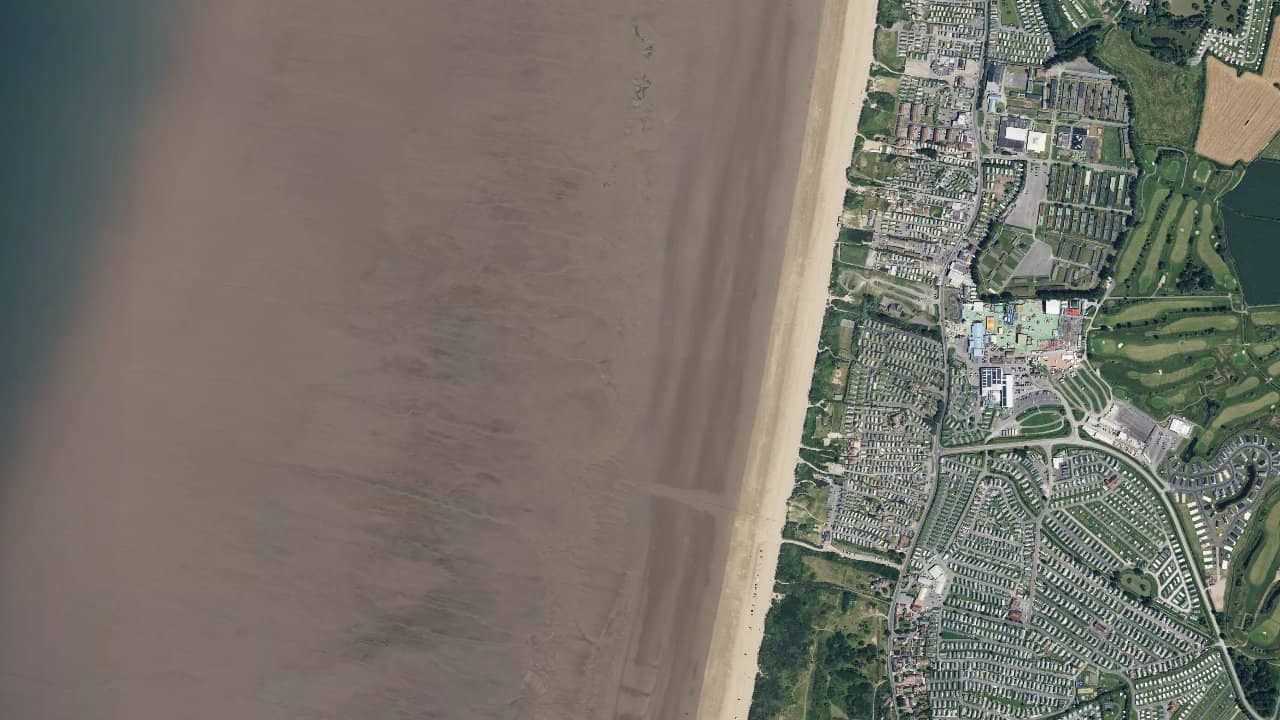
Brean Sands, in Brean, Somerset, is a popular spot for its long sandy beach and easy access from the waterfront. It is a place known by local riders for its good sessions in west to northwest winds.
The spot remains practical for kitesurfing when the beach is clear and the tide leaves enough space for launching. The atmosphere is more pleasant outside of peak times, with a very open setting and few obstacles.
Les données de vent affichées ici proviennent d’ERA5 (via Open-Meteo) sur 4 ans, retraitées pour refléter des conditions réalistes.
👉 Le vent moyen a été calibré pour éviter la sous-estimation habituelle des modèles.
👉 Les rafales ont été corrigées par un ratio médian afin d’éviter des valeurs extrêmes irréalistes.
👉 Chaque jour est résumé par le vent médian (P50) observé pendant les heures utiles (8h–20h), puis classé dans des plages de vent.
👉 Le mode pondéré mélange vent moyen et rafales pour refléter au mieux le vent ressenti.
The wind most often works in side-shore to side-on at Brean Sands when it comes from W to NW, which provides cleaner and more reassuring navigation than wind that is too onshore or too offshore. The beach is wide, but the usable space varies greatly with the tide, so it is always necessary to check the available sand strip before rigging and launching. The spot is generally ridden from the beach, with a simple launch when the area is clear and the wind is steady.
The water surface evolves significantly with the water level. At low tide, there is generally more sandy area and smoother water near the shore, but it is important to monitor depth variations and areas where the bottom drops off more quickly. At high tide, the usable beach shrinks and the water surface becomes more constrained, with more chop and less margin for landing or relaunching the kite. For a comfortable session, aim for a well-cleared navigation area, stay away from areas frequented by the public, and maintain a wide takeoff space.
The spot also requires staying attentive to the returning tide and the available beach width. When the sea rises, the usable area can decrease quickly, complicating safety maneuvers and the choice of starting point. It is a simpler spot when you know how to read the tide and anticipate the evolution of the beach edge.
The best sessions occur with wind from W to NW, clean, stable, and fairly consistent to keep navigation simple. A side-shore or slightly side-on flow is the most interesting to maintain control and limit risks at launch.
The spot gives its best when the beach is wide, the tide leaves space, and the wind remains constant without strong gusts. Winter days with well-established wind are often the most rewarding, especially when the water surface remains readable and the traffic is reasonable.
The water surface is often flat to slightly choppy depending on the sea state and tide level. At low tide, the water can become smoother near the shore, while at high tide, chop forms more easily due to the wind and fetch.
Brean Sands is not a wave spot in the classic sense, but it can take on some relief when the wind picks up or when the sea is more loaded. Conditions generally remain more comfortable for freeride than for pure surfing, with a surface that can alternate between flat sections and more irregular passages.
Currents depend heavily on the tide, with a flood current and ebb current that can be sensitive near channels and areas where the water narrows. Therefore, it is important to closely monitor the tide before heading out, especially if kitesurfing far from the shore.
The water movement can also quickly change the safety zones on the beach. When the tide rises, returning to the shore can be faster than expected, and some areas become less comfortable for landing the kite or retrieving equipment. The spot is better suited for attentive navigation than for an improvised session without tide reading.
The most useful sizes often range from 7 to 11 m², with a real need to adjust according to the rider's weight and the actual strength of the flow. In moderate wind, 9 or 10 m² are often the most versatile sizes.
When the wind picks up significantly in winter, a 7 or 8 m² becomes more relevant, especially to maintain control in gusts. Lighter riders may sometimes kitesurf with 11 m², but it is always necessary to consider the current, tide, and the spot's exposure to the wind.
The most interesting wind regime comes with flows from W to NW, often under the influence of Atlantic disturbances. At Brean Sands, these directions often provide cleaner and more usable wind for kitesurfing.
The wind can be well established, but it is important to monitor variations related to the passage of fronts, as gusts can become pronounced. The spot works better with regular and stable wind, rather than with a very irregular or too unstable flow in direction. With an average wind score and more frequent peaks in winter, it is a spot that can be very good, but it requires choosing the right windows.
The local climate is oceanic, with moderate temperatures year-round and a feeling that is often humid and changeable. Winters are cool and windy, while summers generally remain mild, without excessive heat.
The best months for wind are often January and February, when Atlantic depressions more regularly bring usable wind. Spring and autumn can also offer nice windows, but with more irregular conditions. In summer, the spot remains navigable, but sessions depend more on disturbed entries and local thermals.
The depth is generally gradual, with a bottom mainly sandy. You can often stand for a good distance, which makes launching easier, but you must remain attentive to local variations in the bottom and the depth that changes with the tide.
The area close to the shore can remain quite accessible at low tide, while at high tide, reading the bottom becomes more important. The spot is therefore more comfortable for those who can anticipate the water level changes and choose their navigation area carefully.
The water remains cold for a large part of the year, especially from autumn to spring. In winter, you should expect to wear a thick wetsuit, often with a hood, gloves, and booties.
In spring and summer, the temperature becomes more bearable, but it rarely gets warm in the Mediterranean sense. Even in summer, a wetsuit remains useful to extend sessions without suffering from the cold related to the wind and Atlantic water.