Pays-Bas
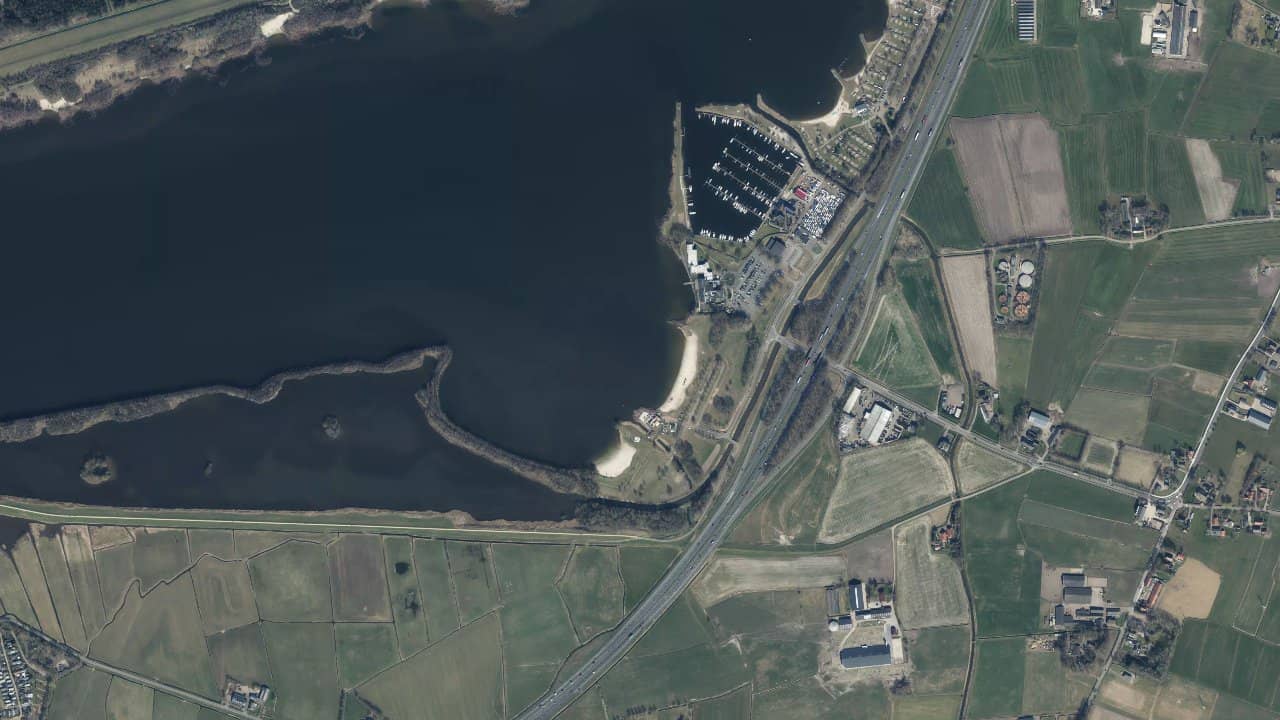
Strand Nulde Zuid, in Putten and Gelderland, is a popular lake spot known for its easy access and user-friendly water conditions. It is part of the Nuldernauw area, a highly frequented environment by local riders for freeride and learning sessions.
The site is often described as an inland lake spot, with a navigation area suitable for clean sessions when the wind is well-oriented. The atmosphere is calmer than on large sea spots, with convenient water entry from the recreational beach.
Les données de vent affichées ici proviennent d’ERA5 (via Open-Meteo) sur 4 ans, retraitées pour refléter des conditions réalistes.
👉 Le vent moyen a été calibré pour éviter la sous-estimation habituelle des modèles.
👉 Les rafales ont été corrigées par un ratio médian afin d’éviter des valeurs extrêmes irréalistes.
👉 Chaque jour est résumé par le vent médian (P50) observé pendant les heures utiles (8h–20h), puis classé dans des plages de vent.
👉 Le mode pondéré mélange vent moyen et rafales pour refléter au mieux le vent ressenti.
The spot mainly works with a wind from W to NW, with variations depending on the local configuration of the water surface. As it is an inland spot, wind orientation is important to maintain consistent navigation and avoid too irregular edges. The water surface is generally flat, which favors freeride, foil, and learning.
Water entry is from the beach area of Strand Nulde Zuid, with space to rig and launch, but one must remain attentive to coexistence with swimmers and other users during the season. Navigation takes place on the Nuldernauw, with a fairly wide riding area to chain edges, but without the expanse of a maritime spot. The spot is interesting when the wind is stable around 21 knots, as this allows for regular edges without having a too choppy water surface.
The bottom is shallow in places, which reassures beginners, but one must watch for lower areas near the shore and boating traffic sectors. The spot remains more comfortable for freeride navigation than for engaged navigation, especially when attendance increases on nice days.

The best sessions occur with a well-established wind from W to NW, around 18 to 25 knots. In this range, the spot offers consistent navigation and a very pleasant water surface for freeride.
The spot is also interesting when the direction remains stable for several hours, as this allows full enjoyment of the width of the water surface without having to deal with too changing winds.
The water surface is generally flat with little chop, especially when the wind remains stable. It is a good terrain for freeride, foil, and initial waterstarts, as the supports remain predictable.
When the wind picks up or becomes more irregular, a small short chop may appear, but it stays far from a true formed water surface. Conditions remain closer to a lake spot than a wave spot.
There is no marked sea current like on a sea spot, but water circulation can vary locally depending on boating traffic and the configuration of the water body. Tides have no notable direct effect on this inland spot.
Vigilance mainly concerns depth variations near the shore and areas where other vessels pass. The spot remains generally easy to read, making it accessible for practicing edges and maneuvers.
With an average wind close to 21 knots, the most relevant sizes are often between 7 and 10 m², depending on the rider's build and level. Lighter riders may sometimes kite with 6 to 8 m², while heavier riders will aim for 9 to 11 m².
In foil, one can go lower in surface area, while in twintip freeride, a slightly smaller kite often remains more comfortable if the wind picks up.
The most interesting wind for this spot generally comes from the W and NW, with regular windows linked to the typical disturbed passages of the Netherlands. The spot can also work with other orientations, but west sector winds remain the most sought after for clean navigation.
In this inland area, the wind can be more irregular than at the seaside, especially during directional changes or gusts associated with fronts. With an average around 21 knots, it is already a well-utilized wind range for intermediate-sized kites.
The climate in Gelderland is temperate oceanic, with mild summers and cool winters. The best times to kite are often in spring and autumn, when the winds are more consistent and the spot is less crowded.
In summer, air temperatures are generally pleasant for kiting in a shorty or light wetsuit. In winter, both water and air become significantly colder, requiring a thick wetsuit and thermal accessories. The site remains usable for a large part of the year if the wind is favorable.
Depth is generally shallow to moderate with a lake-like bottom, which is reassuring for water starts and initial upwind rides. The bottom is mostly sandy in beach areas, with depth variations depending on distance from the shore.
You can often stand in a good part of the shoreline, but caution is needed in shallower areas, and one should not assume uniform depth across the entire spot.
The water is most pleasant in July and August, when temperatures become more comfortable for long sessions. In spring and autumn, the water remains cool and requires a thicker wetsuit.
In winter, water temperature drops significantly, and sessions are generally done in a thick full wetsuit with booties, gloves, and a hood depending on individual sensitivity.