Royaume-Uni
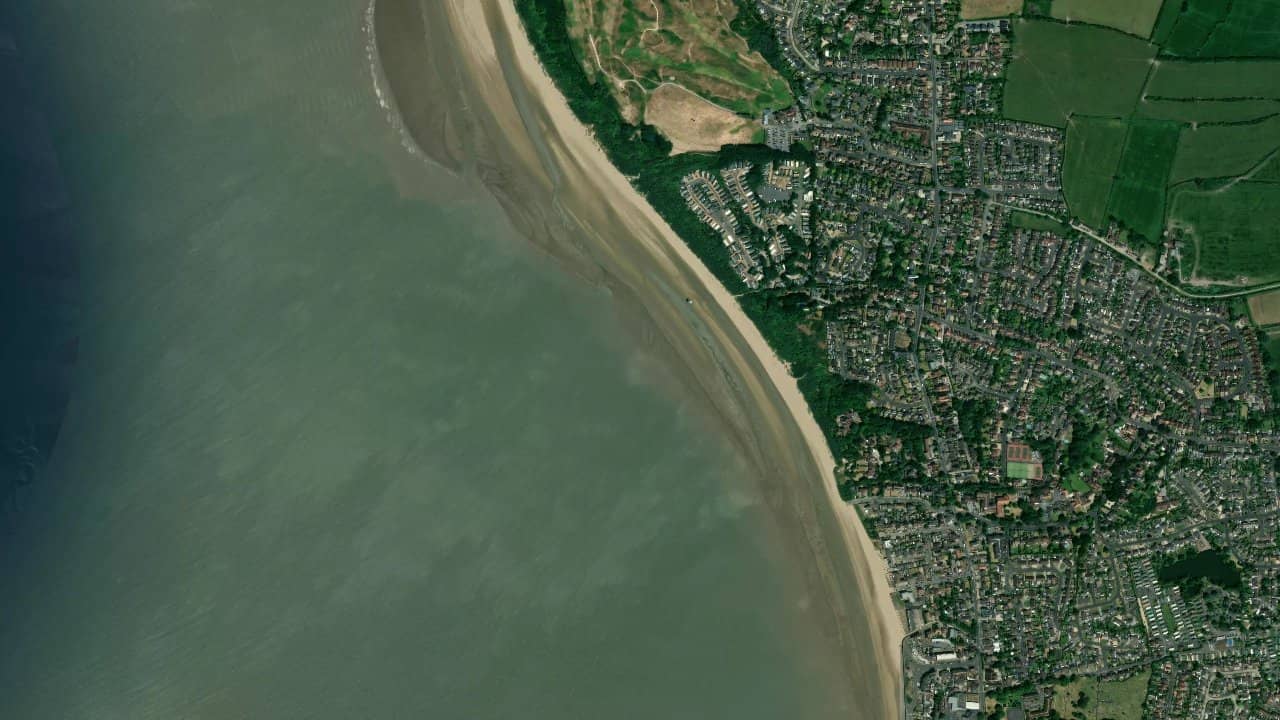
Burnham-On-Sea Low Lighthouse is a spot appreciated by local riders for its easy access and open setting on the estuary. The beach is wide at low tide and the area is very marked by the rhythm of the tides, making it a spot to read before each session.
It is a place suitable for practitioners looking for easy navigation to organize, with a rather calm atmosphere. The area is known to work mainly at low tide, with a quick launch from the beach when conditions are good.
Les données de vent affichées ici proviennent d’ERA5 (via Open-Meteo) sur 4 ans, retraitées pour refléter des conditions réalistes.
👉 Le vent moyen a été calibré pour éviter la sous-estimation habituelle des modèles.
👉 Les rafales ont été corrigées par un ratio médian afin d’éviter des valeurs extrêmes irréalistes.
👉 Chaque jour est résumé par le vent médian (P50) observé pendant les heures utiles (8h–20h), puis classé dans des plages de vent.
👉 Le mode pondéré mélange vent moyen et rafales pour refléter au mieux le vent ressenti.
The spot works best with a wind from the westerly to northwesterly sector, generally in side-shore or side-on depending on the exact orientation of the flow relative to the beach. Navigation mainly takes place on the lower beach and on the sandbanks exposed at low tide, with a launch area to be chosen away from obstacles and keeping space for tensioning the kite. At rising tide, the water surface quickly narrows and one must anticipate the return before the water covers the launch areas.
At low tide, the spot offers a large exploitable area with space to navigate and go upwind. At high tide, the site becomes much more constrained and practice can become technical, especially if the wind is irregular or if the estuary swell enters the area. The bottom is typically sandy, but the configuration of the foreshore changes rapidly with the tides and can reveal softer areas, channels, and more marked current sectors near the channels.
Riders must also take into account the low number of facilities directly on site. One must plan for self-launching, constant monitoring of the tide, and a clear exit plan. The spot remains interesting for practitioners capable of managing a tidal spot environment, with more favorable navigation windows on medium to high coefficients and a precise reading of the sandbanks.
The best conditions are found with a regular wind from W to NW, neither too weak nor too gusty. The spot is cleaner when the swell remains limited and the tide leaves a wide sailing area.
The most comfortable days are those when the wind is stable enough to allow long runs without too much pressure variation in the kite. For this spot, a well-established wind on the estuary is more interesting than a weakening or overly shifting flow.
The water surface is mainly flat to choppy, with a surface that varies according to the tide and wind exposure. At low tide, there is often a smoother and more accessible area for maneuvers, while at rising tide, chop forms more easily.
When the wind is well oriented, sailing remains pleasant with a relatively readable water surface. However, the spot can become more turbulent if the wind accelerates on the foreshore or if the sea comes in with residual swell.
Currents are strongly linked to tidal range and the shape of the estuary. The current can be marked near the channels and becomes more sensitive as the tide rises or falls quickly.
At low tide, reading the terrain is simpler, but one must remain vigilant as water streams can continue to circulate in the channels and around sandbanks. At high tide, returning to shore requires more anticipation, especially if the wind drops or if one finds themselves downwind of a current area.
The most useful sizes are often between 7 and 10 m², with a frequent base around 8 or 9 m² for an average build. In more energetic conditions, a 7 m² may be necessary, while in moderate wind a 10 or 11 m² becomes more suitable.
It is better to plan for a slightly smaller kite than on an inland spot, as Atlantic gusts can make the wind stronger than expected. The right quiver also depends a lot on the tide and the ability to navigate in a sometimes narrow area.
The most useful regime for kitesurfing is that of westerly to northwesterly winds, often linked to Atlantic disturbances. In the region, these winds can arrive with good gusts and a direction that is sometimes a bit irregular near the estuary.
The spot works well on days with established wind, but one must watch for variations in strength during cloudy passages. In the best episodes, the wind is clean enough to sail comfortably, while on more unstable days it can become more capricious near the beach.
The local climate is oceanic, with mild winters for England and moderate summers. The best sensations are often found between autumn, winter, and early spring, when Atlantic depressions more regularly bring wind.
In summer, the air is more stable and often more pleasant for sailing, but gusts are less frequent and more irregular. In winter, sessions are more exposed to cold, humidity, and sustained wind, with water temperatures remaining low for a long period.
The depth is shallow at low tide with a sandy bottom, which facilitates launching and recovery phases when the tide window is good. The spot remains very dependent on the water level, as some areas quickly become exposed while others fill up rapidly.
At high tide, the depth increases and the shore becomes more technical. Reading the bottom is important to avoid current areas, small channels, and sectors where water circulates more strongly around sandbanks.
The water is cold for a large part of the year, with a frequent need for a thick wetsuit, especially from autumn to spring. In winter, temperatures remain low and one must rely on full protection.
In summer, the water becomes more bearable, but it generally remains cool compared to more southern spots. An appropriate wetsuit remains useful even on sunny days, especially if the session lasts a long time.