
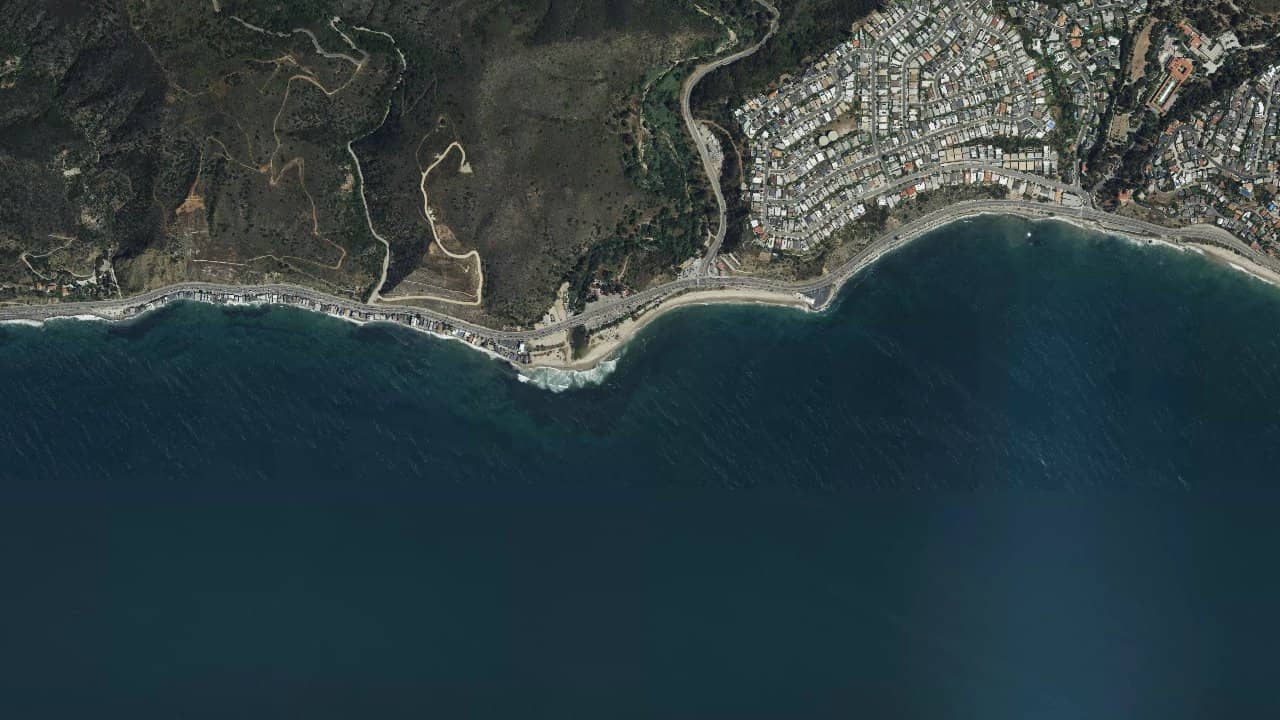
Topanga Canyon
Topanga Beach
United States · Californie
Topanga Canyon
Topanga Beach, located in Topanga Canyon west of Santa Monica along the Pacific Coast Highway, is a popular spot for intermediate riders due to its stable thermal wind. The beach offers easy access from Los Angeles and a typical California coastal vibe with its moderate waves. It's a place where locals come to enjoy regular sessions, especially in the summer.
The spot is near Topanga Point, an exposed point break that works well year-round due to its consistency. With food available on-site, it's convenient for a full day. The best months are April to September, although data also indicates January to April and November-December as acceptable.

 Open Windguru forecast
Climate stats — monthly averages
Historical averages by month — not a live forecast.
Location
Detailed information
The ideal wind comes from the W, side-on or side-shore relative to the north-south oriented beach, creating stable conditions for navigation. The local thermal wind often blows consistently, making the spot acceptable even when it's not perfect. The usual winds come from N, SW, NW, NNW, with a preference for the W which aligns perfectly with the beach.
The launch area is small, so precision is needed for takeoff and landing. The water presents chop, small and medium waves due to swells from the W or WSW, influenced by tides. Navigation is possible along the entire beach, but stay clear of rocky areas. Tides have little effect on the spot, which works at all times, with a preference for mid-tide for better wave shape.
Local peculiarity: the swell can be jumbled on the beachbreaks, but cleaner at the point. Beware of patchy winds offshore, and mixed swell that makes the water unstable. Extensive navigation zones along the coast, but launching remains limited.
Kitesurfers reviews
Sources :unplug-kitesurf.com · surfline.com · surfcaptain.com · surf-forecast.com