
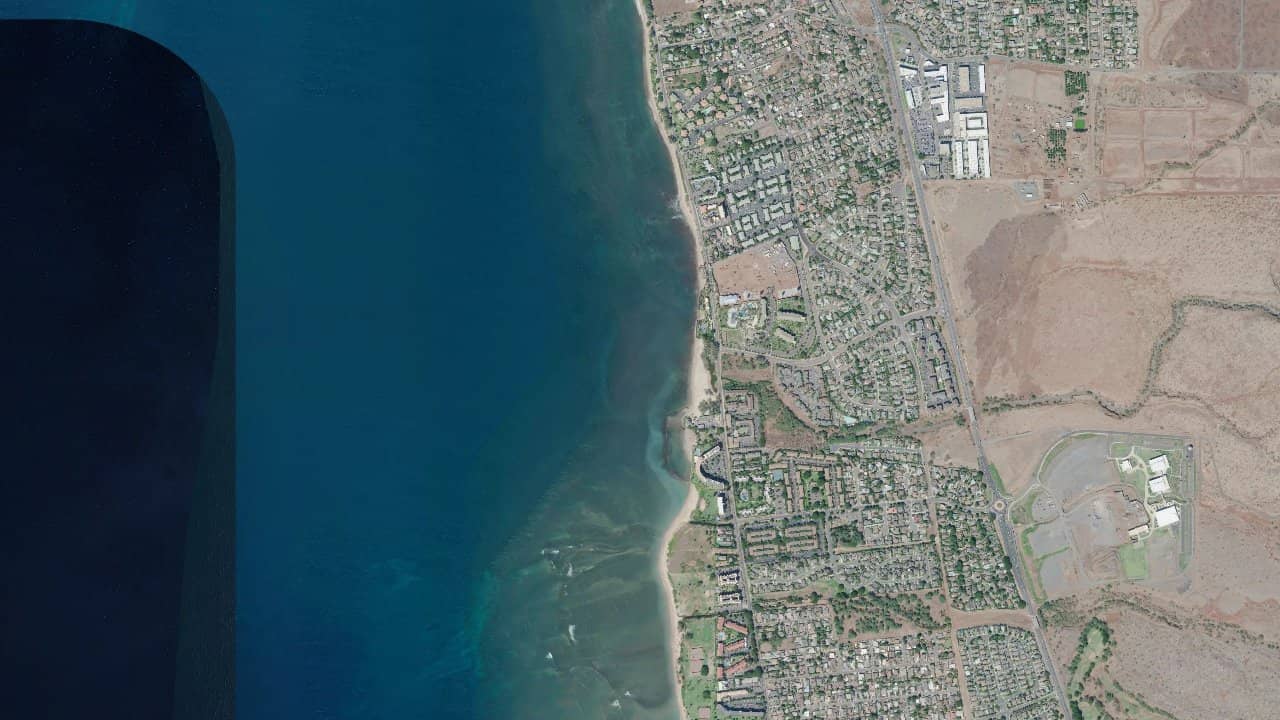
Maui - Kalepolepo Beach Park
États-Unis d'Amérique
Maui
The beach of Kalepolepo Beach Park, located in Kihei in the south of Maui, is the most popular kitesurfing spot in this area. It is a favorite among locals when the conditions to the north are not ideal, with a relaxed atmosphere despite the challenges of the location.
The spot offers direct access to the ocean from a well-equipped park, but it requires experience to navigate safely among the obstacles. Riders mainly come here as a plan B, for its reliable side-onshore wind at times.
Surrounded by typical Maui landscapes, it is a choice for freeride or freestyle sessions when the trade wind kicks in.

Les données de vent affichées ici proviennent d’ERA5 (via Open-Meteo) sur 4 ans, retraitées pour refléter des conditions réalistes.
👉 Le vent moyen a été calibré pour éviter la sous-estimation habituelle des modèles.
👉 Les rafales ont été corrigées par un ratio médian afin d’éviter des valeurs extrêmes irréalistes.
👉 Chaque jour est résumé par le vent médian (P50) observé pendant les heures utiles (8h–20h), puis classé dans des plages de vent.
👉 Le mode pondéré mélange vent moyen et rafales pour refléter au mieux le vent ressenti.
- 🟢 10–16 nds : vent faible mais navigable (notamment en foil).
- 🟡 16–22 nds : plage idéale, conditions confortables pour la majorité.
- 🔴 22–28 nds : vent fort, réservé aux riders expérimentés.
- 🟣 28+ nds : conditions extrêmes, navigation engagée.
Localisation & Points d'intérêt
Informations utiles
The ideal wind blows side-onshore from the N, NW, SW, or SSW, allowing good control during launch and landing directly on the sandy beach. The navigation area extends along the southern coast but remains limited by ocean conditions and surrounding hazards; we generally stay close to shore to avoid swimming areas and outer reefs.
Launching is easy on the sand, but you need to choose a clear space for launching and landing, checking the webcam pointed at Maalaea Harbor or Sugar Beach to spot whitecaps. The water state varies with the tides without being heavily dependent on them: at low tide, be cautious of exposed reefs, while at high tide, the space is more open but potentially choppy.
Local peculiarity: it is a backup spot for days when the wind is too light or offshore at Kanaha; pros practice surf, freestyle, foiling, and big air here, but the crowd is moderate compared to the north shore. Always observe the sets and conditions before heading out.
Ideal conditions are a side-onshore N-NW or SW-SSW wind at 18-25 kts, stable without excessive gusts. Perfect for freeride or freestyle sessions with good control on choppy water.
The water state is chop to small waves, with flat water near the shore in calm conditions and more waves on the outer reef. The bottom is sandy with nearby reefs, making the spot physical for jibes and returns.
Currents are generally weak near the beach but can strengthen near channels or with south swells. Tides do not significantly impact kitesurfing conditions, but check the schedules to avoid shallow areas.
Opt for sizes of 9 to 12m² in moderate wind, or 7-9m² when it picks up beyond 20 kts. Adjust according to your weight and style, favoring surf kites for potential waves.
The wind regime is dominated by trade winds ENE to NE, which pick up around 9 AM and blow until 6 PM. At Kalepolepo, we look for a N, NW, SW, or SSW side-onshore wind for stable sessions, as more easterly winds are gusty and challenging.
The strength typically ranges from 15-25 kts, stronger in summer, but the southern spot is less reliable than Kanaha.
Maui enjoys a warm tropical climate year-round, with air temperatures around 24-26°C on average. The wet seasons from November to April bring more rain, but the south often remains sunny, while May to October offers the driest and windiest conditions.
The best months for kiting are January, February, March, April, May, June, August, November, December, aligned with the consistent trade winds.
The depth is gradual with a sandy bottom and reefs. You can stand near the shore, but it drops quickly towards the outer reef; avoid falls on rocky areas.
The water remains warm year-round between 26-28°C, peaking in summer around 28°C and a minimum in winter around 24-26°C. A shorty is usually sufficient.