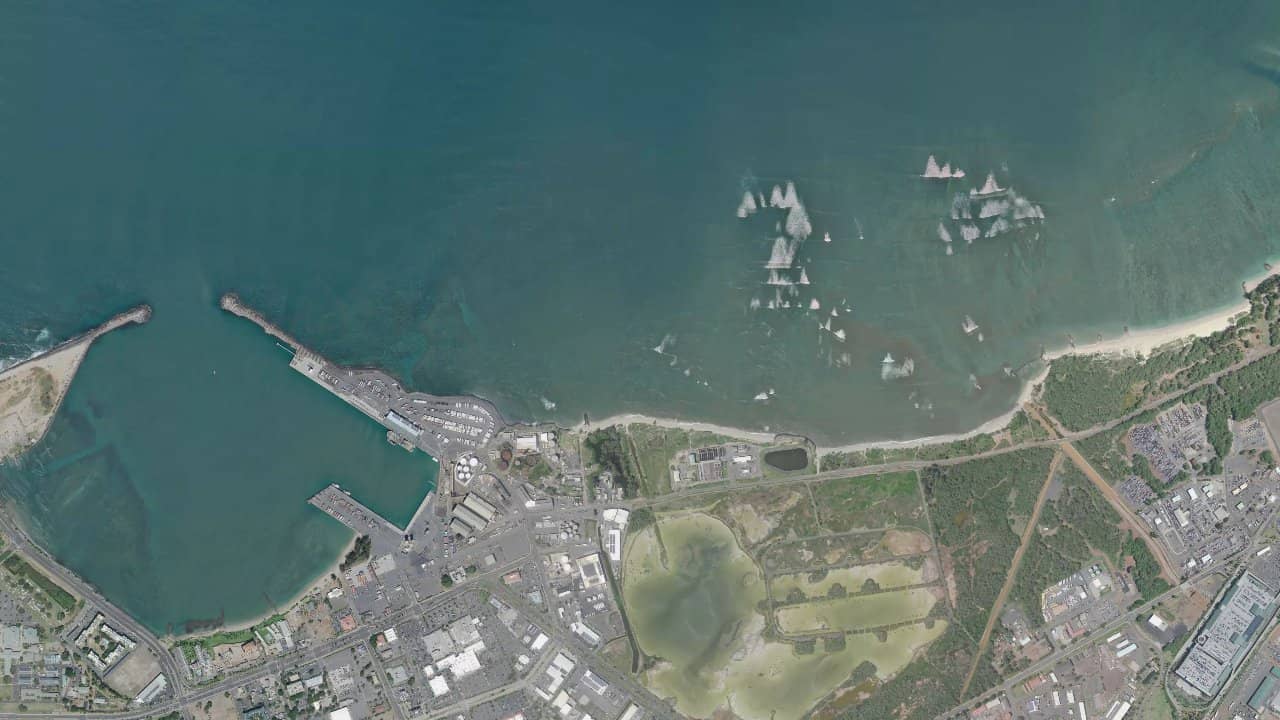
Maui - Crack Beach
United States
Maui
The beach of Crack Beach, located on the north coast of Maui near Kahului, is a popular spot for kiters due to its exposure to consistent northeast winds. It features a long stretch of sand with easy access parking and a lively atmosphere thanks to nearby kite schools.
It is a place where locals and pros gather, especially when the trade wind conditions set in. The view of the airport and mountains adds to the charm of the place.
The spot gets its name from a local feature, but it is mainly its constant wind and varied water conditions that make it a reference in Maui.
Les données de vent affichées ici proviennent d’ERA5 (via Open-Meteo) sur 4 ans, retraitées pour refléter des conditions réalistes.
👉 Le vent moyen a été calibré pour éviter la sous-estimation habituelle des modèles.
👉 Les rafales ont été corrigées par un ratio médian afin d’éviter des valeurs extrêmes irréalistes.
👉 Chaque jour est résumé par le vent médian (P50) observé pendant les heures utiles (8h–20h), puis classé dans des plages de vent.
👉 Le mode pondéré mélange vent moyen et rafales pour refléter au mieux le vent ressenti.
- 🟢 10–16 nds : vent faible mais navigable (notamment en foil).
- 🟡 16–22 nds : plage idéale, conditions confortables pour la majorité.
- 🔴 22–28 nds : vent fort, réservé aux riders expérimentés.
- 🟣 28+ nds : conditions extrêmes, navigation engagée.
Localisation & Points d'intérêt
Informations utiles
The dominant wind comes from the northeast (NE), making Crack Beach a perfect side-on spot for freestyle or wave riding. The trade winds channeled between Haleakala and the West Maui mountains provide consistent power, ideal for staying upwind easily.
Launching is done directly from the sandy beach, with a wide and clear take-off area, but be careful of swimming zones to avoid. The riding area extends along Kanaha beach, with a pro pool upwind flat for tricks and medium waves on the outer reef in winter.
At low tide, the shallow reef exposes dangerous areas like the Boneyard, so stay offshore. Tides have little influence on the main water, but prefer high tide for more safety. Mandatory rotation in the tricks area near the rocks, and always leave space downwind.
Ideal conditions are a NE 20-28 knots wind, side-on, with flat water upwind and small waves for jumping.
The water is flat to choppy near the beach in normal conditions, with waves of 1-3m on the reef in winter. Intense shorebreak to watch out for when launching.
Currents are generally weak to moderate along the beach, but they intensify near the downwind rocky jetties and towards the reef. Tides have a moderate range, with low tide exposing more hazards.
Opt for sizes of 9 to 12m² in standard trade wind, 7-9m² on strong days, and 12-15m² in light winds.
Typical winds are the northeast trade winds, blowing from 15 to 30 knots almost every afternoon, especially from May to October. Ideal direction between 70-90° for clean and powerful wind.
In winter, kona winds from the southwest (225°) can pick up, but they are less predictable.
Maui's tropical climate offers pleasant temperatures year-round, around 24-30°C during the day. Winter (December to March) brings more rain but powerful swells, while summer (April to November) is drier and windier.
The best months for kiting are from January to December, peaking in summer due to the consistent trades.
Progressive depth with a sandy bottom near the shore, then coral reef. You can stand up to 20-30m, but the reef comes up quickly.
Water temperature ranges from 24°C in winter to 28°C in summer, a lycra is often sufficient.