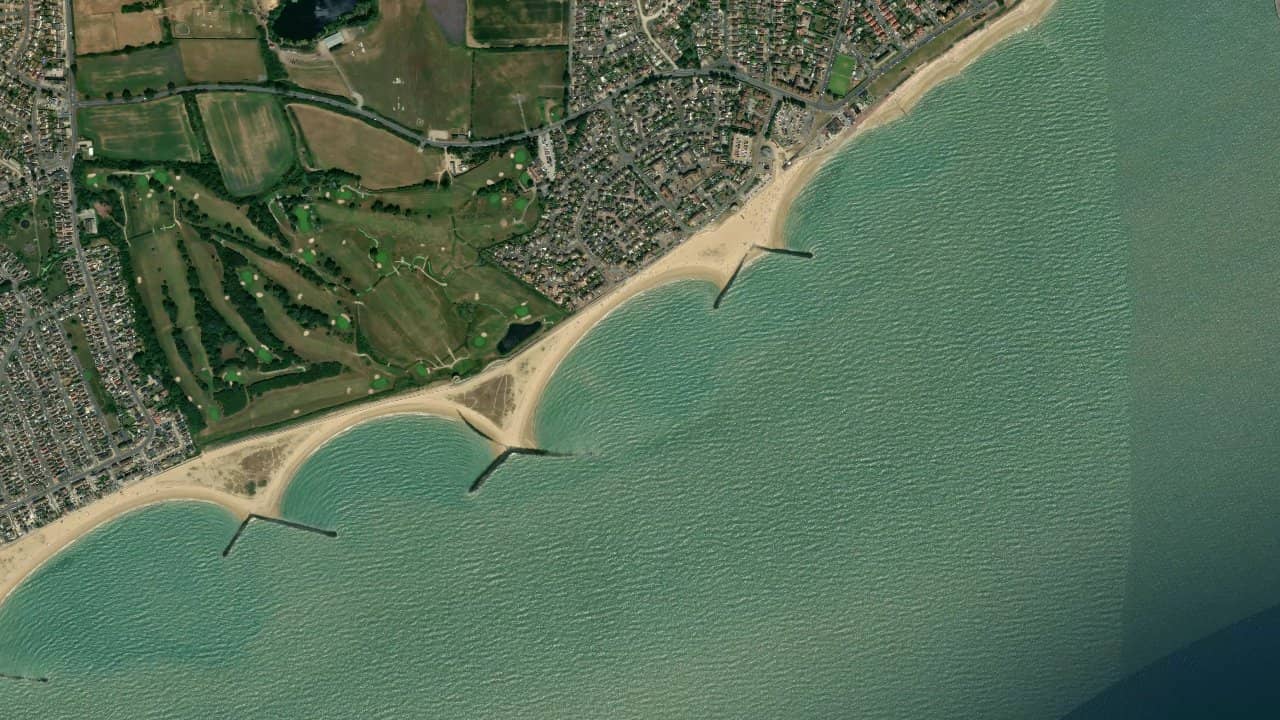
Martello Bay
Royaume-Uni · England
Martello Bay in Clacton-on-Sea is a large beach on the Essex coast, with easy access and a very local atmosphere. It is a spot appreciated for its open playground and often workable conditions when the wind comes in well.
The site is known among local kitesurfers for its practicality and sandy beach. It offers a simple setting, without unnecessary complexity, with navigation that heavily depends on wind direction and tide level.
According to available feedback, it is a spot that works for several levels, but it requires careful selection of the navigation window and attention to local usage areas on the beach.
Historical averages by month — not a live forecast.
Martello Bay mainly works with a side-shore to side-on wind depending on the flow orientation, with the best sessions when the wind comes from the SW to SE sector. Feedback from riders indicates that the spot is particularly interesting with southwest wind, while southeast remains possible, though less regular. A wind coming from the north is described as offshore, thus less suitable and more challenging for returning to the shore.
The water state is generally a mix of flat, chop, and small waves. The swell often remains limited, mainly with wind chop, but there is locally a more protected area that can offer flatter water behind a port structure or bay protection. This area provides an interesting terrain for working on edges and maneuvers when the tide and local traffic allow.
Launching takes place from the sandy beach, with a takeoff area to prepare properly while avoiding cluttering the seafront. The site is described as a large beach with enough space, but sources also report that parking can become difficult in summer. Therefore, it is advisable to arrive early and keep a clear launch area, especially when the beach is busy.
The tide significantly changes the organization of the spot. At low tide, the navigable space increases and the shoreline can offer more room for rigging and launching. At high tide, the useful beach area reduces, making the launch area more compact and requiring more attention for takeoff and landing.
The spot remains generally accessible, but it rewards riders who can read the local wind and adapt to an exposed seaside environment. The best sessions seem to come when the wind is well established, regular, and clean enough to cross the beach without too much turbulence.


 Open Windguru forecast