Kiteloopers - Kitesurfing spots, trips and destinations worldwideKiteloopers - Kitesurfing spots, destinations and kite trips worldwide
CarteDestinationsBlog
Connexion

Project

  • About
  • Contact

Legal

  • Terms of Service
  • Privacy
  • Cookies
  • Legal mentions
  • Support

Community

  • Spots
  • Blog
  • Schools
  • Instructors
  • Accommodations
  • Trips
  • KiteMarket

Social

  • Instagram
  • Facebook
© 2026 Kiteloopers — All rights reserved
Traba

Traba - Praia

Spain

🎓Inter · Conf
🌊Vagues
💨23.2 nd
☀️15.1°C

Traba

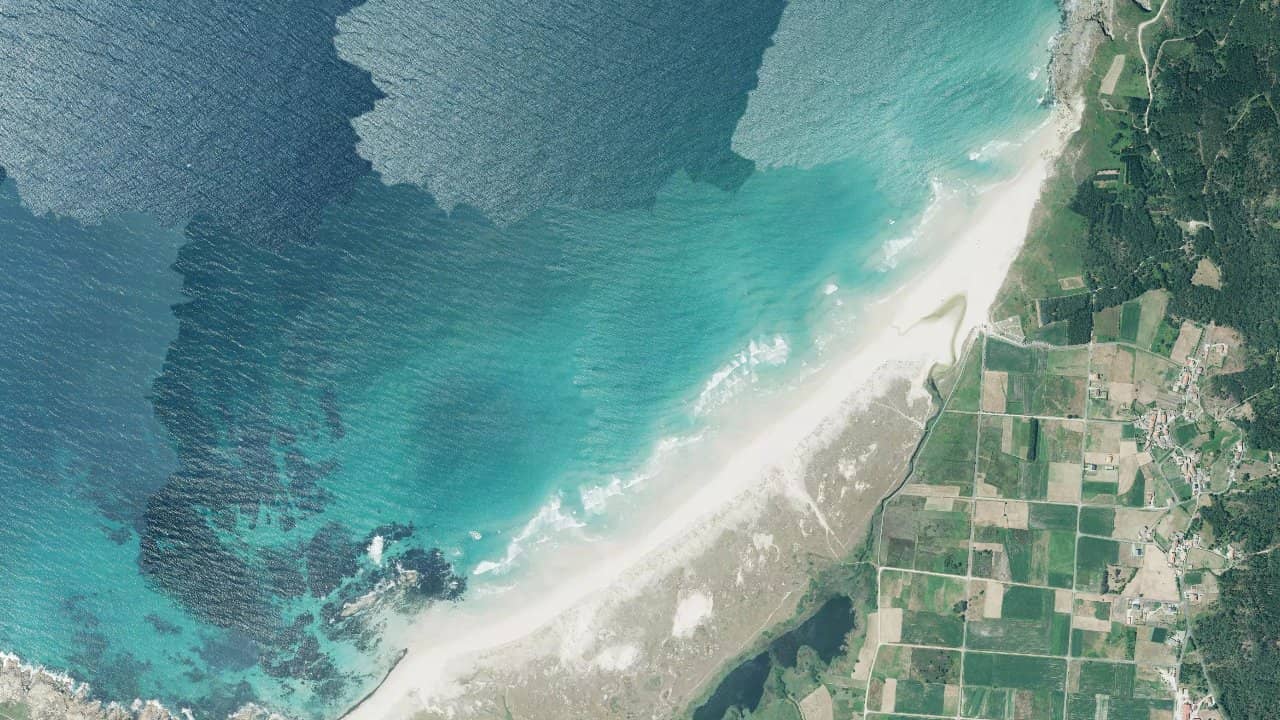
The beach of Praia de Traba, on the Costa da Morte in Galicia, is a long sandy bay surrounded by dunes and wild hills. The area remains sparsely built, with a great sense of space and a tranquil atmosphere, even in the height of summer.

It is a spot exposed to the Atlantic, known by surfers, windsurfers, and kitesurfers for its consistent wind and powerful waves. The beach is wide, allowing space for rigging and launching, but the spot retains a preserved aspect that appeals to riders seeking a natural environment.

Les données de vent affichées ici proviennent d’ERA5 (via Open-Meteo) sur 4 ans, retraitées pour refléter des conditions réalistes.
👉 Le vent moyen a été calibré pour éviter la sous-estimation habituelle des modèles.
👉 Les rafales ont été corrigées par un ratio médian afin d’éviter des valeurs extrêmes irréalistes.
👉 Chaque jour est résumé par le vent médian (P50) observé pendant les heures utiles (8h–20h), puis classé dans des plages de vent.
👉 Le mode pondéré mélange vent moyen et rafales pour refléter au mieux le vent ressenti.

  • 🟢 10–16 nds : vent faible mais navigable (notamment en foil).
  • 🟡 16–22 nds : plage idéale, conditions confortables pour la majorité.
  • 🔴 22–28 nds : vent fort, réservé aux riders expérimentés.
  • 🟣 28+ nds : conditions extrêmes, navigation engagée.

Localisation & Points d'intérêt

Informations utiles

Type d’eau
Profondeur
Navigabilité
Marée haute
wavewave
Pied
Oui
Marée basse
wavewave
Pied
Oui
Conditions de navigation

The beach is generally oriented east-west, with the ocean to the west, which gives a wind direction of NW to W often side-on starboard, sometimes more onshore depending on the day. With NE wind (common in Galicia in summer), the wind arrives more side-off and the spot quickly becomes technical for kiting, especially with swell offshore. The wind is often established, but it can rise quickly and lead to strong conditions for twin-tip or surfkite.

The water surface is directly exposed to the Atlantic, with a marked shorebreak as soon as there is swell. At low tide, the beach widens, the shorebreak shifts, and you can enjoy a slightly easier area for launching, even if the chop remains present between sets. At high tide, the shorebreak becomes steeper and more powerful, and launching requires more commitment, especially when the sets align well on the sandbanks.

The water surface is largely chop/waves: disordered chop between sets, then beautiful lines of waves further out that can reach significant size, especially in autumn and winter. The waves are suitable for surfkite or directional riders who already have a good level. With strong NW wind, the spot can quickly become a real playground for wave riding, but demanding.

The main riding area is located in the center of the bay, where the beach is widest and summer traffic is a bit more dispersed. It is advisable to rig and launch in the middle or slightly north of the beach, to move away from potential bathers and enjoy cleaner wind. Launching is done on the sand, with plenty of space, but one must anticipate gusts and consider that the wind can increase during the day.

When kiting, avoid the area directly in front of the potential natural channel formed by the waves and sandbanks, where the current can concentrate the water and create more turbulent zones. The spot remains quite "raw": no large kite infrastructure on the beach, so one must be self-sufficient to assess conditions, manage the tide, and choose the right time.

In summer, thermals often reinforce the announced northwest wind, which can lead to windier sessions than expected in the mid/late afternoon. In the off-season, Atlantic depressions bring strong wind and large swell, with waves that can become difficult to manage for inexperienced kitesurfers. Overall, Praia de Traba is an interesting spot for kiting, but rather to be considered for intermediate to advanced riders who know how to handle shorebreak, waves, and currents.

Vent ideal
W
NWdominant

The ideal conditions for kitesurfing at Praia de Traba are generally found with wind from NW to W side-on, between 18 and 25 knots, with moderate swell. This combo offers rideable waves without the shorebreak becoming too destructive, and allows full enjoyment of the spot's surf potential.

For twin-tip riders discovering the spot, a day with consistent wind around 18–22 knots and average swell is a good compromise. Experienced surfkite riders can aim for slightly bigger and windier days, but must remain attentive to the tide and the size of the sets.

État de la mer

The water surface is typically waves + chop. With small swell, there is tight chop near the shore and cleaner waves further out, interesting for practicing surfkite. With large swell, the sets become bigger and more powerful, with a shorebreak that can be difficult to cross and waves that quickly increase in size offshore.

In summer, with more modest swells and well-oriented thermal wind, sessions can be more accessible, even if the water surface is rarely perfectly flat. Autumn and winter are more reserved for big surf kite enthusiasts, with powerful, sometimes messy waves, and a very physical water surface. The spot is more suited to practitioners who enjoy riding in waves than to flat water enthusiasts.

Courants marins

The currents are related to the Atlantic swell and tidal changes. They generally remain moderate but can strengthen in areas where sandbanks channel the water, particularly near potential natural channels. Depending on the size of the swell and the tidal coefficient, these currents can pull out to sea or towards one of the ends of the bay.

At high and low tide, the water movement combined with the waves can create marked backwash, especially when the sets are powerful. It is important to monitor your drift relative to the starting point, as you can quickly find yourself displaced along the beach. The currents are not extreme like in some estuaries, but they remain a factor to consider, especially for less experienced riders or those on larger equipment.

Taille de kite recommandée

For an average build around 75–80 kg, the most commonly used kite sizes generally range around 8 to 11 m² in summer, with consistent winds of 18 to 25 knots. When depressions strengthen the wind, a 7 m² can become the main kite, especially in surfkite.

Lighter builds will often use kites of 7–9 m², while heavier builds can ride with 9–12 m² on slightly less windy days. It is advisable to have a quiver covering a fairly wide spectrum, as the wind can vary quickly depending on weather systems.

Météo & vent

In Galicia and in this area, the wind regime is dominated by NW to N flows in summer, often reinforced by a local thermal in the afternoon. This wind does not always have a specific name locally, but it is generally referred to as the north Atlantic wind, which blows regularly with intensities often between 15 and 25 knots, sometimes more in case of a marked gradient.

In spring and autumn, the winds are more related to Atlantic depression systems, with flows that can shift to W, SW, or NE and rapid variations in strength. In winter, gusts are more frequent, with episodes that can easily exceed 30 knots and a very challenging water surface. Forecasts should be closely monitored as wind and swell variations can be significant from day to day.

Climat

The climate of the Costa da Morte is oceanic, with mild and humid winters and moderate summers. In summer, air temperatures generally hover around 20–25 °C, with often sunny days but always a bit breezy. In spring and autumn, temperatures are cooler, often between 14 and 20 °C, with more disturbed weather patterns.

Winter is wetter and windier, with frequent Atlantic depressions and temperatures often ranging between 10 and 15 °C during the day. Clouds and rain are common, but it is also a time when swells are more consistent. Overall, the spot remains usable year-round, with maximum comfort from spring to early autumn.

Profondeur

The depth is gradual with a predominantly sandy bottom. Generally, you can stand a good distance from the shore at low tide, which provides some margin to manage the launch and the passage of the shorebreak.

At high tide, the level rises quickly and you lose the bottom closer to the shore, which increases the impact of the waves and the shorebreak. One should not count on large lagoon areas or shallow flat water: it is a true ocean beach spot, with depth as soon as you move a little away.

Température de l’eau

The water temperature in Galicia remains cool year-round. In summer, the water often hovers around 17–19 °C, which generally requires a full wetsuit of 4/3 mm, or even 3/2 mm for those less sensitive on the warmest days. In spring and autumn, the temperature tends to drop to around 14–16 °C, making a 4/3 or 5/3 mm wetsuit with booties more comfortable.

In winter, the water can drop to 12–14 °C, necessitating a thicker wetsuit (5/4 mm or 5/3 mm), booties, and possibly gloves and a hood for long sessions. Even in the height of summer, you are not in the temperate waters of southern Spain, so it is always necessary to plan for an appropriate wetsuit.

Avis des kitesurfers

Chargement des avis...

Laisser un avis

0/500 caractères

Votre avis sera modéré avant publication

RéserverTrouver une écoleLouer du matériel
Voir sur la carte

Résumé rapide

  • 🌍 Pays : Spain
  • 📍 Zone / Région : Galice
  • 💰 Budget sur place : $$
  • 🎓 Niveau minimum : Intermédiaire
  • 🌤️ Saison idéale : Jan → Déc
  • 🪁 Tailles de kite reco. : 7 m² – 11 m²

⚠️ Risques & Sécurité

  • The shorebreak can be very powerful, especially at high tide and with swell, making launching tricky.

  • The currents related to the sandbanks can pull out to sea or along the beach, so it is important to monitor your drift.

  • With NE side-off wind, the spot becomes engaging for kites, with a risk of drifting out to sea in case of problems.

Besoin d’aide ?
  • 🛡️ Réservation sécurisée
  • 🌬️ Conseils selon la saison et le vent
  • 🧭 Guides & écoles partenaires
Contacter le support →

Spots à proximité

Voir sur la carte →

Chargement des spots proches...

← Retour à la recherche