
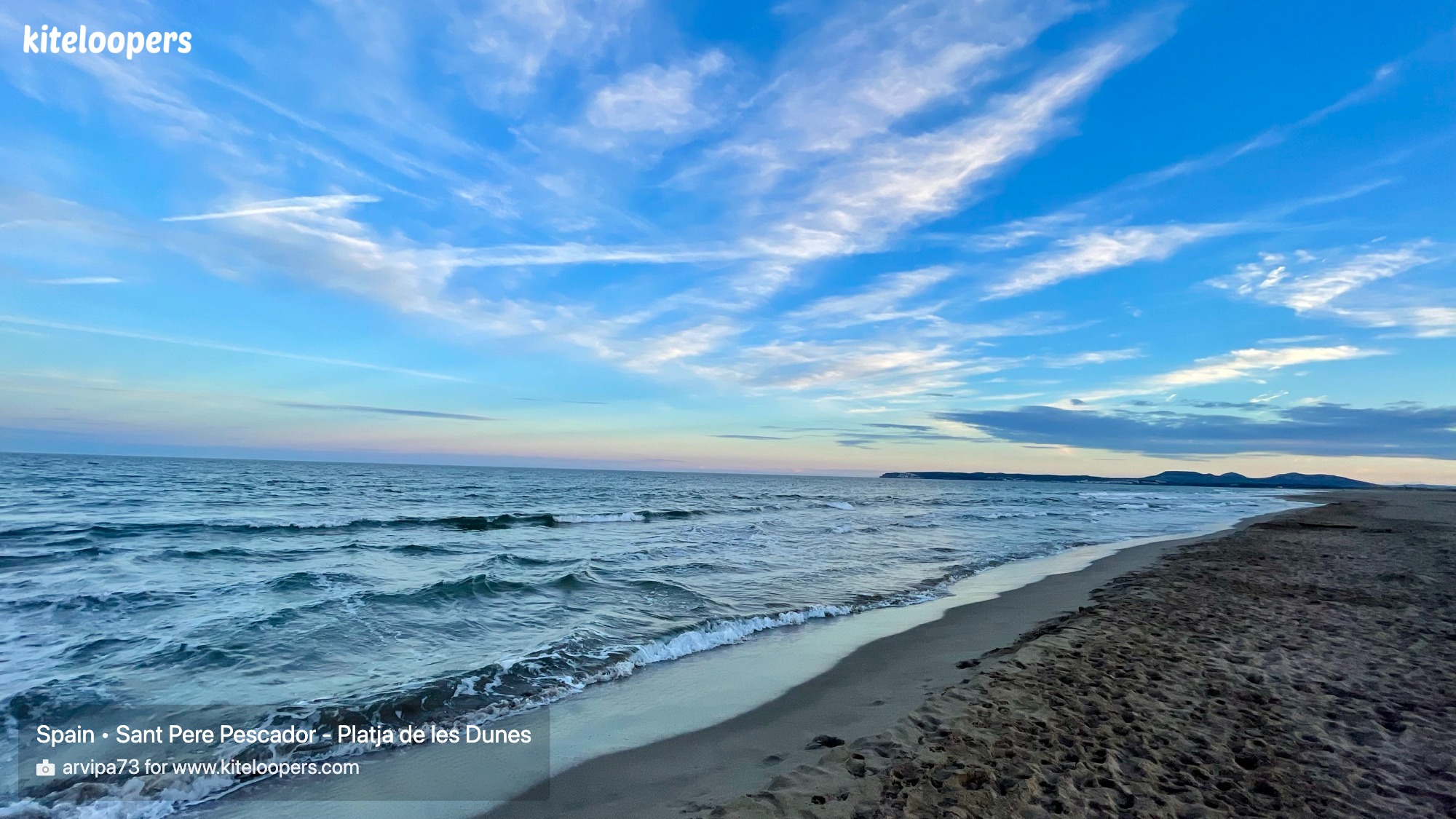
Sant Pere Pescador - Platja de les Dunes
Spain
Sant Pere Pescador
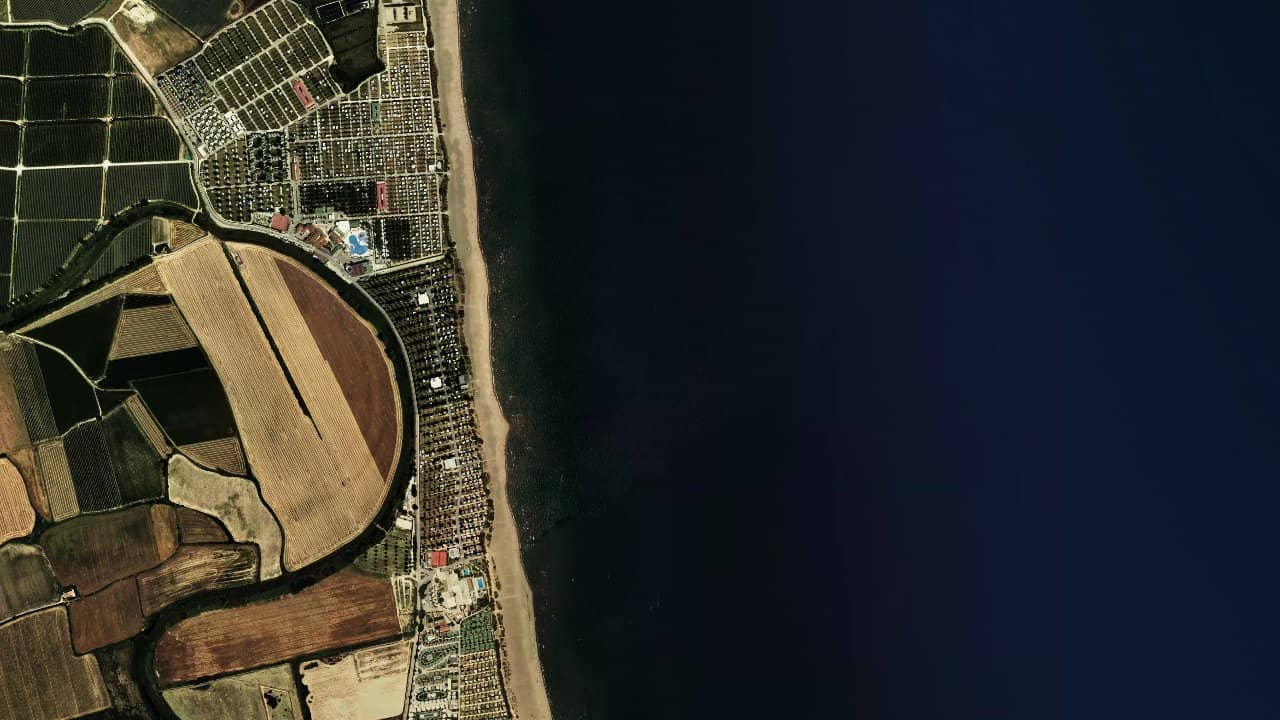
Platja de les Dunes, on the coast of Sant Pere Pescador, is part of the large Bay of Roses with a long sandy beach open to the sea. The beach is wide, bordered by dunes and campsites, with a dedicated kitesurfing area separated from bathers during the high season.
It is a spot appreciated by riders for its large sailing space, easy access, and consistent wind. The atmosphere is quite relaxed, with several kite schools present on the beach and significant attendance starting in spring.

The wind data shown here comes from ERA5 (via Open-Meteo) over 4 years, reprocessed to reflect realistic conditions.
👉 Average wind has been calibrated to avoid the usual underestimation of models.
👉 Gusts have been corrected by a median ratio to avoid unrealistic extreme values.
👉 Each day is summarized by the median wind (P50) observed during useful hours (8am–8pm), then classified into wind ranges.
👉 The weighted mode mixes average wind and gusts to best reflect felt wind.
- 🟢 10–16 kts: light but sailable wind (especially on foil).
- 🟡 16–22 kts: ideal range, comfortable conditions for most.
- 🔴 22–28 kts: strong wind, reserved for experienced riders.
- 🟣 28+ kts: extreme conditions, committed riding.
Location & Points of interest
Useful information
The beach stretches for several kilometers with a wide strip of sand, providing plenty of space to rig, launch, and land. Access is generally via the parking lots of the campsites and public access points along the beach, then through a short path in the dunes. The official kite area is located around Platja de les Dunes / Can Martinet, with a portion of the beach reserved for kitesurfers in season, while the rest is mainly reserved for bathers.
With a thermal wind from the southeast or east, which is most common in spring and summer, the wind arrives side-on to onshore relative to the beach, making sailing safe, especially for beginners. In tramontane (northwest wind coming from the Pyrenees), the wind can be stronger and gustier, with a more side-shore to side-off orientation depending on the exact sector of the bay, which is more suitable for intermediate to advanced riders. The width of the beach allows for a good safety margin during takeoff even when the wind is strong.
The water surface is flat to slightly choppy near the shore, generally shallow for about twenty meters, which facilitates water starts and board recovery. Further offshore, the wind establishes a marked chop, and with good thermal breeze, the water becomes quite choppy. On days with small Mediterranean swell, small waves form on the sandbank, but it remains a spot more suited for freeride/freestyle than purely waves.
Launching is done directly facing the kite area: you can walk in the water for several dozen meters with a uniform sandy bottom, without rocks or major obstacles reported. Schools usually mark a lesson area and a launch area, and in high season, the navigation and safety corridors are clearly marked. It is important to stay within the dedicated kite area, as the beach is very crowded with bathers in summer and authorities may monitor.
Locally, the thermal generally rises in late morning to strengthen in the afternoon, with typical winds around 12 to 20 knots, sometimes more on very sunny days. On tramontane days, the wind can significantly exceed 25–30 knots with gusts, turning the spot into a more engaged playground, while still maintaining a water surface primarily choppy with some ramps for jumping.
Ideal conditions at Platja de les Dunes are generally found with a side-on to onshore wind from SE to E between 15 and 22 knots. This regime offers a good compromise between safety, consistent power, and a water surface still manageable for all levels.
For riders who enjoy more engaged sessions, an established tramontane from NW between 20 and 30 knots creates a more choppy and powerful water surface, suitable for big air and strong freeride, provided they have the appropriate level and equipment.
The water surface is mostly flat to slightly choppy near the shore, especially in the shallow band used for lessons and for the first runs. This area is ideal for learning, transitions, and basic maneuvers.
As you move away from the shore, the wind generates a well-defined chop, which increases with wind strength, particularly on tramontane days. This chop offers good ramps for jumping and for committed freeride. With Mediterranean swell, small waves can form on the sandbanks, but it remains a spot primarily oriented towards freeride/freestyle rather than wave surfing. The absence of rocks and the regularity of the bottom make the conditions readable, even when the water surface becomes more technical offshore.
Currents are generally weak in the Bay of Roses at Platja de les Dunes. The spot is not subject to strong tidal changes like in the Atlantic, and the water level varies little with the tides.
A slight current parallel to the beach may form depending on the wind direction and swell, especially during long thermal days or sustained tramontane, but it remains moderate and manageable for most riders. Near any channels reserved for boats or marked swimming areas, it is important to stay alert, as the combination of wind + small swell can create a bit more water movement.
For a rider weighing around 75 kg, a range of 8 to 12 m covers most sessions in the spring and summer thermal. In April, May, and June, a 9–13 m is often recommended, while in mid-summer, it sometimes goes up to 11–15 m on lighter wind days.
In case of strong tramontane, it is easy to go down to kites of 6 to 9 m, especially when the wind exceeds 25 knots. Lighter riders will adjust downwards and heavier riders will plan for a size up in each range.
The wind regime is dominated by the tramontane (northwest) and by a thermal breeze from southeast to east in the warm season. The tramontane descends from the Pyrenees and can blow strongly, often from 20 to over 30 knots, with a more irregular but very powerful wind. This wind is more frequent in autumn, winter, and early spring, providing energetic sessions, mainly for experienced riders.
From spring to the end of summer, the thermal sets in during the afternoon, coming from SE to E, with usual strengths around 12 to 20 knots, sometimes more on very sunny days. This wind is quite consistent, side-on to onshore, and is very suitable for lessons, freeride, and freestyle. Depending on the days, lighter phases can be encountered in the morning before the wind settles in.
The climate in Sant Pere Pescador is of the mediterranean type, with hot, dry summers and mild winters. In spring and autumn, air temperatures are generally pleasant, often between 18 and 25 °C during the day, allowing for comfortable sailing with a light wetsuit.
In summer, temperatures regularly exceed 28–30 °C, and the heat is tempered by the thermal sea breeze. In winter, it is cooler but rarely very cold on the coast, with values often above 10–12 °C during the day, which still allows for sailing for well-equipped riders. Sunshine is high for a large part of the year, which promotes a significant number of rideable days.
The depth is gradual with a completely sandy bottom. You can stand on a wide band near the shore, often up to twenty meters, which facilitates starts and board recovery for beginners.
As you move away, the depth increases steadily without marked drops or holes, and there are no reported rocks in the usual sailing area. This configuration, combined with the width of the beach, makes Platja de les Dunes a very comfortable spot for learning and practicing safely.
In summer, the water temperature generally ranges between 20 and 26 °C, allowing for sailing in a shorty, or even in boardshorts and lycra on the hottest days. In spring and autumn, the water is cooler, often around 15 to 19 °C, and a long wetsuit of 3/2 or 4/3 mm is recommended.
In winter, the Mediterranean cools down further, with values likely dropping below 14–15 °C, making a thicker wetsuit necessary for those who continue to sail during this period. Overall, the most comfortable period for water temperature extends from late spring to early autumn.