Spain
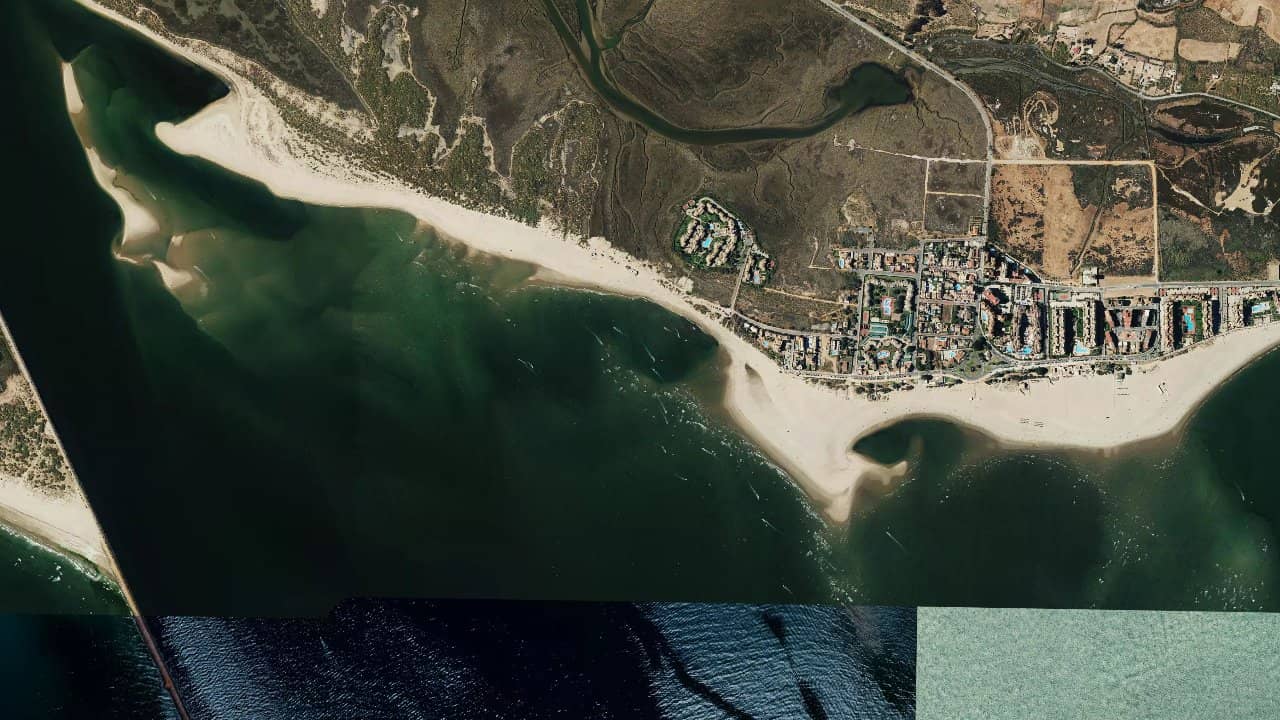
Playa de San Bruno is located to the west of Isla Canela, in Andalusia, and is the most famous kitesurfing spot in southwestern Spain. This golden sandy beach benefits from a strategic location in the heart of the Río Guadiana delta, making it a true paradise for kitesurfers of all levels.
The spot is distinguished by its exceptional and consistent conditions, particularly in the afternoon. The beach offers an ideal setting with its shallow waters and natural flat areas formed by sandbars. It is a very popular place among local riders for its constant thermal wind and welcoming atmosphere.
Les données de vent affichées ici proviennent d’ERA5 (via Open-Meteo) sur 4 ans, retraitées pour refléter des conditions réalistes.
👉 Le vent moyen a été calibré pour éviter la sous-estimation habituelle des modèles.
👉 Les rafales ont été corrigées par un ratio médian afin d’éviter des valeurs extrêmes irréalistes.
👉 Chaque jour est résumé par le vent médian (P50) observé pendant les heures utiles (8h–20h), puis classé dans des plages de vent.
👉 Le mode pondéré mélange vent moyen et rafales pour refléter au mieux le vent ressenti.
Playa de San Bruno benefits from side-shore to side-on wind with the Poniente (southwest) regime. The water surface varies significantly with the tides: at low tide, the natural lagoons formed by sandbars offer perfectly flat waters, ideal for freestyle and learning. At high tide, the spot offers semi-flat to choppy conditions with small waves, allowing for varied riding styles.
Launching is done directly from the very wide white sandy beach. The kitesurfing area is well marked with yellow buoys delineating the space reserved for riders and separating it from the swimming area. It is imperative to respect these boundaries, especially in high season. The spot is protected by the spur of Portugal, which limits currents and offers more stable and secure conditions.
During the summer season (June 15 to September 15), navigation is strictly regulated in this area. The rest of the year, riders have 7 kilometers of beach to kite freely. Access is easy with nearby parking and well-developed infrastructure.
The ideal conditions at Playa de San Bruno are the Poniente (southwest) in the late afternoon, with a strength of 12 to 18 knots. This regular and steady thermal wind usually blows from 3 PM until sunset, offering predictable and enjoyable sessions. The best time to enjoy these conditions is from April to October, with a particularly favorable peak from May to June, when the wind is reliable, temperatures are pleasant, and the beach is less crowded than in mid-summer.
The water surface at Playa de San Bruno is exceptionally flat at low tide, making it a reference spot for learning and freestyle. The shallow waters of the natural lagoons provide extra safety for beginners. At high tide, the water surface becomes semi-flat to slightly choppy, with small waves that allow progression towards wavestyle. The water is generally crystal clear, especially in the morning after a strong north wind the previous night.
The current at Playa de San Bruno is generally weak and steady thanks to the natural protection offered by the spur of Portugal. However, care should be taken near the mouth of the Río Guadiana, where the current can become stronger and where wind intensity also increases. Tides play an important role in the morphology of the spot: at low tide, shallow lagoons form, while at high tide, the water expands and conditions change.
The recommended kite sizes vary according to wind conditions. With the standard thermal regime of 12 to 18 knots, a kite of 13 to 15 m² is ideal for most riders. For windier days or lighter riders, a 11 m² may suffice. Beginners will benefit from a slightly larger kite, around 14 to 17 m², to have more power in the light thermal conditions of the afternoon.
The wind regime at Playa de San Bruno follows two distinct seasons. From March to September, the dominant wind is the Poniente (southwest), a very steady and consistent thermal wind that usually blows from noon until sunset, with an average strength of 12 to 20 knots. This is the best time to kite, with reliable and predictable conditions.
From October to February, the thermal wind disappears and conditions become more irregular. One can encounter north winds (offshore) in the morning, generally gusty and less suitable for beginners, especially at high tide. During winter storms, the Levante (east-southeast) can blow, bringing swell but less stable conditions. In case of Levante, riders prefer to head to other spots like Faro, located 40 minutes away.
Isla Canela enjoys a mild and pleasant Mediterranean climate all year round. Winters are mild and humid, while summers are hot and dry. The region enjoys significant sunshine and temperatures that are rarely extreme, making the spot accessible almost all year round.
The depth at Playa de San Bruno is gradual with a very consistent sandy bottom. At low tide, the natural lagoons offer depths of 0.5 to 2 meters, allowing easy walking and standing everywhere. At high tide, the depth gradually increases to 3 to 5 meters a few dozen meters from the shore. The bottom remains sandy and obstacle-free, making the spot very safe for all levels.
Water temperatures at Isla Canela vary by season. In summer (June to September), the water is warm, between 22 and 26°C, allowing for navigation in a swimsuit or with a light lycra. In spring and autumn (April-May and October), temperatures are between 18 and 22°C, requiring a lycra or shorty. In winter (November to March), the water cools to 14 to 18°C, necessitating a 3/2 mm wetsuit for added comfort.