Kiteloopers - Kitesurfing spots, trips and destinations worldwideKiteloopers - Kitesurfing spots, destinations and kite trips worldwide
CarteDestinationsBlog
Connexion

Project

  • About
  • Contact

Legal

  • Terms of Service
  • Privacy
  • Cookies
  • Legal mentions
  • Support

Community

  • Spots
  • Blog
  • Schools
  • Instructors
  • Accommodations
  • Trips
  • KiteMarket

Social

  • Instagram
  • Facebook
© 2026 Kiteloopers — All rights reserved
Ibiza

Ibiza - Platja Pont de Baix (Camino Cap des Falco)

Espagne

🎓Inter · Conf
🌊Choppy
💨24.5 nd
☀️14.0°C

Ibiza

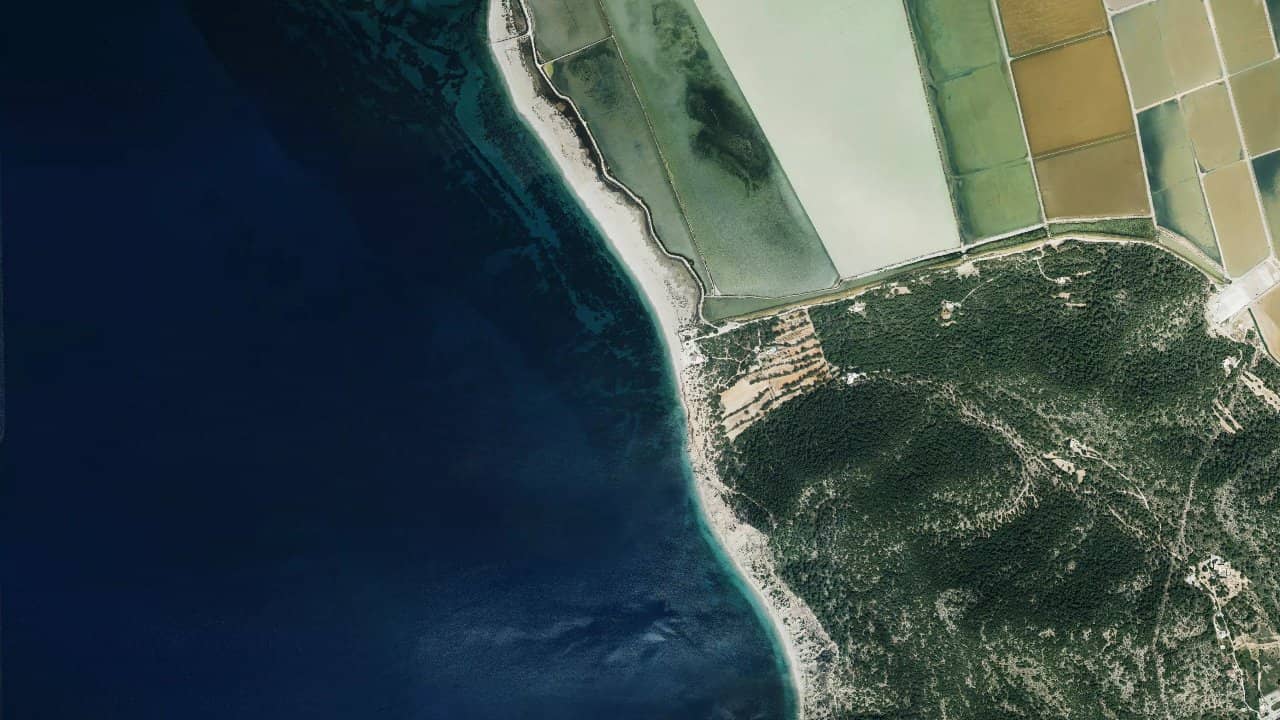
Platja Pont de Baix, in Sant Josep de sa Talaia, is a discreet spot on the southwest coast of Ibiza. The beach is made up of pebbles and is located in a fairly natural environment, with a bay open to the sea and a setting less crowded than the nearby large beaches.

It is not the easiest spot for beginners, but it can offer good sessions when the wind comes in properly. Access via Camino Cap des Falco provides a practical starting point to reach the launch area.

Les données de vent affichées ici proviennent d’ERA5 (via Open-Meteo) sur 4 ans, retraitées pour refléter des conditions réalistes.
👉 Le vent moyen a été calibré pour éviter la sous-estimation habituelle des modèles.
👉 Les rafales ont été corrigées par un ratio médian afin d’éviter des valeurs extrêmes irréalistes.
👉 Chaque jour est résumé par le vent médian (P50) observé pendant les heures utiles (8h–20h), puis classé dans des plages de vent.
👉 Le mode pondéré mélange vent moyen et rafales pour refléter au mieux le vent ressenti.

  • 🟢 10–16 nds : vent faible mais navigable (notamment en foil).
  • 🟡 16–22 nds : plage idéale, conditions confortables pour la majorité.
  • 🔴 22–28 nds : vent fort, réservé aux riders expérimentés.
  • 🟣 28+ nds : conditions extrêmes, navigation engagée.

Localisation & Points d'intérêt

Informations utiles

Type d’eau
Profondeur
Navigabilité
Marée haute
chopchop
Pied
Oui
Marée basse
chopchop
Pied
Oui
Conditions de navigation

Platja Pont de Baix works best when the wind comes with a side-shore to side-on component from the west or northwest. With the cleanest orientations, one can maintain navigable conditions along the bay without too much drift offshore. Conversely, a wind that is too onshore can make exiting more physical, and a wind that is too offshore should be avoided as the area quickly becomes less safe.

The available sources describe a beach of 300 meters long and about 40 meters wide, with a pebble composition and wave swimming conditions. For kitesurfing, this suggests a water surface that is rarely perfectly flat, with some movement in the bay and more chop as the wind picks up. Launching takes place at the edge of the beach, but one must plan a careful takeoff as the space is more limited than a large sandy beach.

The spot remains more comfortable for riders who can manage a somewhat technical launching area and who navigate comfortably in irregular water. Depending on the swell and wind, one can have a choppy to moderately choppy sea, with cleaner navigation near the coast than further out. The bottom being reported as pebbles, one must also account for a less comfortable entry and exit from the water than at a sandy beach.


Vent ideal
Wdominant
NWdominant
SW
S

The best sessions occur with a well-established W to NW wind, ideally steady and not too gusty. A side-shore to side-on orientation remains the most comfortable for maintaining control and easily returning to the beach.

With this type of flow, the spot becomes interesting for an engaged ride but still manageable, especially when the sea is not too formed. On days when the wind drops around 20 to 30 knots, one is often in the right window to exploit the area.

État de la mer

The water surface is generally more choppy than perfectly flat, with a sea that can be ridden quickly as soon as the wind picks up. Since the beach is open and the area is exposed to the sea, one can find small short waves and relief on the water surface.

Depending on the wind strength, the area can remain navigable for freeride sessions, but it does not offer the ultra-smooth conditions of a lagoon. Riders who enjoy a lively water surface will find more interest here than those looking for perfect flat.

Courants marins

Currents are generally moderate, but they can strengthen depending on the wind direction, swell, and proximity to the rocky points of the bay. One must remain attentive to lateral drifts when the wind is well established, especially if navigation moves away from the launch area.

The tide has a limited impact compared to other Atlantic spots, but it can slightly modify the entry into the water and the reading of the edge. The spot is mainly driven by the wind and sea state, more than by the tide itself.

Taille de kite recommandée

With the average observed wind around 22.9 knots, the most useful sizes often range between 7 m² and 10 m². In practice, a 8 m² or 9 m² often covers a good part of the sessions, while a 7 m² becomes relevant when the flow picks up significantly.

In slightly lighter wind, a 10 m² can help maintain glide, but the beach becomes really interesting when the wind is sufficiently established to allow a clean launch and an easy return to the edge.

Météo & vent

The most interesting wind regime in Ibiza often comes from the west to northwest, with episodes that can become well established when a depression passes over the Balearics. The spot can then take a good flow from NW or W, which fits well with the configuration of the southwest coast.

With an average around 22.9 knots during the sought period, the beach can offer already quite physical sessions. The best months indicated, December, January, and March, confirm a winter and early spring potential, often more regular than the height of summer.

Climat

Ibiza enjoys a mild Mediterranean climate, with relatively mild winters and hot, dry summers. On the coast of Sant Josep de sa Talaia, the most pleasant sessions often take place in spring and autumn, when temperatures remain comfortable and the wind is still present.

In summer, the heat can become pronounced on the beach, especially in the middle of the day, while in winter the air often remains mild but more variable. The best times for kitesurfing are generally those when the wind is established without excessive heat, with a good window in December, January, and March according to the provided data.

Profondeur

The depth seems gradual but the presence of pebbles and an irregular bottom requires vigilance at the edge. It is not on an ultra-comfortable sandy bottom, so walking in the water and waterstarting can be less pleasant than elsewhere.

As the beach is a small open bay, there is quickly enough water to navigate, but the launch area requires careful timing and angle for entry. The bottom is more rocky than sandy, which is important for the safety of the gear and feet.

Température de l’eau

The water is generally mild in spring and becomes warm in summer, with sessions often more comfortable in a shorty or light wetsuit between June and September. In winter, the temperature drops significantly and a thicker wetsuit becomes necessary.

In Ibiza, the sea remains navigable for a good part of the year, but the most comfortable conditions for kitesurfing are often between May and October for water temperature, even if the most interesting wind can arrive outside this period.

Avis des kitesurfers

Chargement des avis...

Laisser un avis

0/500 caractères

Votre avis sera modéré avant publication

RéserverTrouver une écoleLouer du matériel
Voir sur la carte

Résumé rapide

  • 🌍 Pays : Espagne
  • 📍 Zone / Région : Balearic Islands
  • 💰 Budget sur place : $$
  • 🎓 Niveau minimum : Intermédiaire
  • 🌤️ Saison idéale : Déc → Jan
  • 🪁 Tailles de kite reco. : 7 m² – 10 m²

⚠️ Risques & Sécurité

  • Pebbles make launching and exiting more uncomfortable, with a risk of slipping.
  • The spot becomes less safe if the wind shifts too offshore.
  • The rocks and points around the bay can create more marked drift zones.
Besoin d’aide ?
  • 🛡️ Réservation sécurisée
  • 🌬️ Conseils selon la saison et le vent
  • 🧭 Guides & écoles partenaires
Contacter le support →

Spots à proximité

Voir sur la carte →

Chargement des spots proches...

← Retour à la recherche