Espagne
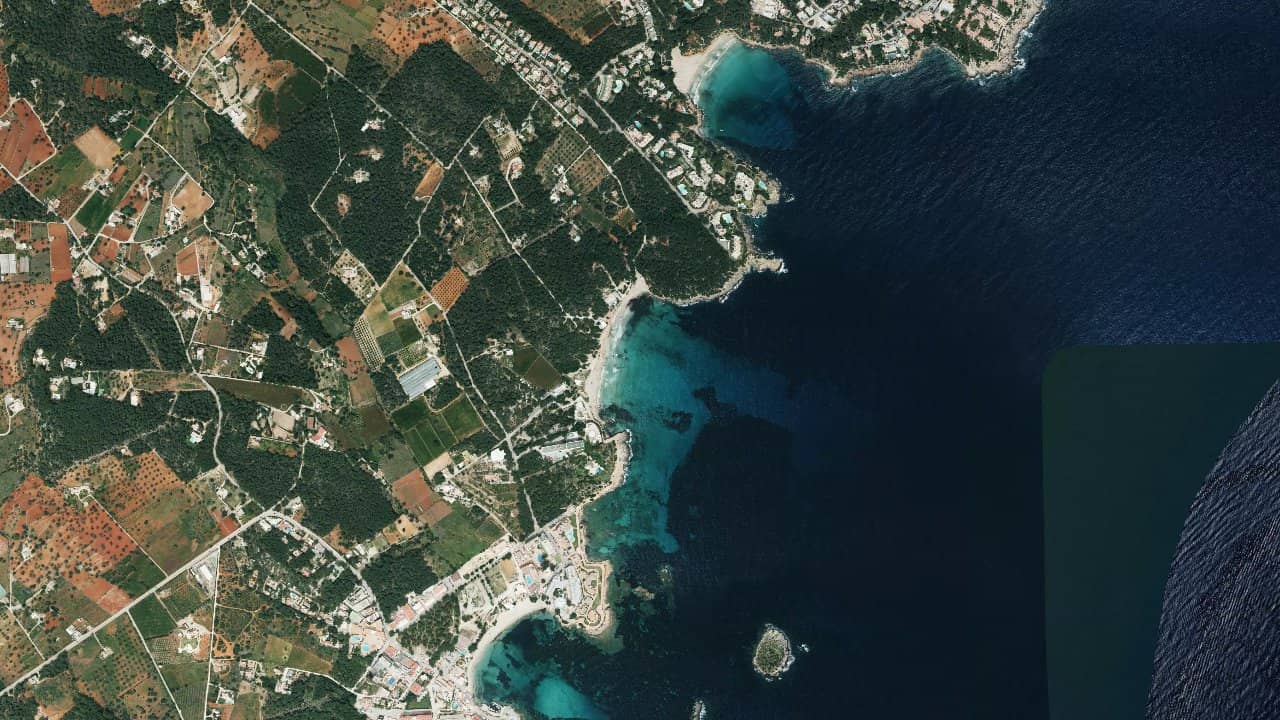
Cala Nova, on the east coast of Ibiza, is a spot known for its sessions in a very busy setting during the season. The bay attracts riders looking for accessible water with consistent wind when the right orientations come in.
The spot is appreciated for its simple and straightforward atmosphere, with navigation that can become really interesting when the east wind sets in well. However, it is important to keep in mind that access and practice may be subject to local restrictions depending on the period.
Les données de vent affichées ici proviennent d’ERA5 (via Open-Meteo) sur 4 ans, retraitées pour refléter des conditions réalistes.
👉 Le vent moyen a été calibré pour éviter la sous-estimation habituelle des modèles.
👉 Les rafales ont été corrigées par un ratio médian afin d’éviter des valeurs extrêmes irréalistes.
👉 Chaque jour est résumé par le vent médian (P50) observé pendant les heures utiles (8h–20h), puis classé dans des plages de vent.
👉 Le mode pondéré mélange vent moyen et rafales pour refléter au mieux le vent ressenti.
Cala Nova mainly works with an E to SE wind, which often arrives side-on to side-shore depending on the exact orientation on the beach. According to spot guides, the bay handles east wind well and can offer cleaner water when it is well established, with waves or chop depending on the current swell.
The water surface is less dependent on the tide compared to other spots, but reading the spot remains important due to the rocks and more exposed areas on the sides of the bay. Launching generally takes place from the beach, with a take-off area to be organized carefully due to sometimes limited space and summer traffic. One must remain attentive to the positioning of bathers, boats, and rocky areas close to the shore.
Available feedback converges on a more interesting spot with a steady east wind, capable of generating waves when the swell comes in. In lighter wind, the water surface becomes more irregular and can quickly take on chop. In high season, it is also necessary to check local regulations before kitesurfing, as several sources indicate that practice may be limited on beaches during the busiest months.

The spot works best with a well-established E to SE wind, ideally clean enough to gain speed without too much disturbance near the shore. It is in this configuration that Cala Nova can offer the best sessions, with a livelier water surface and sometimes beautiful waves.
With the wind forecasted around 21 knots, we are in an interesting range for a kite of 8 to 10 m² depending on the size and level. The best months given for the spot remain December and January, when cooler and windier situations can be more regular.
The water is generally of the wave type when the swell comes in, with more irregular sections and sometimes chop when the wind strengthens without a real formed sea. The consulted guides describe a spot capable of offering both small to medium-sized waves and cleaner phases depending on the wind direction and swell.
When the wind is well oriented, the bay can offer pleasant and fairly dynamic navigation. When it is weaker or poorly oriented, the water quickly becomes more choppy.
Currents are not described as a major permanent problem, but one must remain vigilant near the rocks and in the transition areas of the bay. Reading the water is more important than the tide itself, as the local configuration can alter the trajectories within the spot.
Overall, the operation is simpler in stable seas, but the presence of rocky obstacles requires maintaining a margin, especially when returning to the beach. The tide does not seem to be the main factor here, but it can influence access to the shore and the quality of the take-off areas.
For wind around 21 knots, the most consistent sizes often range between 8 and 10 m². A lighter rider may sometimes go down to 7 or 8 m², while a heavier build will often prefer 9 or 10 m².
In lighter conditions, it may be useful to plan for a kite of 11 m². However, when the wind picks up stronger at the spot, one must be ready to quickly reduce the sail size.
The spot is mainly associated with East sector winds, with good sensitivity to breezes and more established episodes. Spot sources mention interesting operation with E and SE flows, while the swell and exposure of the bay can enhance wave sessions.
This is not an ultra-regular thermal spot like some continental beaches, but conditions can become quite good when the gradient sets in. The wind can rise enough to require an appropriate kite, especially on more exposed days.
The climate of Ibiza is Mediterranean, with hot and dry summers and mild winters. In summer, the air is often pleasant but can become very hot during the day, especially out of the wind.
In winter, temperatures remain moderate, but the water can drop to around 17°C, making a 3/4 mm wetsuit often useful. The wind can also significantly cool the thermal sensation, even when the air remains mild.
The depth is generally gradual, with a bay bottom that remains navigable for launching, but the presence of rocks requires attention near the shore and on the sides. There is no strong indication of a very deep edge from the first meters, but the area remains to be read carefully.
The bottom seems mainly composed of rocky elements and sand depending on the sectors of the bay, which reinforces the importance of a good safety distance when departing and returning.
The water is most pleasant in summer and early autumn, when the Mediterranean warms up and allows for navigation in a light wetsuit. In winter, the water temperature hovers around 17°C, making a 3/4 mm wetsuit relevant for staying comfortable.
With the wind, the sensation can be cooler than the air temperature alone would suggest. Therefore, it is necessary to adjust the wetsuit to the season and the duration of the session.