Espagne
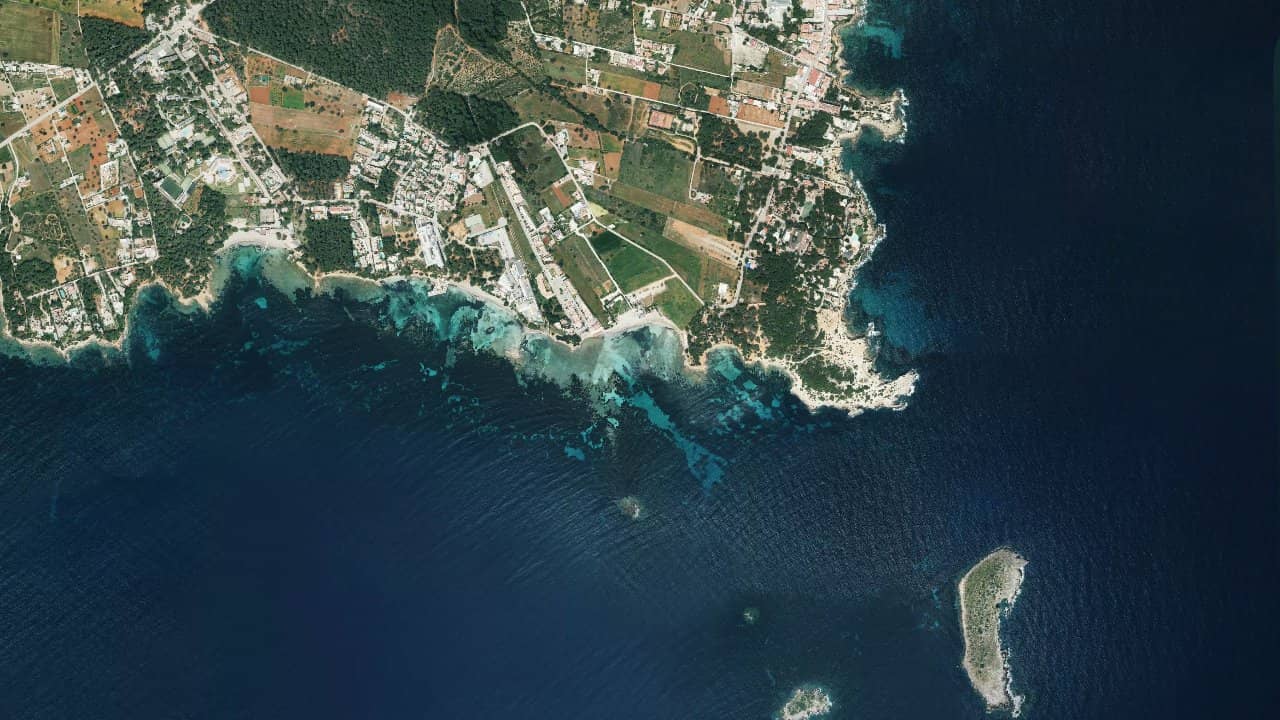
Cala Martina, in Ibiza, is a spot appreciated by local riders for its easy access and shallow waters. The setting is quite calm off-season, with a laid-back atmosphere for kiting without too many constraints.
The spot is well-suited for kitesurfers looking for an accessible body of water and a convenient launch area. In summer, the crowds make access much more complicated, but outside of this period, Cala Martina remains a classic on the island.
Les données de vent affichées ici proviennent d’ERA5 (via Open-Meteo) sur 4 ans, retraitées pour refléter des conditions réalistes.
👉 Le vent moyen a été calibré pour éviter la sous-estimation habituelle des modèles.
👉 Les rafales ont été corrigées par un ratio médian afin d’éviter des valeurs extrêmes irréalistes.
👉 Chaque jour est résumé par le vent médian (P50) observé pendant les heures utiles (8h–20h), puis classé dans des plages de vent.
👉 Le mode pondéré mélange vent moyen et rafales pour refléter au mieux le vent ressenti.
At Cala Martina, the wind mainly works in side-shore to side-on from the SW, S, and SSW, with an interesting orientation for navigating along the beach. Sources describe a spot that is quite suitable for all levels, with a launch generally possible on a small beach when it is not congested by tourists or boats.
The water is most often in chop, with sometimes small waves when the wind picks up well. The navigation area remains quite short, and it is important to keep an eye on the available space for takeoff and landing, which is limited. However, the bottom is favorable for reassuring navigation near the shore, especially when conditions are clean and the swell does not come in too much.
The spot is mainly exploitable outside of the high season, as the beach is very crowded in summer and access for kiting from the sand becomes very constrained. Off-season, you can enjoy a simple spot, with a practical water entry on the right when looking at the sea.

The best sessions come with a wind from SW to SSW, ideally quite steady to keep a clean water surface and comfortable navigation. The spot also responds well to S, especially when the orientation is well-aligned with the beach.
For a freeride rider, a wind strength around 15 to 25 knots is generally the most interesting range, with more comfort when the wind is stable. Above that, the water surface becomes more formed, and the beach requires even more attention for launching.
The water is most often in chop, with a short and irregular sea when the wind sets in. In strong winds, small waves of about 50 cm can appear, but the spot is generally less wave-oriented than freeride navigation.
In calmer conditions, the water can become smoother near the shore, providing an easy navigation feel for working on edges and transitions. It is mainly a spot for accessible navigation in an environment that remains quite protected when the wind is well-placed.
Currents are generally weak to moderate at this spot, and the tide does not play a significant role in the quality of navigation. Available information indicates that the tide is not very influential here, which simplifies the organization of a session.
It is mainly necessary to watch for the presence of boats and the space near the shore more than the current itself. When the wind picks up, the sea can become more choppy, but without creating any real current issues reported recurrently at this spot.
With the wind forecasted around 21 knots, the most logical size range often falls between 7 and 9 m² depending on the rider's build and level. A lighter rider may sometimes go out with a 6 or 7 m², while an average build will be more comfortable with an 8 m².
When the wind drops a bit, a 9 or 10 m² can become useful to maintain some margin on the edges. The spot does not necessarily require very large sizes, remaining more oriented towards dynamic freeride than light wind.
The most well-known wind regime at Cala Martina is a wind from the S to SW sector, sometimes SSW, which comes in well at the spot. Sources indicate that the spot works particularly well with these directions, making it an interesting base when the synoptic aligns.
On the island, there are also thermal winds in the hot season, especially between June and August, but access to Cala Martina is then heavily restricted from the beach. Outside of summer, the winds are less consistent but often more exploitable for serene navigation from the shore.
The climate in Ibiza is mild for much of the year, with hot, dry summers and relatively mild winters. In winter, the air can drop to 15 to 5°C with the wind, which often requires a thicker wetsuit.
The water remains navigable for a good part of the year, but the most comfortable months depend mainly on the wind and the crowds. Winter sessions are cooler, while the summer period offers more pleasant temperatures, even if access to the spot is then much more limited.
The spot is known for its shallow water near the shore, with a mainly sandy bottom that is comfortable for navigation. You can stand quite quickly, which facilitates starts and recoveries during the launch phases.
The depth remains generally gradual, although the usable area depends on the beach's congestion and the state of the water. This is a real asset for a spot that remains primarily focused on practicality and accessibility.
The water is most pleasant in summer and early autumn, with conditions often comfortable in a shorty or light wetsuit depending on individual sensitivity. However, off-season sessions are cooler and require more protection.
In winter, the water temperature hovers around 17°C, and a 3/4 mm wetsuit is generally recommended. With the cooler air and wind, the perceived temperature can drop quickly, especially during long sessions.