Playa de Laida
Spain · Pays basque autonome
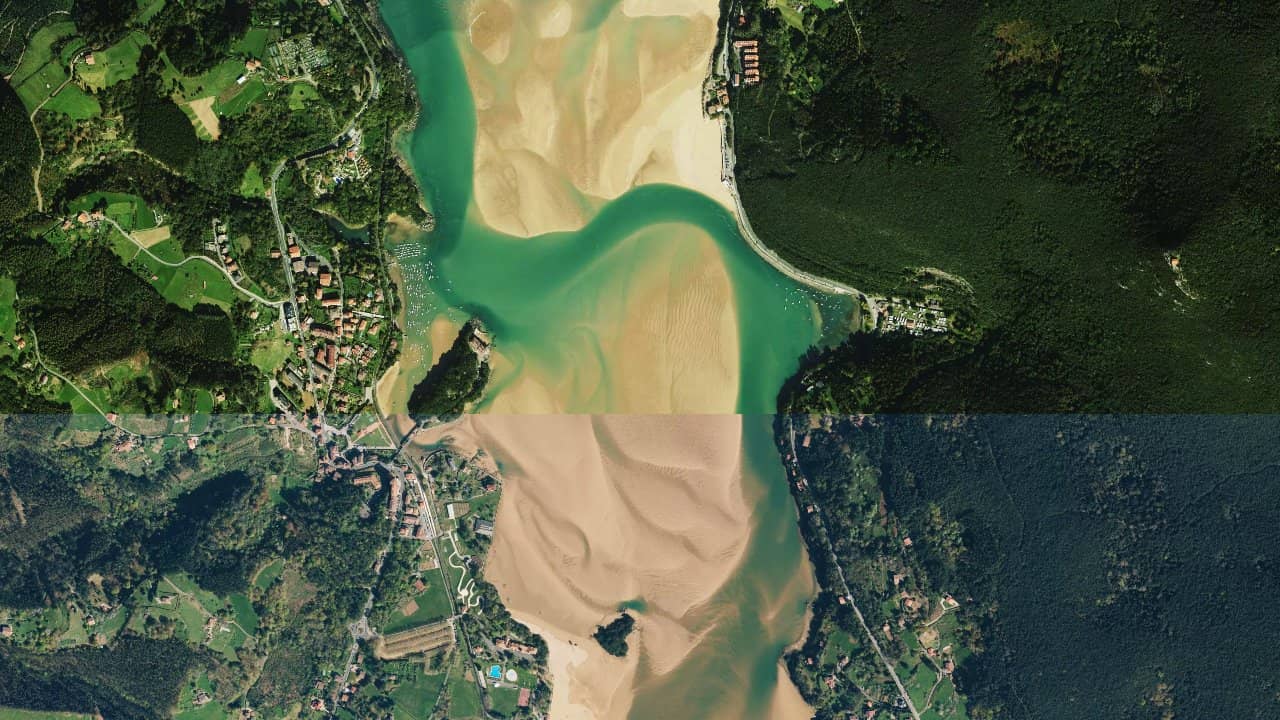
The Laida Beach in Ibarrangelu, in the Spanish Basque Country, is a large beach of fine golden sand in the Urdaibai Biosphere Reserve. It changes shape with the tides, from a small beach at high tide to vast sandbanks at low tide. It is a spot known for surfing with long, gentle waves, but also practiced in kitesurfing thanks to its open space.
Surrounded by impressive dunes and offering a view of the Mundaka estuary and Izaro Island, it attracts riders for its wild atmosphere and easy access. Local surf schools operate here, and the atmosphere is relaxed even in season.
Close to Laga, which is more exposed to the ocean, Laida remains more sheltered by the estuary, ideal for a quiet session.
Historical averages by month — not a live forecast.
Laida Beach is oriented northwest, which favors a side-on or side-shore wind coming from the south, southeast, or southwest for optimal kitesurfing conditions. At low tide, wide sandbanks appear, offering a large area for launching and taking off without rocks, but with shells that can damage the kite in case of a violent crash. At high tide, the space reduces, making launching more technical near the grassy dunes.
The navigation area extends one kilometer long and up to 800 meters wide, with a flat sandy bottom suitable for freeride. Beware of the mouth of the estuary which influences the water surface, making it more chop with onshore wind from the northwest. The best sessions are in the middle of the beach to avoid the dune edges. The prevailing winter winds from the south bring power, while in summer it is lighter but constant.
Easy parking and direct access from Ibarrangelu, with nearby schools for safety checks. The spot works well on all tides, but check the schedules to anticipate changes in sandbanks.
Sources :se.kiteforum.com · se.kiteforum.com · tourisme.euskadi.eus · turismourdaibai.com · wavecamps.com


 Open Windguru forecast