Espagne
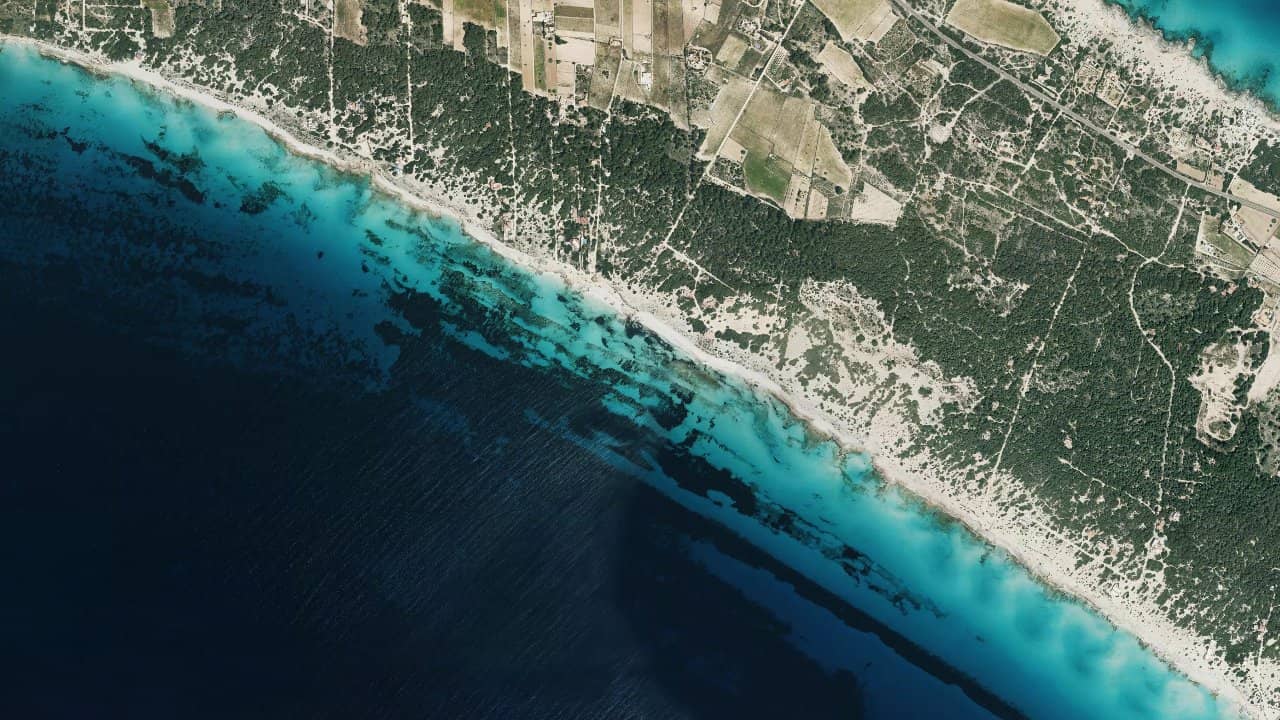
Platja Es Códol Foradat, on the southern coast of Formentera, is a modest-sized beach in the heart of the Migjorn area. It is a spot appreciated for its natural setting, with a mix of sand and rocks, and a more tranquil atmosphere than the larger beaches on the island.
In kitesurfing, the spot is mainly interesting when the wind is well established and consistent. The area is not a large open beach break, but rather a section of rugged coastline, with several access points and limited launch areas depending on the sectors.
Les données de vent affichées ici proviennent d’ERA5 (via Open-Meteo) sur 4 ans, retraitées pour refléter des conditions réalistes.
👉 Le vent moyen a été calibré pour éviter la sous-estimation habituelle des modèles.
👉 Les rafales ont été corrigées par un ratio médian afin d’éviter des valeurs extrêmes irréalistes.
👉 Chaque jour est résumé par le vent médian (P50) observé pendant les heures utiles (8h–20h), puis classé dans des plages de vent.
👉 Le mode pondéré mélange vent moyen et rafales pour refléter au mieux le vent ressenti.
Es Códol Foradat mainly works with wind coming side-on relative to the southern coast of Formentera. The local configuration means that the best conditions occur when the wind is fairly consistent and without strong gusts, as the takeoff and landing areas are limited. The water surface is generally more pleasant in the open sectors of Migjorn, with sandy areas between rocky passages.
The spot is not known for a large flat lagoon or perfectly smooth water. Depending on the orientation, one finds rather a mixed water surface, with small chop and sometimes smoother areas near the shore. At low tide as well as high tide, the beach maintains a similar operation as the tidal range remains low in the Mediterranean, but one must watch for rocky passages and irregular bottoms. Launching is done from the beach or from sandy openings between the rocks, keeping space for kite takeoff and landing.
The spot is better suited for an independent rider than for a complete beginner, especially due to sometimes long access via paths and fragmented navigation areas. One must also contend with summer crowds and areas reserved for swimming or beach restaurants.

The spot performs best with a wind from the W to S sector, clean and consistent, around 18 to 25 knots. It is under these conditions that one finds the best compromise between control, upwind performance, and sailing comfort.
A side-on wind is often the most interesting for sailing smoothly along this coast. When the wind becomes too weak or too unstable, the fragmented access points and rocky passages make the session much less comfortable.
The water surface is most often mixed, with a combination of small waves, chop, and flatter areas depending on the wind direction. When the wind is well oriented and consistent, a fairly clean water surface can be achieved in certain parts of the bay.
However, the rocky bottom and the cuts in the shoreline can create irregularities, especially when the sea is formed. The spot is not a guaranteed flat area, but it can offer good freeride sessions in a natural and uncrowded atmosphere off-season.
Currents are generally weak to moderate in this area, but they can strengthen locally near rocky points and passage areas. The Mediterranean has a low tidal range, so water level variations do not significantly affect daily navigation.
It is especially important to stay alert to wind-related drifts and potential edge effects near the rocks. At this spot, reading the coastline is more important than the tide itself.
With the average wind forecasted around 20.8 knots, the most suitable sizes are generally 7 to 9 m² for most riders. Heavier riders may prefer 9 to 10 m², while lighter ones often feel better with 6 to 8 m².
When the thermal or a well-established flow rises above 25 knots, it may be necessary to go down a size. At this spot, it is better to keep a kite that is easy to relaunch and well controllable in gusts.
The most interesting local wind in this area often comes from the west to northwest, with episodes that can also shift to the south depending on Mediterranean depressions. In Formentera, tramontane and disturbed flow regimes can provide exploitable sessions, but the quality depends greatly on the stability of the wind at the spot.
The best days are those when the wind blows at 20 to 25 knots cleanly, without being too irregular in gusts. With wind that is too south or too onshore, the water surface becomes more disturbed and navigation areas lose comfort.
The climate of Formentera is Mediterranean, with mild winters and hot, dry summers. In summer, air temperatures often rise to around 28 to 32°C, while in spring and autumn, conditions remain very pleasant for sailing, with days often between 18 and 25°C.
The most comfortable period for kitesurfing is generally spring, late season, and early autumn, when the wind is still present but the heat and crowds are more bearable. Winter can also offer good sessions, but the water is cooler and wind episodes are more irregular.
The bottom is mixed, sand and rock, with rapid variations depending on the access points. Depth increases gradually in several areas, but some sectors remain shallow near the shore and require caution.
This is not a spot with an entirely sandy bottom. One must watch for stones, rocky slabs, and posidonia areas, especially during takeoff and landing phases.
The water is warmest in summer, with values often rising to 26 to 28°C. During this period, a light wetsuit or a simple shorty may suffice depending on individual sensitivity.
In winter, water temperature generally drops to around 14 to 16°C, which requires a thicker full wetsuit, often 4/3 mm or 5/4 mm depending on conditions and wind level.