Espagne
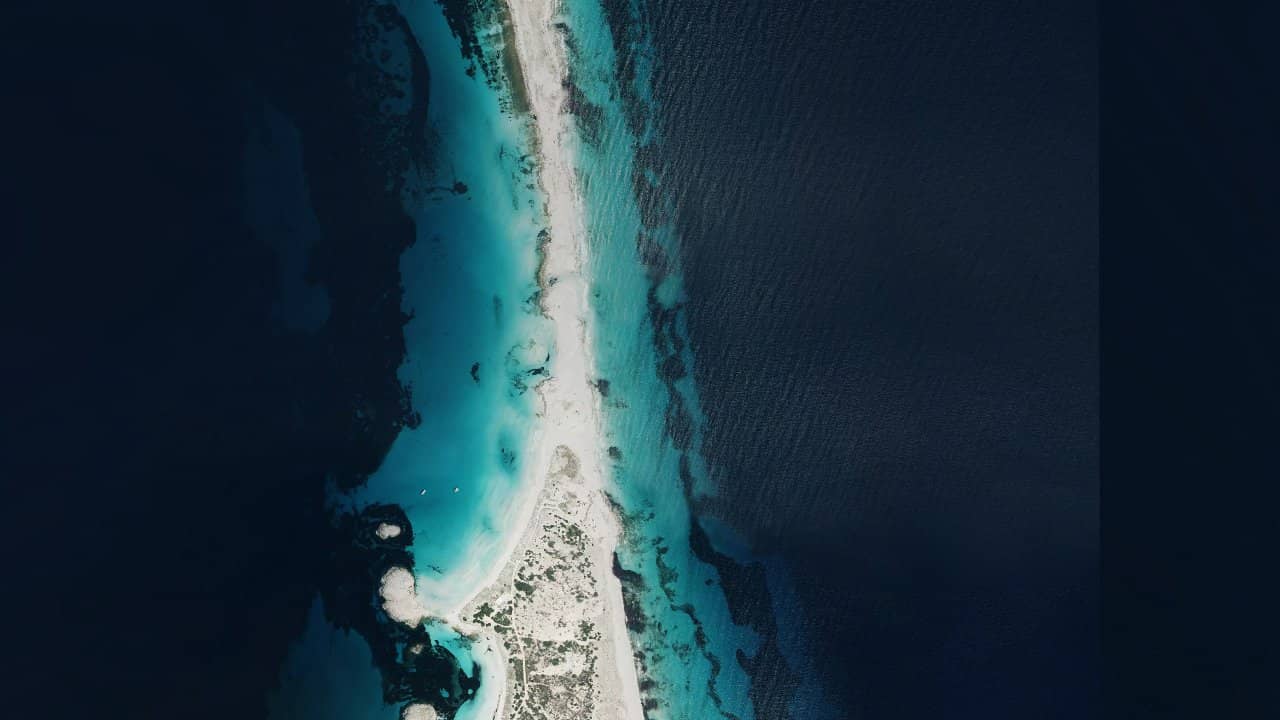
Platja de Ses Illetes, in the north of Formentera, is a spot known for its turquoise waters and protected setting. It is also a very popular place for riders looking for clear water and a typical Balearic atmosphere.
The spot mainly works with the thermal tramontane and winds from the east to northeast. However, kitesurfing is prohibited during the high season, which significantly limits practice during tourist months.
Les données de vent affichées ici proviennent d’ERA5 (via Open-Meteo) sur 4 ans, retraitées pour refléter des conditions réalistes.
👉 Le vent moyen a été calibré pour éviter la sous-estimation habituelle des modèles.
👉 Les rafales ont été corrigées par un ratio médian afin d’éviter des valeurs extrêmes irréalistes.
👉 Chaque jour est résumé par le vent médian (P50) observé pendant les heures utiles (8h–20h), puis classé dans des plages de vent.
👉 Le mode pondéré mélange vent moyen et rafales pour refléter au mieux le vent ressenti.
The spot of Ses Illetes is most often navigated with wind from the E to NE, sometimes wider depending on the days, but the most reliable feedback remains on a side-on to side-shore orientation relative to the beach. This provides reassuring conditions for takeoff and returning to the shore, with fairly clean navigation as long as the wind remains consistent.
The water is generally flat to slightly choppy on the protected part of the sandbank, with a bit more movement as you move towards the exposed areas. On one side of the spot, there is calm water suitable for freeride and freestyle, and on the other side, more formed conditions, with a bit more wave depending on the orientation and swell. The bottom is generally pleasant for learning, but one must stay in authorized areas and clearly identify the limits of the spot before heading out.
The launching area is directly from the beach, in a very busy environment and sometimes constrained by local regulations. The takeoff zone can be narrow depending on the crowd, which requires proper preparation of equipment and maintaining a good distance from bathers. In practice, it is a very pleasant spot when attendance is low, but it requires attention to organization at the shore and strict adherence to authorized periods.

The best sessions occur with a well-established wind from the east to northeast, around 15 to 20 knots. It is in this range that the spot shows the most regularity and navigation becomes the most enjoyable.
The most interesting months are mainly in spring, then during certain windows of autumn and winter. In summer, even if the breeze can work, kitesurfing is prohibited on tourist beaches, which significantly reduces kite interest.
The water is often flat on the sheltered part of the spot, making it a very good area for freeride and freestyle. When the swell comes in better or when approaching the more exposed area, you can find a bit more chop and sometimes small exploitable waves.
Overall, the water remains clear and pleasant, with conditions varying according to the wind sector and position on the sandbank. Riders especially appreciate the visibility of the spot and the ability to choose between a smoother area and a livelier area depending on their practice.
Currents are generally moderate, but local effects around the sandbank and passage areas should be monitored. The spot can become more technical near busy access points and in areas where water flows between the passes and small islands offshore.
The tide mainly influences the width of the navigable area and access to the shore, more than the overall quality of the spot. When the water rises, some passages become more comfortable for takeoff and navigation, while at lower tide, more attention is needed for shallow areas and potential sandbanks.
With wind often between 8 and 18 knots in spring according to feedback, versatile kites are recommended. For a weight around 75 kg, the most suitable sizes are often between 10 and 15 m² in light to moderate conditions.
When the thermal picks up more or the wind becomes stronger, kites of 8 to 10 m² may suffice, and more energetic days may require even smaller sizes. A quiver oriented towards 7, 8, 9, 10, and 11 m² covers most useful scenarios at this spot.
The wind regime at Ses Illetes relies on a mix of thermal winds and more irregular flows depending on the season. Local sources indicate good functioning with wind from the east to northeast, and sometimes more variable conditions between November and April.
In the warm season, a regular thermal breeze is often found, generally around 15 to 20 knots in nearby areas, with weaker or more irregular days depending on the weather situation. The wind is not necessarily strong, but it can be very clean and quite consistent when the thermal sets in.
The climate of Formentera is typically Mediterranean, with hot and dry summers and mild winters. In the summer season, the air often exceeds 30°C and the water hovers around 28°C, making sessions very comfortable in a light shorty or lycra.
The best periods are mainly in spring, autumn, and winter, when attendance is lower and the winds become more exploitable. Several sources also report a good sailing window between March and May, and again during part of autumn and winter.
The bottom is mostly sandy, with a generally gradual depth in the most used areas. You can stand for quite a while depending on the exact spot of entry, which facilitates takeoff and equipment control.
However, one must remain attentive to shallow areas and changes in level around the sandbank. The spot remains pleasant for clean navigation, but it requires careful reading of the area before heading into the more exposed parts.
In the height of summer, the water temperature often rises to 28°C, allowing for very light equipment. The air frequently exceeds 30°C, with comfortable but sometimes very crowded sessions.
In spring and autumn, the water remains more temperate and the feel becomes more variable depending on the days. In winter, the water is significantly cooler, but the wind conditions can then be the most interesting for riders looking for calmer and more consistent sessions.