
Espagne
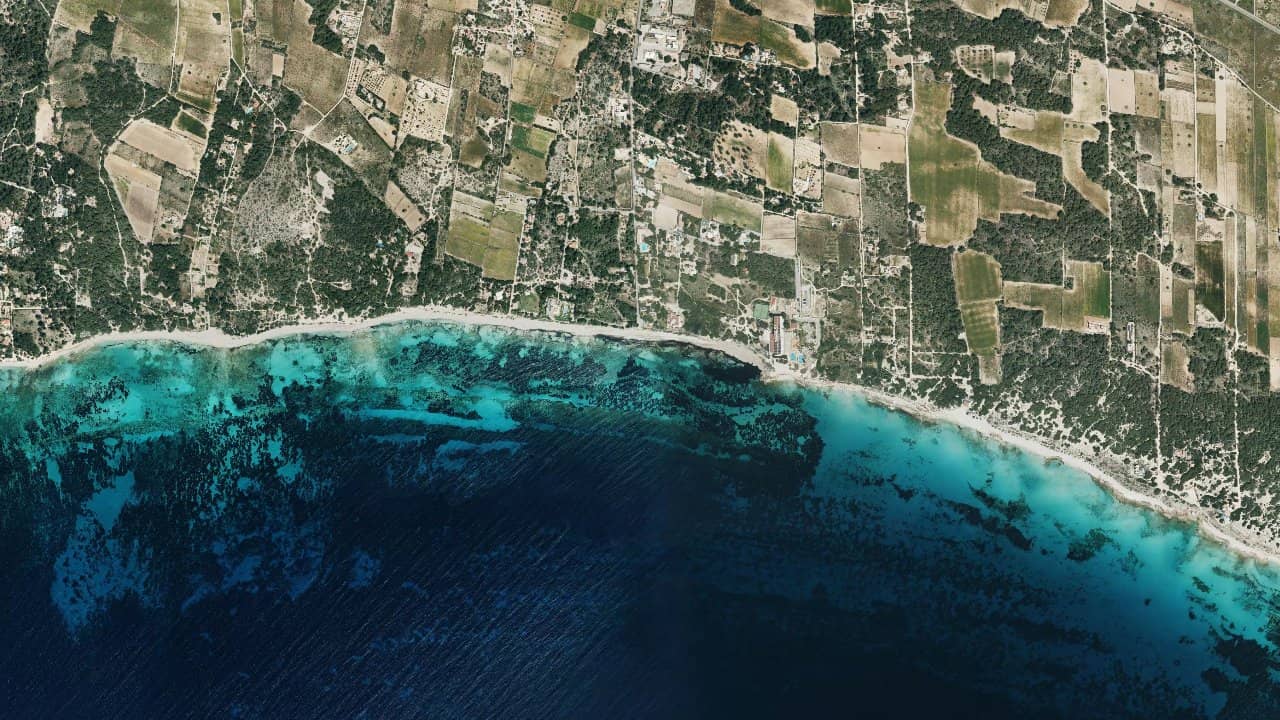
Platja Ca Marí, in the Migjorn area of Formentera, is a calm and fairly accessible spot, with a long sandy beach and a rather tranquil atmosphere. There are some services available, convenient access points, and generally a more laid-back crowd compared to the more exposed beaches of the island.
For kiting, it’s an interesting area when the wind is well established, with space along the shoreline and a zone that remains natural in places. The setting is pleasant for navigating in a typical Formentera environment, but it’s important to keep in mind that this is not a spot designed solely for riders, and one must remain attentive to other beach users.

Les données de vent affichées ici proviennent d’ERA5 (via Open-Meteo) sur 4 ans, retraitées pour refléter des conditions réalistes.
👉 Le vent moyen a été calibré pour éviter la sous-estimation habituelle des modèles.
👉 Les rafales ont été corrigées par un ratio médian afin d’éviter des valeurs extrêmes irréalistes.
👉 Chaque jour est résumé par le vent médian (P50) observé pendant les heures utiles (8h–20h), puis classé dans des plages de vent.
👉 Le mode pondéré mélange vent moyen et rafales pour refléter au mieux le vent ressenti.
The spot works best when the wind comes in side-shore to side-on depending on the exact orientation of the flow on the southern coast of Migjorn. In this area, the water surface generally remains quite clean near the shore, with a sea often fairly flat to slightly choppy when the wind picks up, but some disorder can form if the swell comes in. The beach being long, it is possible to choose a clearer entry point depending on the crowd and the state of the sand.
Entry is done directly from the beach, with a preparation area that must remain clean and clear. A careful takeoff is necessary, as the area is frequented by bathers and holidaymakers in season. The shoreline of Migjorn is quite open, providing space for navigation, but one must remain vigilant to more congested areas near access points, concessions, and facilities close to the beach.
Regarding tides, the effect remains limited as we are on an island in the Balearics, but the water height can slightly modify the width of the sandy strip and the useful area for launching. When the sea is higher, the available space on the shore can reduce, and the water surface can become a bit closer to the surf. The spot remains more comfortable with a well-established wind and a sufficiently clear beach.
The best sessions occur with a steady wind from SW to SE, sufficient to come cleanly onto the beach without being too onshore. A strength around 18 to 25 knots generally offers the best compromise between safety, control, and enjoyment. When the wind is stable and the beach is clear, the spot becomes significantly more enjoyable.
The most comfortable conditions are those of a well-established wind, with few gusts and a water surface that is not too formed. For intermediate riders, it’s easier when the sea is smooth and the pressure is moderate. Lighter riders can often go out earlier, while heavier riders may need a bit more power.
The water surface is often flat to slightly choppy in the best configurations, especially when the wind is clean and the swell remains low. When the west swell comes in, there can be a bit more texture and some small shore waves, but this is not a wave spot in the traditional sense.
The area remains pleasant for freeride, transitions, and long, calm navigations. In case of stronger winds, the chop can become more pronounced offshore, but the shore generally remains readable and exploitable for simple navigation.
Currents are generally weak to moderate along this beach, but they can strengthen at times depending on the swell, wind direction, and local shoreline configuration. One must remain attentive to lateral drifts if the wind is irregular or if the sea becomes more formed.
The tide has little effect on the general functioning of the spot, but it can influence the width of the beach available for preparation and water exit. During higher sea periods, some areas become less comfortable for takeoff, although navigation itself remains possible.
In classic navigation, the most useful sizes are often 8 m², 9 m², and 10 m². In stronger winds, a 7 m² can become the right option, especially for medium to heavy riders. When the wind is lighter but well established, an 11 m² can help to stay on the water.
With the conditions reported around 20 knots, the most logical range for navigation often lies between 8 m² and 10 m². Lighter riders can go smaller, while beginners or heavier riders may sometimes need more fabric depending on the wind quality.
The spot mainly benefits from winds from the west to northwest, which are often the most interesting for navigation on Migjorn. When the wind is well oriented, it can come cleanly onto the beach with a side-shore or side-on component favorable for kiting. The most interesting days are those when the wind sets in regularly, without too many lulls near the shore.
With an average reported around 20 knots, the spot becomes exploitable for a wide range of riders. The most favorable months often concentrate between February, March, April, May, September, October, November, December, and January, when weather patterns are more active. Thermal breezes can also complement certain days, but the best kiting remains linked to depressions and well-oriented synoptic winds.
Formentera enjoys a mild Mediterranean climate, with moderate winters and hot, dry summers. The kiting season is long, and the best periods for kiting often run from spring to autumn, with pleasant air temperatures and water that warms up quickly from late spring.
In summer, it is often hot on the sand, and sessions require good management of hydration and sun exposure. In spring and autumn, conditions are often more comfortable for navigation, with less tourist pressure and more exploitable wind. Winter remains navigable on certain days, but a warmer wetsuit is then necessary.
The bottom is mainly sandy, with a depth that gradually increases from the shore. One can usually stand for quite a while near the shore, which facilitates getting in the water, although the exact area may vary depending on the tide and beach condition.
The bathymetry remains generally simple, with no major difficulties in the most used areas for kiting. However, one should remain attentive to any small changes in the bottom near the most frequented access points and avoid navigating too close to swimming areas.
The water is generally pleasant from June to October, with temperatures often around 22 to 27°C in mid-summer. In spring, it gradually warms up and becomes suitable for navigating in a light wetsuit from late spring.
In winter, the water temperature drops significantly and often hovers around 14 to 16°C. During this period, a warmer wetsuit is necessary, especially if the wind is strong or if sessions last a long time.