Espagne
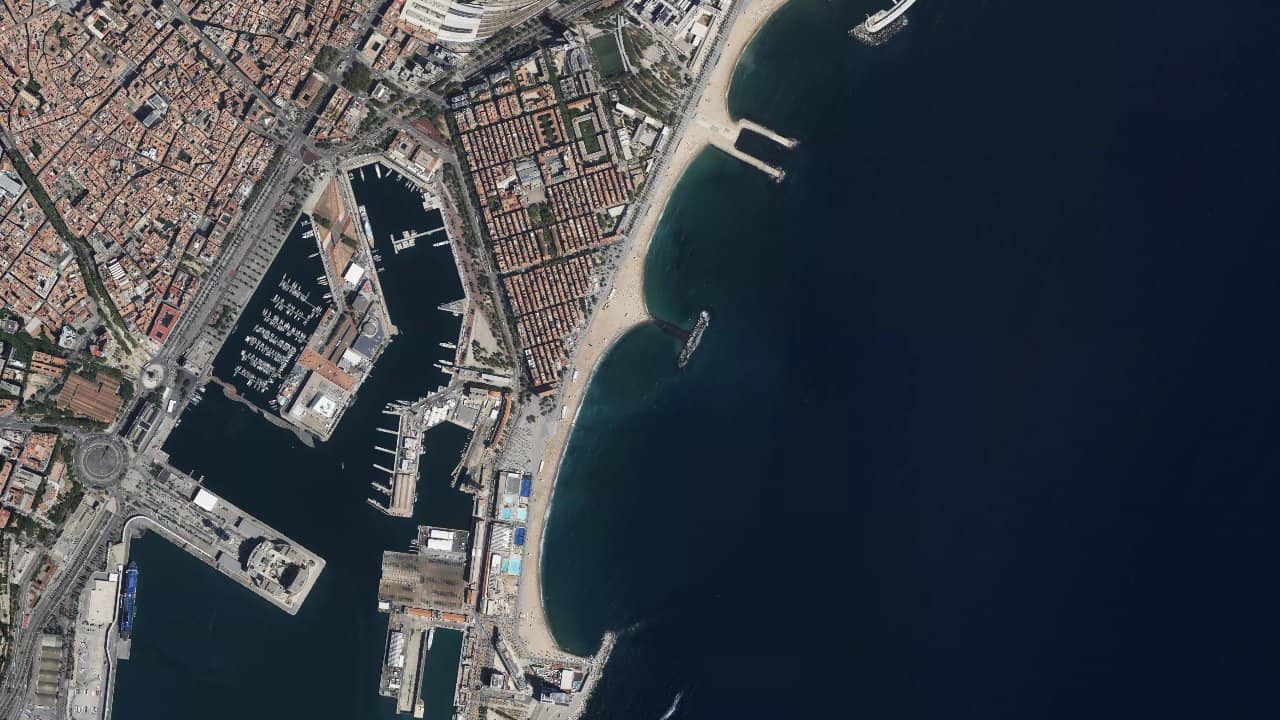
Platja de Sant Miquel, in Barcelona, is an urban beach that is easy to access, with a simple and often lively atmosphere. It is a practical spot for kitesurfing when the wind conditions set in along the Catalan coast.
The water conditions depend a lot on the wind of the day, but there is often quite irregular navigation due to the urban beach environment and local traffic. The spot remains interesting for a short session, especially when the wind is well-oriented and sufficiently steady.
Les données de vent affichées ici proviennent d’ERA5 (via Open-Meteo) sur 4 ans, retraitées pour refléter des conditions réalistes.
👉 Le vent moyen a été calibré pour éviter la sous-estimation habituelle des modèles.
👉 Les rafales ont été corrigées par un ratio médian afin d’éviter des valeurs extrêmes irréalistes.
👉 Chaque jour est résumé par le vent médian (P50) observé pendant les heures utiles (8h–20h), puis classé dans des plages de vent.
👉 Le mode pondéré mélange vent moyen et rafales pour refléter au mieux le vent ressenti.
At Platja de Sant Miquel, the most exploitable wind generally comes in side-shore to side-on depending on the orientation of the flow along this stretch of urban coastline. According to available information on the Barcelona coast and local feedback, it is especially important to aim for a well-established wind and avoid overly irregular days, as the beach is exposed to an environment disturbed by the city and nearby infrastructures.
The water is most often flat to slightly choppy, with sometimes a small short swell when the wind picks up. This is not a spot known for waves, and it works more for freeriding than for surfkiting. The water entry is from the beach, with a takeoff area that must be kept clear, as space can be limited depending on the crowd. During busy periods, you also have to deal with swimmers and traffic on the sand.
Depending on the tide, the evolution of the water remains moderate, but navigation becomes more comfortable when the water edge is clean and without marked shorebreak. The spot is especially interesting when the wind is steady enough to allow for long edges without having to relaunch the kite too much. The conditions are therefore more suited to a rider who knows how to manage water entry in an urban and sometimes crowded environment.

The best sessions occur with a well-established, steady wind from S to NE close to 18 to 25 knots depending on size. A clean flow allows for a more stable water surface and more comfortable edges.
When the wind is too weak or too irregular, the spot quickly loses interest. Here, the ideal window is mainly a strong wind, sufficiently stable for kitesurfing without having to deal with too many holes or variations.
The water is generally flat or slightly choppy, with a short sea when the wind is good. This is not a wave spot, and the best sessions are those where the surface remains clean and steady for freeriding.
When the wind is stronger, the chop can become more present, especially on the exposed edges. However, well-oriented days offer simple, fast, and fairly comfortable navigation to work the edges offshore and then return to the shore without particular difficulty.
Currents are generally weak to moderate on this stretch of urban beach, but they can strengthen locally depending on the swell, wind, and seaside activity. It is important to stay attentive to changes in water areas, especially near the busier edges.
The tide has a limited impact on navigation compared to other more technical spots, but it can change the width of the beach available for takeoff and landing. When the beach area is small, vigilance must be increased to maintain a margin when coming back in.
With the most typical wind conditions at this spot, the most useful kites are often between 7 m² and 10 m². For an average size around 20 knots, a 9 m² is often the most versatile size, with an 8 m² or 10 m² depending on weight and wind consistency.
In case of lighter wind, an 11 m² can become relevant, while in stronger gusts, you may sometimes need to go down to 7 m². The exact sizes depend a lot on the rider and the stability of the flow on the day of the session.
The local wind regime can be quite variable, but the Barcelona area is mainly known for W to NW winds when systems settle over the region. You can also encounter marine flow depending on weather situations, with intensity changing significantly from day to day.
The conditions reported around 20.4 knots correspond to a good freeride session for an average size, with a kite suitable for this type of steady wind. The spot becomes much more interesting when the wind is well-settled and consistent, as days that are too light or too irregular make navigation less enjoyable.
The climate in Barcelona is mediterranean, with hot and dry summers, and rather mild winters. Between spring and autumn, the temperatures are the most pleasant for kitesurfing, with generally stable weather and many sunny days.
In summer, the heat can be pronounced, and it is better to kitesurf early or late in the day. In spring and autumn, the conditions are often more comfortable, with a good compromise between air temperature and wind consistency. The water remains quite pleasant for a good part of the season, although a light wetsuit may be necessary outside of summer.
The depth is generally gradual with a rather sandy bottom on this type of urban beach. You can often stand near the shore, which makes it easier to get in the water, but you still need to keep an eye on the variations of the beach edge.
The bottom does not present any particular difficulties reported here, making the spot quite simple to approach for a freeride session. The depth remains compatible with classic navigation, with no major technical areas known in the immediate sector.
The water is most pleasant between June and September, with temperatures often sufficient to kitesurf in a light wetsuit, or even in a shorty depending on the days. For the rest of the year, a thicker wetsuit quickly becomes useful, especially in spring and autumn.
The thermal conditions remain generally comfortable for the Mediterranean, but you should expect notable seasonal variations. In winter, the air can remain mild on some days, but the water requires more protection.