Portugal
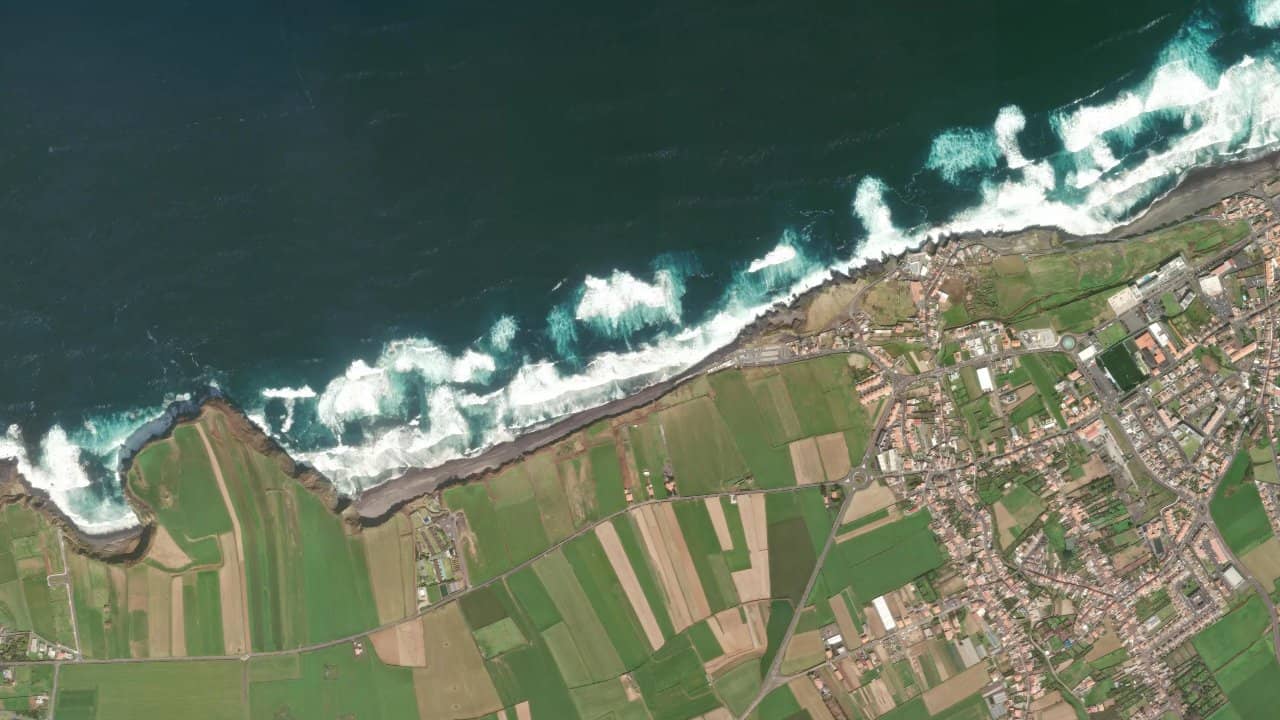
Praia do Areal de Santa Bárbara, in Ribeira Grande on the island of São Miguel, is a large beach in the north of the Azores archipelago. It is a spot known for surfing and bodyboarding, with a relatively simple and local attendance off-season. The beach is long, well-exposed, and its natural setting attracts both riders and bathers when the sea is calmer.
For kitesurfing, it is mainly a spot to reserve for well-chosen days. The water can quickly become powerful, and the environment requires staying attentive to swell conditions, wind, and currents. When everything aligns, you can enjoy a vast space and a clear shoreline, but it is not a technical or easy spot in all weather.
Les données de vent affichées ici proviennent d’ERA5 (via Open-Meteo) sur 4 ans, retraitées pour refléter des conditions réalistes.
👉 Le vent moyen a été calibré pour éviter la sous-estimation habituelle des modèles.
👉 Les rafales ont été corrigées par un ratio médian afin d’éviter des valeurs extrêmes irréalistes.
👉 Chaque jour est résumé par le vent médian (P50) observé pendant les heures utiles (8h–20h), puis classé dans des plages de vent.
👉 Le mode pondéré mélange vent moyen et rafales pour refléter au mieux le vent ressenti.
The spot mainly works with a side-shore to side-on wind depending on the swell orientation and the wind direction of the day. The beach is wide, allowing space to prepare equipment and take off, but you need to maintain a significant safety zone as the sea can quickly become engaged. According to local sources, the beach is mainly known for its waves and exposure, making it a place more suited for riders comfortable in chop and waves than for beginners.
The water is generally choppy with swell, and it can become wave when the swell comes in well. At high tide, the water hits the shore more, and the useful area can visually reduce, with a launch closer to the wave zone. At low tide, the beach offers more space, but the shorebreak and currents can still be present. Therefore, you need to choose your launch carefully and keep a margin for returning to the shore.
The navigation area is mainly located offshore from the central axis of the beach, staying away from bathers and organized swimming areas. The takeoff should be done on the wide sand, with rigorous control of the kite before engaging. This is not a flat freestyle spot, but rather a site for waves or dynamic navigation, with real attention to reading the water and managing power.

The best sessions occur with a wind W to NW, clean and fairly steady, preferably side-shore or side-on. Ideally, there should be present swell but not too disorganized, in order to maintain power without suffering excessive shorebreak. When the wind is stable and the swell remains readable, the spot becomes more exploitable and enjoyable.
This is not a spot to seek in very light winds, nor with poorly oriented winds. The good compromise is a steady wind, a lightly loaded beach, and a sea that allows you to launch without getting trapped at the shore.
The water is most often choppy with residual swell, and it can turn into waves as soon as the swell is well present. There is rarely flat water here, except during very specific windows and at the edge of the beach. The area close to the shore can be shaken by the shorebreak, especially when the swell comes in strongly.
While navigating, you can find nice runs offshore, but you have to accept lively and powerful water. This is not a spot to look for clean and easy lines like on a lagoon; here, you navigate with the sea, not against it.
Currents can be present and sometimes more pronounced near the shore when the swell comes in strong. You also need to be careful when returning to the beach, as the shorebreak and water turbulence can complicate regaining footing. Tides modify the shape of the wave and the energy of the shore, but the spot does not become a flat water area.
Navigation is more serene when you know the tide timing and the retreat area well. On an open beach like this, the current can quickly move a tired or misplaced rider, so you need to stay attentive to your heading and distance from the shore.
With wind around 25 knots, the most useful sizes are often between 7 and 9 m² depending on the build and level. A lighter rider may sometimes manage with a 7 m², while a heavier build will be more comfortable with 8 or 9 m². On more lively days, you should plan for smaller sizes to maintain control in gusts.
To cover the spot properly, it is relevant to have a quiver around 7, 8, and 9 m², with a 10 m² only if the use is very regular in more moderate winds. On this type of exposed beach, it is better to prioritize control over raw power.
The wind regime is variable, with Atlantic influences that can bring fairly strong gusts to the north coast of São Miguel. The useful wind often comes from the W to NW sector, sometimes more northwest depending on front departures or the positioning of depressions. On-site, the wind can be sustained and gusty, which requires keeping some depower.
With the indicated wind score, we are on a navigation beach that is already quite lively, but not automatically ideal. The best sessions occur when the wind is clean, fairly steady, and blowing cross-shore relative to the beach. In more disturbed conditions, gusts and direction variations can make the spot more physical.
The climate of São Miguel is mild all year round, with temperatures rarely extreme. In summer, the air is generally pleasant, around 22 to 26°C depending on the periods, while winter remains temperate, often between 14 and 18°C. The weather can change quickly on the island, with cloudy spells, rain, and sunny breaks in the same day.
The spot can be navigated over several seasons, but the best sessions depend a lot on the combination of wind + swell + tide. The water remains relatively mild for the North Atlantic, allowing for navigation with an adapted wetsuit without falling into icy conditions. In summer, the presence of tourists and bathers increases, so space management becomes more important.
The depth increases quite quickly as you move away from the shore, with a shallow area that can be stirred up by the swell. The bottom is mainly
You can stand in a limited distance depending on the tide and swell, but you should not count on a long shallow plateau. The depth and bottom change quickly with the movement of the water, which reinforces the importance of a clean and well-controlled launch.
The water temperature is cool all year round, but it remains manageable with a good wetsuit. In summer, it often hovers around 22 to 23°C according to local data, allowing for more comfortable navigation in a light wetsuit or reinforced shorty depending on habits. In autumn and spring, a 3/2 mm or 4/3 mm is often more suitable.
In winter, you need to plan for a warmer wetsuit, often 4/3 mm to 5/4 mm, with accessories depending on sensitivity to cold. The Atlantic water remains invigorating, and the sensation can drop quickly when the wind picks up.