Kiteloopers - Kitesurfing spots, trips and destinations worldwideKiteloopers - Kitesurfing spots, destinations and kite trips worldwide
CarteDestinationsBlog
Connexion

Project

  • About
  • Contact

Legal

  • Terms of Service
  • Privacy
  • Cookies
  • Legal mentions
  • Support

Community

  • Spots
  • Blog
  • Schools
  • Instructors
  • Accommodations
  • Trips
  • KiteMarket

Social

  • Instagram
  • Facebook
© 2026 Kiteloopers — All rights reserved
Moledo

Moledo - Praia

Portugal

🎓Inter · Conf
🌊Vagues
💨20.5 nd
☀️15.5°C

Moledo

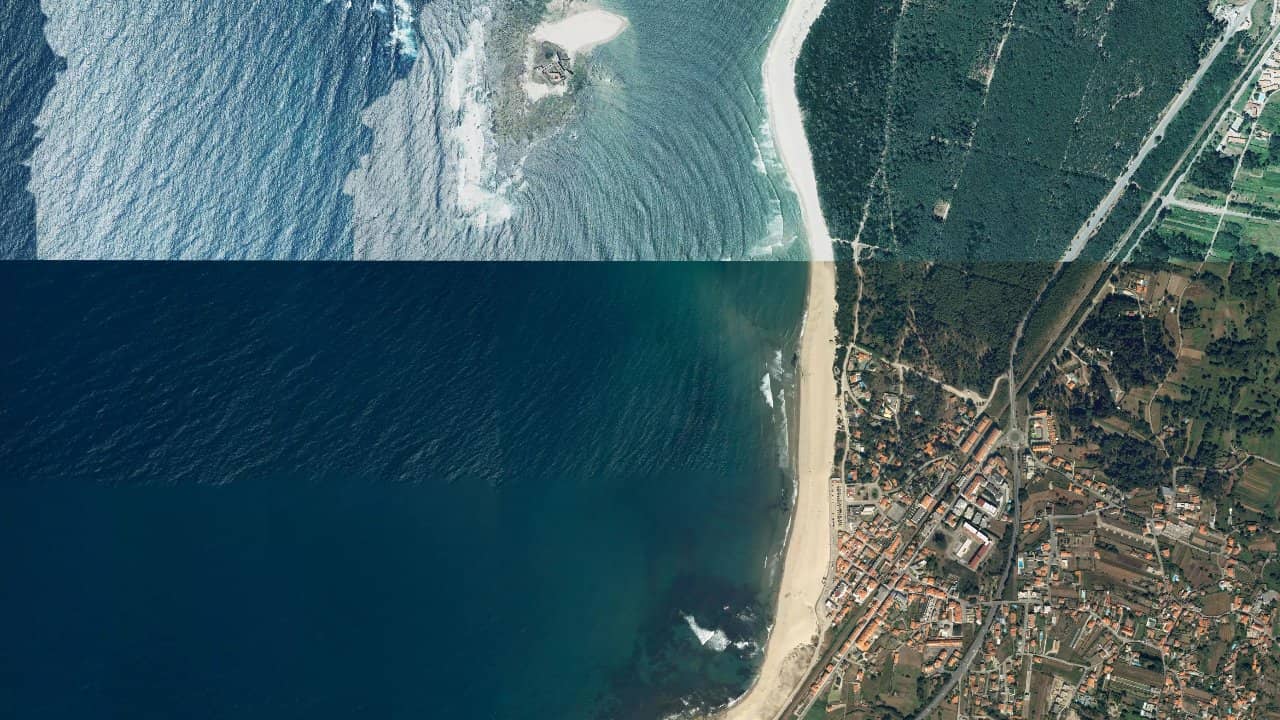
The beach of Moledo is located in the far north of Portugal, facing the Atlantic Ocean and very close to the Spanish border. It is a large sandy beach, bordered by a pine forest and with an unobstructed view of the Insua islet and its fort, providing a very pleasant setting for kitesurfing.

Moledo is a spot known to kitesurfers in the Viana do Castelo region for its wilder and less crowded side compared to Cabedelo. The beach is wide, with plenty of space to set up equipment, and the atmosphere remains calm even in high season.

Les données de vent affichées ici proviennent d’ERA5 (via Open-Meteo) sur 4 ans, retraitées pour refléter des conditions réalistes.
👉 Le vent moyen a été calibré pour éviter la sous-estimation habituelle des modèles.
👉 Les rafales ont été corrigées par un ratio médian afin d’éviter des valeurs extrêmes irréalistes.
👉 Chaque jour est résumé par le vent médian (P50) observé pendant les heures utiles (8h–20h), puis classé dans des plages de vent.
👉 Le mode pondéré mélange vent moyen et rafales pour refléter au mieux le vent ressenti.

  • 🟢 10–16 nds : vent faible mais navigable (notamment en foil).
  • 🟡 16–22 nds : plage idéale, conditions confortables pour la majorité.
  • 🔴 22–28 nds : vent fort, réservé aux riders expérimentés.
  • 🟣 28+ nds : conditions extrêmes, navigation engagée.

Localisation & Points d'intérêt

Informations utiles

Type d’eau
Profondeur
Navigabilité
Marée haute
wavewave
Pied
Oui
Marée basse
wavewave
Pied
Oui
Conditions de navigation

Moledo mainly works with north and northwest winds, which generally arrive side-shore to side-on relative to the beach. This thermal wind, the Nortada, sets in late morning and gradually increases in the afternoon, with an average intensity around 20 to 25 knots during the main season.

The beach is long and sandy, with a large open area for water entry and kite launching. Generally, you start from the central part of the beach, where there are fewer obstacles and a more manageable shorebreak. Further north, the wind remains clean but the waves can be a bit more powerful. Further south, the beach continues but you move away from the monitored areas.

The water surface is clearly oriented wave / waves. There is almost always swell due to the full west exposure of the coast, with waves varying from small ripples to more serious swells depending on Atlantic depressions. At low tide, you benefit from sandbanks that better organize the waves, with fairly regular peaks and more readable sections. At high tide, the shorebreak is closer to the beach and the waves become more powerful, making water entry more technical.

Depending on the configuration of the sandbanks, there are areas with slightly flatter water between sets, especially in the troughs between two peaks. These sectors are interesting for transitions and some freeride runs, but Moledo remains primarily a spot for small to medium waves. Complete beginners are usually supervised by schools in more sheltered parts or in areas where the waves break less hard.

The beach is very wide, providing plenty of space for launching and landing. However, it is important to pay attention to the state of the tide, as the beach shrinks at high tide and the useful sandy area can be more limited. Local kiteschools generally organize dedicated kitesurfing zones to avoid conflicts with bathers in summer.

The spot is less crowded than Viana do Castelo (Cabedelo), which leaves more space on the water, but the conditions are more challenging when the swell is present. Moledo is therefore very popular with riders who enjoy kitesurfing in the waves on twin-tips or directional surfboards, whether in freeride or strapless.

Vent ideal
Ndominant
NWdominant

The ideal conditions at Moledo occur with a well-established wind from N to NW, between 18 and 25 knots, providing a side-shore to side-on flow relative to the beach. This type of wind, frequent from May to October, generates a water surface with nice waves while remaining sufficiently consistent for comfortable kitesurfing.

To make the most of the spot, many riders prefer a mid-low to mid-high tide, when the sandbanks organize the waves and the shorebreak remains manageable. A clear sky favors thermal strengthening and increases the likelihood of having stronger wind than forecasted.

État de la mer

The water surface at Moledo is typically wave-formed. There is a mix of chop near the shore and small to medium waves offshore, with cleaner sets when the swell is well oriented or when the sandbanks are well placed. The waves can offer nice lines for strapless surfing or twin-tipping, but they become powerful on days of big swell.

At low tide, the water can be a bit more organized, with more regular wave zones on the sandbanks and smoother channels between the peaks. At high tide, the shorebreak strengthens, the waves break closer to the beach, and entering the water becomes more technical, especially with strong wind. On days of moderate wind and low swell, you can find relatively smoother water sections between sets, interesting for practicing maneuvers, but Moledo clearly remains a wave spot rather than flat.

Courants marins

The currents at Moledo are influenced by the tide and the Atlantic swell. There is a current parallel to the beach that can be felt, particularly on days of strong swell or high tide. This current is generally manageable for an intermediate rider, but it can complicate the waterstart and heading for less experienced ones.

At tide changes and during high coefficients, the current is more pronounced and can pull out to sea or along the beach depending on the direction of the swell and wind. It is important to take landmarks on the beach and regularly check your drift downwind. The proximity of the mouth of the Minho River (further north) also reminds that there can be more complex water movements in the area, even if the beach of Moledo remains mainly subject to the classic tidal currents of an open coast.

Taille de kite recommandée

With an average of 20 to 25 knots in season, medium-sized riders (70–80 kg) most often use kites around 8 to 10 m². Lighter riders can go down to 7 m² on well-winded days, while heavier riders will prefer 10 to 11 m² when the wind is a bit more moderate.

Outside the thermal period or on days of lighter wind, it may be useful to plan for a larger kite of 11–12 m², but for the high season in Moledo, a quiver centered on 7–10 m² already covers the majority of sessions.

Météo & vent

The dominant wind regime at Moledo is related to the Nortada, a wind from the N to NW sector that strengthens thermally during sunny summer days. This wind often picks up in the early afternoon to reach values around 20 to 25 knots, with good consistency.

The main wind season extends from May to October, during which the thermal wind works most often, especially under clear skies. Off-season, there can be episodes of south or SW winds related to depressions, sometimes more irregular and accompanied by rain and bigger swells. The spot remains usable, but the conditions are more changeable and technical.

Climat

The north of Portugal around Viana do Castelo enjoys a mild oceanic climate. Summers are generally moderately warm, with air temperatures often between 22 and 28 °C during the day, cooled by the wind and the influence of the Atlantic. Nights remain pleasant.

Winter is wetter and cooler, with temperatures around 10 to 15 °C, more rain, and depressions that bring swell and wind. The spot is kitable year-round for motivated riders, but the main pleasant season for combining wind stability, comfort, and open services is from May to October.

Profondeur

The depth at Moledo is gradual with a mainly sandy bottom. You can stand quite far offshore at low tide thanks to the sandbanks, which facilitates initial maneuvers and recovery in case of equipment issues.

At high tide, you lose footing more quickly near the beach, especially in areas where the swell digs into the wave bar. There are no large rocky areas in the central navigation zone, but as always on an Atlantic coast, it is advisable to walk the beach at low tide to spot any potential changes in sandbanks or small rocky areas.

Température de l’eau

In summer, the water temperature in northern Portugal is around 17 to 21 °C. A full wetsuit 3/2 mm or 4/3 mm is generally sufficient for comfortable kitesurfing, especially with the thermal wind that cools the air.

In spring and autumn, the water remains cool, often between 14 and 18 °C, and many riders switch to a 4/3 mm or 5/3 mm depending on their sensitivity to cold and the wind strength. In winter, the water can drop below 14 °C, making a thicker wetsuit, like 5/4 mm with possibly booties, more suitable for sessions in big swells.

Avis des kitesurfers

Chargement des avis...

Laisser un avis

0/500 caractères

Votre avis sera modéré avant publication

RéserverTrouver une écoleLouer du matériel
Voir sur la carte

Résumé rapide

  • 🌍 Pays : Portugal
  • 📍 Zone / Région : Viana do Castelo
  • 💰 Budget sur place : $$
  • 🎓 Niveau minimum : Intermédiaire
  • 🌤️ Saison idéale : Jan → Déc
  • 🪁 Tailles de kite reco. : 7 m² – 11 m²

⚠️ Risques & Sécurité

  • The waves can become powerful on days of big swell, making the shorebreak and water entry difficult for inexperienced riders.

  • The current related to tides and swell can be sensitive and pull downwind, so it is important to keep landmarks on land and not stray too far.

  • The beach narrows at high tide, leaving less space to safely launch and land kites.

Besoin d’aide ?
  • 🛡️ Réservation sécurisée
  • 🌬️ Conseils selon la saison et le vent
  • 🧭 Guides & écoles partenaires
Contacter le support →

Spots à proximité

Voir sur la carte →

Chargement des spots proches...

← Retour à la recherche