Fonta da Telha Praia Azul
Portugal · Setúbal
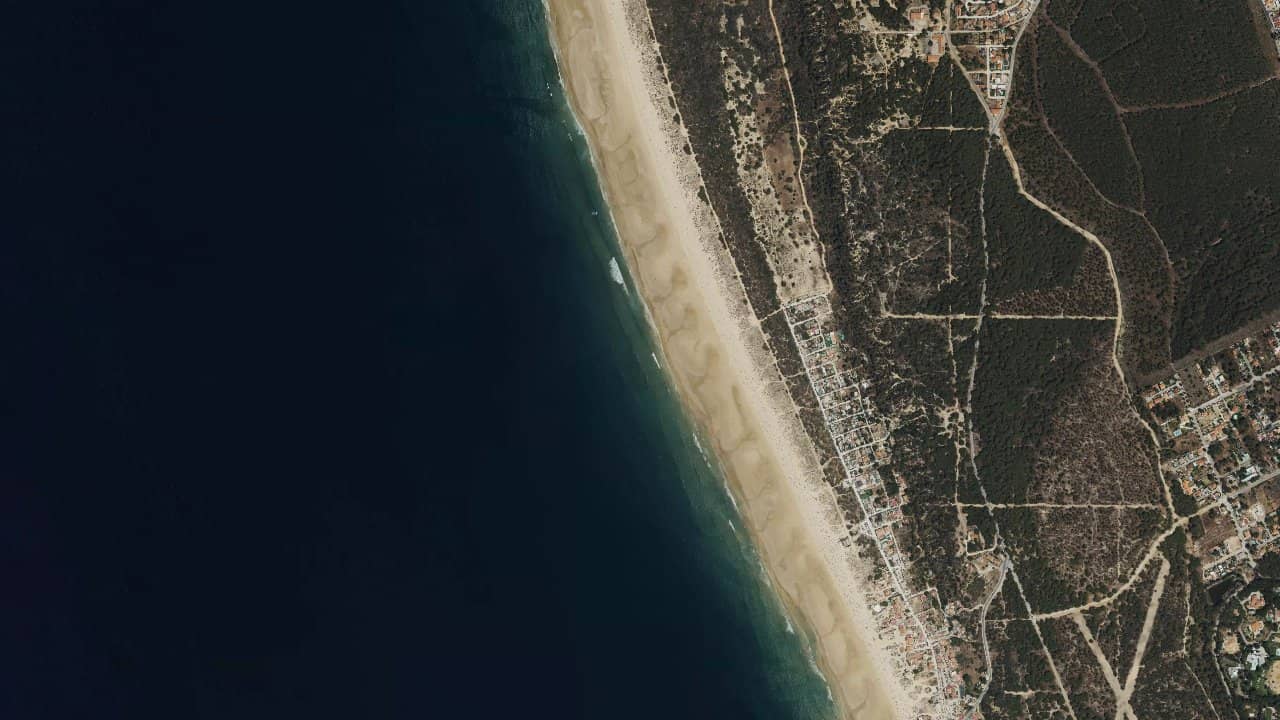
Fonte da Telha – Praia Azul is located south of Lisbon, on a long stretch of sand bordered by pine forest and a few beach bars. The beach is wide, with plenty of space to set up equipment and walk away from the more crowded areas.
It is a popular spot for riders from Lisbon and Costa da Caparica due to its consistent summer winds and accessible waves. The atmosphere is relaxed, with a mix of kite schools, locals, and passing riders enjoying the good conditions just a few minutes from the capital.
The spot of Fonte da Telha – Praia Azul is a large Atlantic beach oriented generally north–south, with the sea to the west. With the classic north to northwest wind regime, the wind arrives side-shore to side-on from the right, which is very comfortable for navigation and safety. The thermal often establishes in the middle of the day and strengthens in the afternoon, especially between late spring and early autumn.
Water entry is from a wide beach of fine sand, with no particular difficulty in walking and launching the kite. The launch area is vast, but one must consider the presence of swimmers in summer and slightly move away from the most central areas in front of the beach bars. Further south and north, the beach remains wide and allows finding space to launch and land kites without stress.
The water surface is typical of an Atlantic beach: near the shore, there is a shorebreak that varies with the swell, then a field of waves further out. Most often, one navigates in small to medium waves, with a choppy water surface between sets. With moderate swell, it is a pleasant playground for freeriding and for getting started in surfkite, especially since the waves are generally smaller here than at more exposed spots like Guincho.
The tides influence the behavior of the shorebreak and the width of the beach, but the spot remains kiteable at most coefficients. At low tide, the beach is very wide and there is more space to launch and land, but some bars may close more quickly. At mid-tide, the sandbanks often work better and the waves are more regular. At high tide, the beach narrows and the shorebreak can become more physical, especially with swell.
Navigation takes place over a completely sandy bottom, which is reassuring for falls and beginners. Further out, the water surface mixes chop and wave ramps, with enough space for maneuvers, freeriding, and a bit of old school freestyle. The width of the beach and the water surface allows for easy management of downwind drift and avoiding other users if one moves away.
In summer, cohabitation with swimmers and surf schools requires some organization. It is recommended to choose a slightly off-center area for kiting, to keep a good margin downwind, and to respect any navigation corridors or monitored areas set up by lifeguards. Outside of high season, the attendance is lower and navigation is more relaxed with plenty of free space.
Sources :kiteguide.com · kitecontrolportugal.com · mackiteboarding.com · pt.surf-forecast.com · se.kiteforum.com
