Nouvelle-Zélande
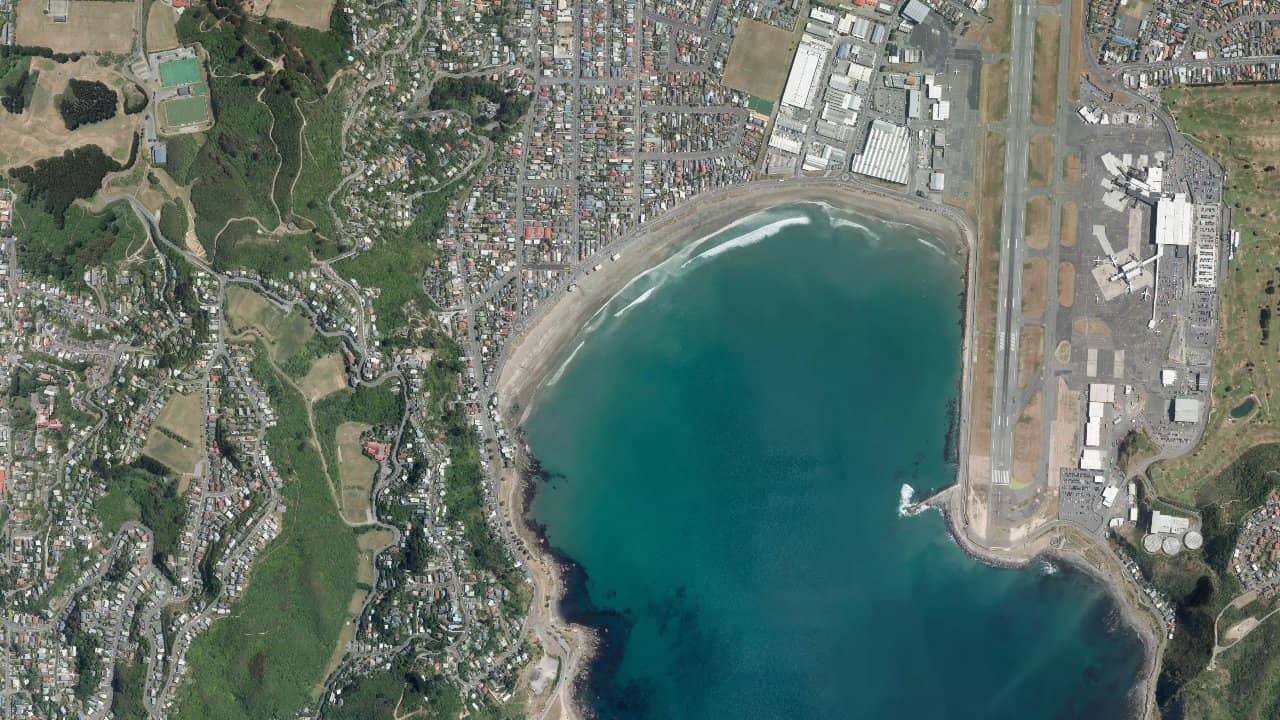
Lyall Bay is a long sandy bay located south of Wellington, right next to the international airport. It faces the Cook Strait and attracts a lot of south swell, creating regular waves favored by surfers and experienced kiters.
It is a well-known spot among locals for its windy conditions and dynamic atmosphere, with a golden sandy beach and an active community around sliding sports. The west corner of the beach is the preferred spot for setting up and launching.
Close to the city center, just 6 km away, Lyall Bay combines urban accessibility with open ocean space, ideal for a session after work.
The wind data shown here comes from ERA5 (via Open-Meteo) over 4 years, reprocessed to reflect realistic conditions.
👉 Average wind has been calibrated to avoid the usual underestimation of models.
👉 Gusts have been corrected by a median ratio to avoid unrealistic extreme values.
👉 Each day is summarized by the median wind (P50) observed during useful hours (8am–8pm), then classified into wind ranges.
👉 The weighted mode mixes average wind and gusts to best reflect felt wind.
The dominant wind comes from the southeast to southwest (SE-SW), often cross-onshore from the right (starboard tack to get out of the shore break). It can be gusty from the SW due to the hills to the west. Navigation is strictly limited to the west zone of the bay, up to the Briscoes building or better yet Accountants to avoid the airport.
Launching and taking off only at the extreme west corner, in front of the toilet block where windsurfers also rig – this is the most upwind point. Avoid launching further east of the rescue club, as it is impossible to get back upwind in the shore break. The water is choppy with waves from the south, rideable upwind on port tack or down-the-line on starboard.
Mandatory: contact the airport control tower before any launch at 04 387 1980, especially if first on site. They manage the airspace and can prohibit kite flying.
Ideal conditions in SE to S cross-onshore wind, 20-30 kts stable, to ride the waves upwind or down-the-line. Avoid too onshore or too light.
Water conditions are choppy with waves due to the south swell, ranging from small to large depending on the fronts. Strong shore break to the east, more manageable to the west. Water is choppy in strong winds, sometimes flat in light summer breezes.
The currents are influenced by the Cook Strait and tides, generally moderate but to be monitored near the shore break and in case of strong swell. No major channel reported, but the flow can accelerate with south waves.
Plan for sizes 7 to 11m² depending on the strength, smaller (7-9m) in strong winds from fronts, larger (10-11m) in light breezes.
South winds (southerly) are the most productive, representing about 15-20% of the days, compared to 75% of northerly winds that do not work here. They can pick up quickly and strongly during fronts, reaching over 29 kts, with a score around 59/100.
In summer, light thermal breezes from the south bring gentle wind over flat water. Gusty in SW due to the terrain.
The climate of Wellington is oceanic temperate, with mild temperatures year-round: 10-15°C in winter (June-August) and 18-22°C in summer (December-February). The best months for kiting are April, June to August, October to December, with more reliable winds.
Rainy and windy, especially in the southern winter, but sessions are possible even in cool weather thanks to the city's proximity.
Sandy bay with a gradual bottom, shallow near the shore at low tide, then quickly deep offshore. No major rocks reported outside the west area.
Cool water temperatures: 12-14°C in winter (June-August), 16-18°C in summer (December-February). A 5/3mm wetsuit is recommended year-round.