Pays-Bas
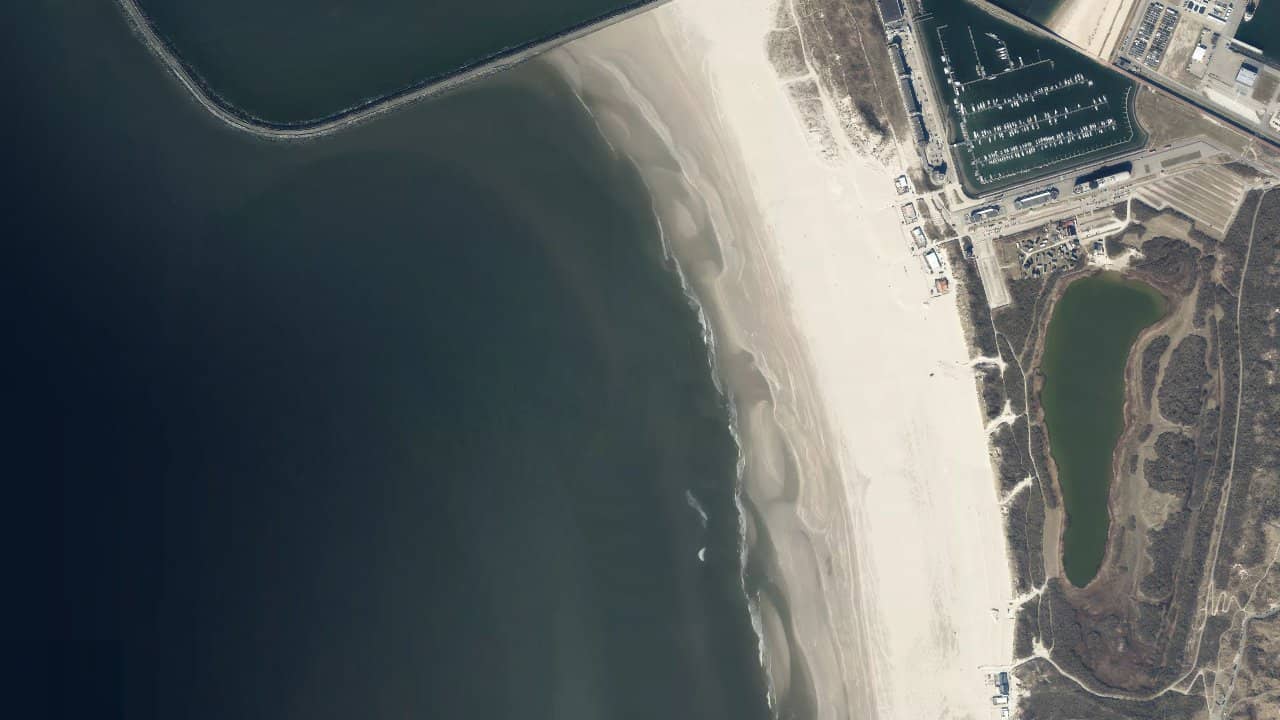
Ijmuiden Strand, located on the northern coast of North Holland in the Netherlands, is a renowned kitesurfing spot that spans several well-organized areas. It is one of the widest beaches in the Netherlands, offering a spacious and rarely overcrowded setting, ideal for progressing or perfecting skills.
The spot is divided into several managed zones (Zuidpier, IJmuiderslag) with strict seasonal rules. Zone 1 (Zuidpier) is accessible year-round for kitesurfers, while Zone 2 is only open from October to March for experienced riders. The beach gradually ends, allowing for a long stay in shallow water, making it an excellent learning ground.
Les données de vent affichées ici proviennent d’ERA5 (via Open-Meteo) sur 4 ans, retraitées pour refléter des conditions réalistes.
👉 Le vent moyen a été calibré pour éviter la sous-estimation habituelle des modèles.
👉 Les rafales ont été corrigées par un ratio médian afin d’éviter des valeurs extrêmes irréalistes.
👉 Chaque jour est résumé par le vent médian (P50) observé pendant les heures utiles (8h–20h), puis classé dans des plages de vent.
👉 Le mode pondéré mélange vent moyen et rafales pour refléter au mieux le vent ressenti.
Ijmuiden offers very variable conditions depending on the season and zone. In Zone 1 (Zuidpier), the dominant wind is from the SW to NW sector, which generally creates a favorable side-shore to side-on orientation. The water surface is characterized by moderate chop with small to medium waves, particularly in winter.
Launching is done gradually on a stable sandy bottom. A 40-meter launch area is marked by yellow flags in Zone 1, reserved for kitesurfers, while a 40-meter strip up to the tide line is kept free for walkers. In Zone 2 (open October-March), conditions become more dynamic with more pronounced waves and stronger currents at high tide, reserved for advanced riders.
Zone 3 (IJmuiderslag) is accessible year-round and offers similar conditions to Zone 1. The spot benefits from good accessibility with nearby parking and facilities (schools, restaurants, kite tents).

Ideal conditions occur with a SW to NW wind between 12 and 18 knots, creating an optimal side-shore to side-on orientation. These conditions are most frequent in March, April, May, September, October, and November. A wind of 15 knots represents a good average for progressing or riding in freeride.
The water surface is generally characterized by moderate chop with small to medium waves. In winter and autumn, the swell intensifies, creating more dynamic conditions. At high tide with good swell, the waves become more pronounced and the water surface more chaotic. At low tide, the spot becomes flatter with residual chop. The stable sandy bottom maintains good water quality.
The general current is weak to moderate over most of the spot. However, near the channel and in Zone 2 at high tide with good swell, the current can become more pronounced. Tides significantly influence conditions, particularly in Zone 2 where currents intensify at high tide. It is recommended to check the tide tables before heading out.
With an average wind of 5 to 6 knots and gusts up to 15-18 knots, the recommended sizes vary according to conditions. In light conditions (5-8 knots), prefer kites of 13 to 17 m². For medium conditions (10-15 knots), kites of 11 to 14 m² are ideal. In strong conditions (15-20 knots), kites of 9 to 12 m² are sufficient.
The dominant wind regime at Ijmuiden comes from the SW to NW sector, with a marked preference for SW. Winds from the north, south, and northwest are also common and usable. The average strength observed is 5 to 6 knots, but can reach higher values in winter. The wind is generally more consistent in autumn and spring.
The climate of the region is oceanic temperate with cold winters and mild summers. The best times to ride are March, April, May, September, October, and November, when the wind is more consistent and conditions are more stable. Winter (December-February) brings stronger winds but also more variability.
The depth at Ijmuiden is gradual and very gradual, which is a major asset for learning. You can stand very far from the shore, allowing for a long stay in shallow water. The bottom is entirely sandy and stable, with no significant rocky obstacles. This gradual configuration makes the spot very safe for beginners and intermediates.
The water temperature varies significantly by season. In winter (December-February), the water is very cold, between 3 and 6°C, requiring a thick wetsuit or drysuit. In spring (March-May), the temperature gradually rises from 6 to 12°C. In summer (June-August), the water reaches 15 to 18°C, allowing for a lighter wetsuit. In autumn (September-November), the temperature drops from 15 to 8°C.