Pays-Bas
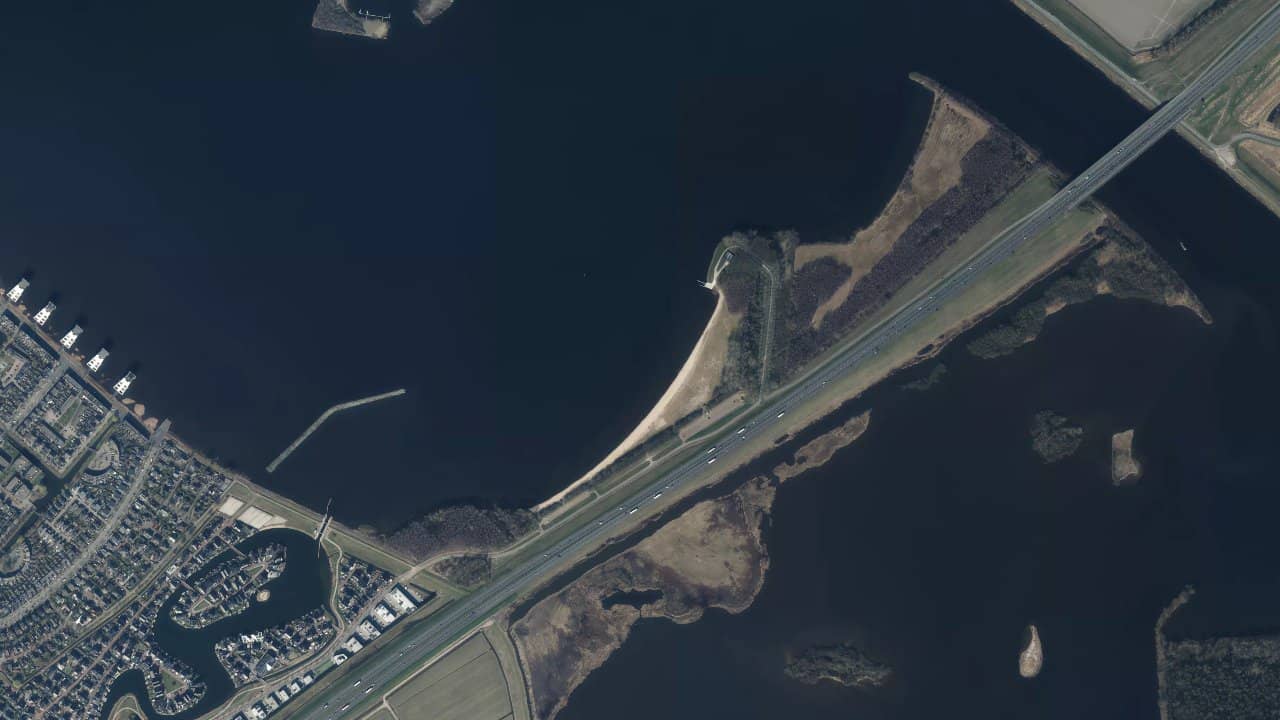
Stichtse Strand, on the Gooimeer in Huizen, is a spot well-known by locals for its easy access and navigable water when the wind is well-oriented. The atmosphere is very local, with a fairly free practice, but it must be kept in mind that the area is currently not officially authorized for kitesurfing according to local authorities.
When conditions align, it offers an interesting playground to work on maneuvers in inland water. The spot is especially appreciated for its proximity to Amsterdam and the presence of a nice flat to slightly choppy water area, but the question of regulation is a crucial point before any session.
Les données de vent affichées ici proviennent d’ERA5 (via Open-Meteo) sur 4 ans, retraitées pour refléter des conditions réalistes.
👉 Le vent moyen a été calibré pour éviter la sous-estimation habituelle des modèles.
👉 Les rafales ont été corrigées par un ratio médian afin d’éviter des valeurs extrêmes irréalistes.
👉 Chaque jour est résumé par le vent médian (P50) observé pendant les heures utiles (8h–20h), puis classé dans des plages de vent.
👉 Le mode pondéré mélange vent moyen et rafales pour refléter au mieux le vent ressenti.
The spot mainly works with a wind from the west to northwest, with a favorable orientation often of the side to side-on type depending on the exact angle on the water surface. The Gooimeer is an inland lake, so we are not talking about tides here: conditions remain stable, without variation related to sea level. However, the wind can become irregular with gusts if the flow crosses built-up areas or obstacles close to the shore.
Navigation takes place over a large open area, with launching from the shore. The area is interesting for riders who enjoy flat water and easy runs, but one must remain cautious about the available space and other water users. According to local information, kitesurfing is still prohibited to this day in this section of the lake, unless there is an administrative change or specific authorization. In practice, it is therefore a spot to closely monitor in terms of regulations before getting on the water.

The best sessions occur with a wind from W to NW, steady and clean enough to maintain pressure in the kite without too many gusts. With a flow around 18 to 25 knots, the spot becomes very interesting for dynamic freeride navigation.
A side to side-on wind is the most comfortable, as it facilitates launching, returning to the shore, and managing the navigation area. The cleaner and more stable the wind, the more enjoyable the spot.
The water surface is generally flat to slightly choppy. When the wind picks up, a small short chop can develop, but it remains far from a wave spot. It is a favorable environment for freeride, jump work, and technical progression.
On good wind angles, the water can become quite smooth, which is very appealing to riders who like to maintain clean trajectories. In irregular or gusty wind, the water surface retains its inland character with more pronounced water relief in places.
There is no real sea current on the Gooimeer, as it is a lake. Currents are generally weak to almost nonexistent, making the spot easier to manage than a coastal site.
However, one must remain attentive to local water movements related to traffic, wind, or variations in lake level. There is no tidal effect to consider, so reading the spot is mainly related to the wind and available space.
With the typical conditions of this spot, the most useful sizes are often 8 to 10 m² for most medium-sized riders. When the wind really picks up, a 7 m² can become relevant, while in lighter sessions, an 11 m² can help maintain planning.
For a standard build, the most consistent range remains 7 to 10 m², with an expanded quiver if one wants to cover the frequent wind variations in the Netherlands.
The most interesting wind regime often comes from the west and northwest, with possible windows when the flow turns a bit more north. The wind is often exploitable around 21 knots in good sequences, making it a pleasant spot in medium wind for freeride and progression.
As the water surface is inland, the wind can be cleaner on certain axes and more disturbed near the shores or urban areas. Gusts remain the point to watch, especially if the gradient is strong or if the local thermal mixes with a synoptic flow.
The climate is that of the central-western Netherlands, with cool winters, moderate summers, and often changing weather. In summer, kitesurfing is generally done in a pleasant range, but it is often necessary to wear a wetsuit to stay comfortable on the water. In autumn and spring, temperatures drop quickly and sessions can become chilly, especially with the wind.
The best months remain variable, as the spot depends a lot on low-pressure systems and wind orientation. It is typically a spot to follow day by day rather than an ultra-regular spot in a single season.
The depth is generally gradual on this inland water, with a rather sandy bottom in certain areas. One can often stand near the shore, which is reassuring for launching and the first runs, but it is still necessary to check the exact area before heading out.
With a simple bottom, the spot remains readable for freeride practice, but it should be kept in mind that the depth can vary locally depending on the chosen access and the bank configuration.
The water remains cool for a large part of the year. In summer, the temperature becomes more pleasant, but it often stays below that of truly warm water, so a wetsuit remains useful. In spring and autumn, the water is significantly colder, and one must equip accordingly.
In winter, water temperatures drop low, and navigation requires serious protection. The spot can therefore be navigated year-round for equipped riders, but comfort depends a lot on the season.