Pays-Bas
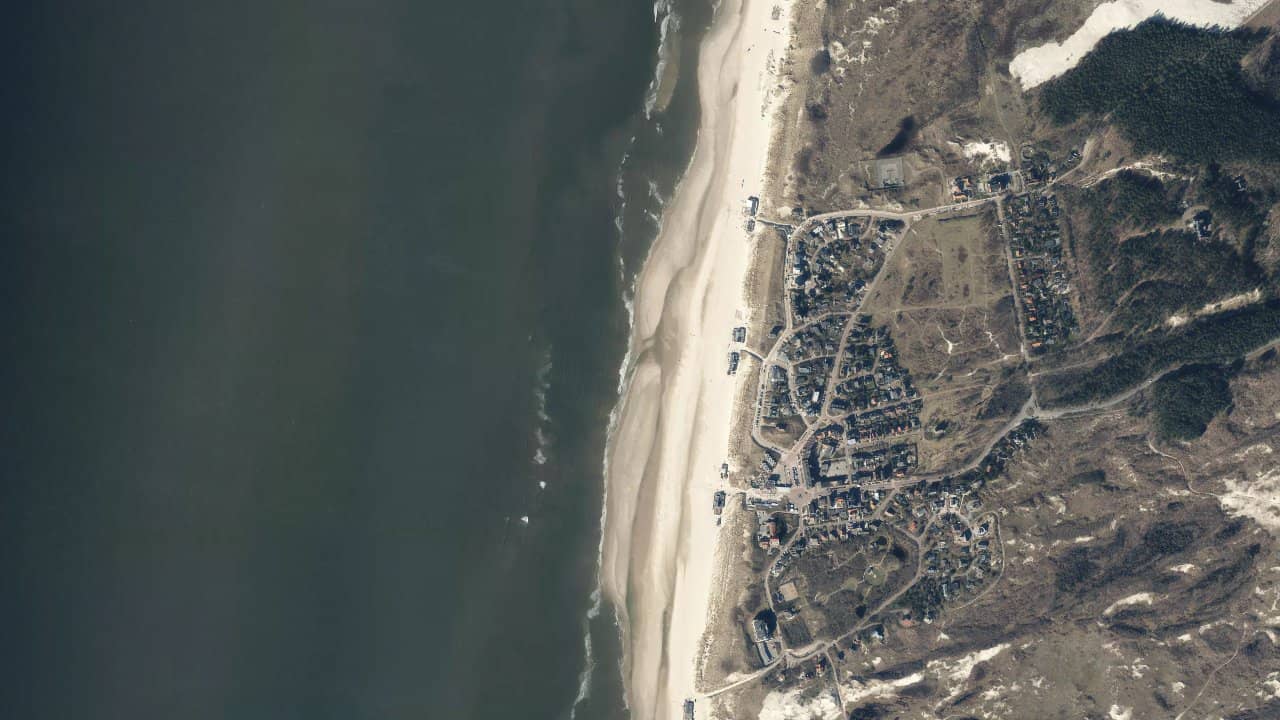
Bergen aan Zee, in North Holland, is a seaside spot known for its large sandy beach and very local atmosphere. It is a place to kitesurf in an open setting, with easy access from the village and a true sliding culture around the spot.
The spot is appreciated by riders looking for a consistent playground on the North Sea, with often better conditions when the wind shifts to W and NW. Access is convenient, but it is important to respect the authorized zones, as kitesurfing is regulated in the natural park area.
Les données de vent affichées ici proviennent d’ERA5 (via Open-Meteo) sur 4 ans, retraitées pour refléter des conditions réalistes.
👉 Le vent moyen a été calibré pour éviter la sous-estimation habituelle des modèles.
👉 Les rafales ont été corrigées par un ratio médian afin d’éviter des valeurs extrêmes irréalistes.
👉 Chaque jour est résumé par le vent médian (P50) observé pendant les heures utiles (8h–20h), puis classé dans des plages de vent.
👉 Le mode pondéré mélange vent moyen et rafales pour refléter au mieux le vent ressenti.
The spot mainly works with a side-on to onshore wind when the flow comes from W, NW, or SW. According to spot guides and local associations, the beach is wide and offers space for launching, but kitesurfing is only allowed in dedicated zones. It is therefore important to clearly identify the launch areas and stay within the designated kite zone, especially near the club area and the accesses indicated by local stakeholders.
The water surface is typical of the North Sea: chop most of the time, with short to medium waves when the wind and swell strengthen. The spot is more oriented towards freeride and light to medium waves, with a more interesting functioning for riders already comfortable in irregular wind and shorebreak. At high tide, the water can become more agitated near the shore and the launch area may shrink depending on the beach configuration. At low tide, you gain a bit of space, but it is important to remain vigilant about the actually navigable width depending on the sand state and the position of the banks.
The site is located in a protected environment, which requires strict adherence to local regulations. Feedback agrees that it is a spot accessible all year round, but clearly more suitable for independent practitioners than for complete beginners. Kitesurfing takes place on an exposed beach, with cold water for a large part of the year and often energetic sessions when the wind comes well from the west sector.

The best sessions occur with a wind from W to NW, sometimes SW, with a stable intensity between 15 and 25 knots. It is in this range that the spot provides the best balance between power, control, and quality of kitesurfing. The most interesting months are often January, February, March, April, and December, when Atlantic depressions bring more consistent winds.
The water surface is most often in chop, with sometimes small to medium waves when the swell and wind combine. It is not a pure flat spot, but a pleasant playground to work on stance, jumping, and surfing in small swell. Conditions can become more physical when the wind picks up and the sea forms.
When the wind comes from W/NW, the spot can offer very consistent sessions, with a lively but readable sea. It is a spot that rewards riders who can handle chop and a bit of short swell.
The currents can be quite present in this area of the North Sea, especially when the wind blows from W or NW and the sea is well loaded. It is important to stay attentive to possible drifts offshore and returns to the beach, especially if kitesurfing for a long time in cold and fairly physical water.
The tide influences the comfort of kitesurfing, but the spot remains generally usable in both states. At high tide, the shorebreak and chop can become more pronounced near the shore. At low tide, the beach generally provides a bit more space to prepare the kite and launch without immediate hindrance.
In classic kitesurfing, the most useful sizes are often 7 to 10 m², with a 8 m² being very versatile for an average rider in sustained wind. In lighter conditions, an 11 m² can be relevant, while in strong wind, it is better to go down to 6 to 8 m². With 23 knots, a 7 to 9 m² already covers a large part of the sessions.
The most interesting wind regime is generally from the W to NW, with sometimes SW or WNW flows. Local spot sources confirm that these orientations provide the most regular conditions on the beach. The wind is often quite clean when entering from the west sector, then can become more irregular or stronger during disturbed passages.
With a measurement of 23.2 knots, the spot is in a very usable range for a freeride or wave session, especially for medium to heavy riders. In winter and early spring, wind gusts are generally more frequent and stronger than in summer, which fits well with the spot's functioning.
The climate is that of the Dutch coast: windy, humid, and cool for a good part of the year. Winter is cold, with sessions requiring a thick wetsuit, while summer remains moderate without ever becoming really hot. The best kitesurfing periods are often between January, February, March, April, and December, when the wind gusts are most regular.
In summer, the air is milder and the water becomes a bit more pleasant, but strong winds are often less frequent than during the cold season. The spot remains kitesurfable all year round, with particular interest in autumn and winter if one is looking for sustained wind on the northern Dutch coast.
The bottom is mainly sandy and the depth is generally gradual, which facilitates launching in the authorized area. One can usually stand near the shore, although the exact configuration varies with the tide and sandbanks. The spot remains primarily an open beach spot, with no reported obstructive rocky structures in the consulted sources.
The water is cold almost all year round in this part of the North Sea. In summer, it remains cool and often requires an appropriate wetsuit, while in winter and early spring, thick protection is necessary, usually in 5/4 mm or equivalent. Even in the beautiful season, the water temperature is not really summery in the Mediterranean sense.