Mauritius
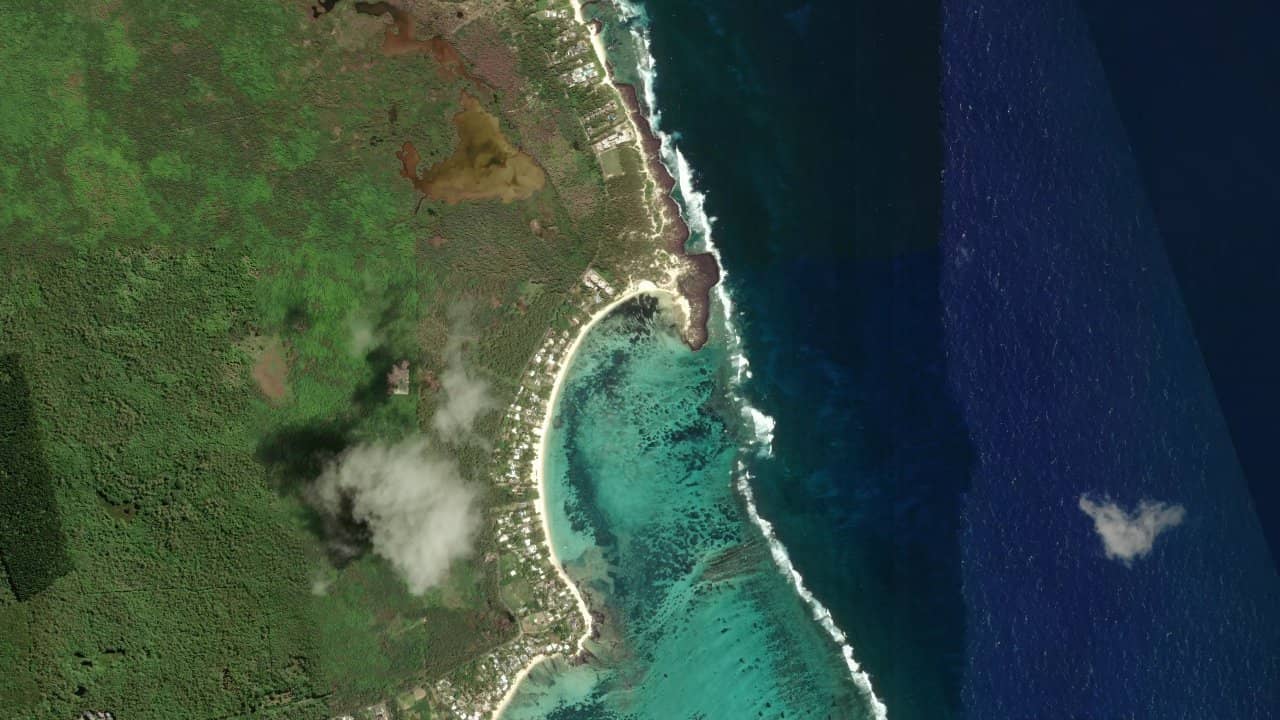
Poste Lafayette beach, located on the northeast coast of Mauritius in the Flacq district, offers an authentic setting lined with casuarinas and preserved nature. It is a popular spot for its large flat and shallow lagoon, ideal for freeride, foil, and learning.
The site extends for several kilometers, with a well-cleared sandy beach for takeoff. It is not crowded, allowing for quiet and independent sessions.
Accessible in 30 to 40 minutes from Flacq or Grand Baie, it is a natural place without amenities on site, perfect for a self-sufficient day.
The wind data shown here comes from ERA5 (via Open-Meteo) over 4 years, reprocessed to reflect realistic conditions.
👉 Average wind has been calibrated to avoid the usual underestimation of models.
👉 Gusts have been corrected by a median ratio to avoid unrealistic extreme values.
👉 Each day is summarized by the median wind (P50) observed during useful hours (8am–8pm), then classified into wind ranges.
👉 The weighted mode mixes average wind and gusts to best reflect felt wind.
The spot is exposed to the trade winds from east to southeast, which blow in side-onshore relative to the northeast-facing beach. The wind is consistent between 15 and 25 knots from May to October, with good consistency in the dry season, and possible thermals off-season.
The lagoon is vast, flat, and shallow for several kilometers, with a predominantly sandy bottom. Launching is easy from the well-cleared sandy beach. The navigation area is safe for freeride and foil, even in light wind, with space for beginners in the center and advanced riders on the sides.
A closed cove on one side allows for tricks safely. At low tide, the lagoon remains navigable with standing depth for a long time, but be cautious of coral areas. Waves are small near the outer reef for freestyle.
Ideal conditions are a wind from east to southeast of 15 to 25 knots, side-onshore, during the dry season for a flat and stable lagoon.
The water surface is flat and shallow in the main lagoon, with some chop in strong winds and small waves near the reef for freestyle.
Currents are generally weak in the lagoon due to its protection. Tides have little influence on navigation, but check the schedules for peripheral areas.
Opt for sizes of 9 to 12 m² in typical wind of 15-25 knots. Go larger like 11-13 m² for light thermals off-season.
The trade winds from east to southeast dominate, particularly from May to October. The wind is constant and predictable, ranging from 15 to 25 knots, with thermals in the intermediate season.
The climate is tropical with temperatures between 20°C and 34°C year-round. The dry season from May to October is ideal for kitesurfing, with less rain and consistent winds. Avoid the rainy season and cyclones from December to April.
The lagoon is shallow with a sandy bottom predominantly. You can stand for several hundred meters from the shore depending on the tide.
Water temperature ranges from 24°C in winter to 28-30°C in summer. A lycra is sufficient year-round.