Mauritius
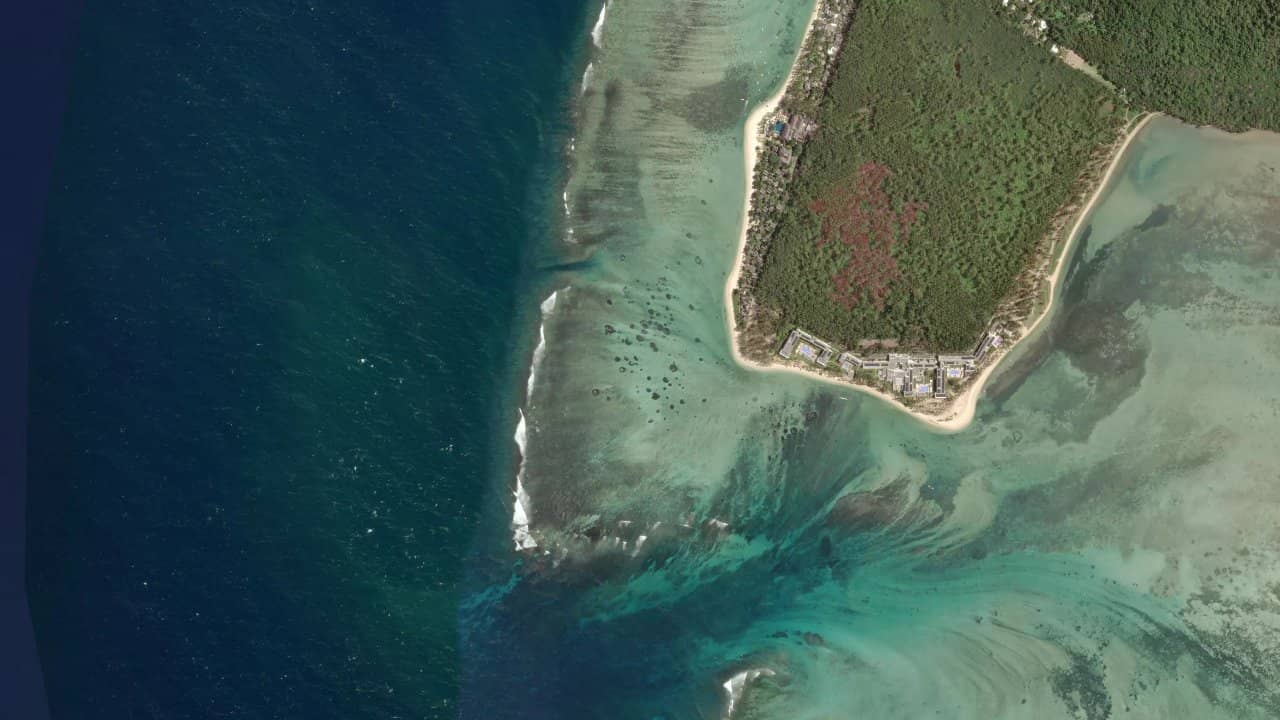
Southwest Point in Le Morne, in the Rivière Noire district of Mauritius, marks the western end of the famous kite lagoon. This spot is located at the foot of the Morne Brabant mountain, with its turquoise lagoon protected by a coral reef.
It offers direct access to legendary waves like One Eye and Chameaux, favored by experienced riders. Local kite schools animate the area, creating a friendly atmosphere.
The scenery is spectacular, between crystal-clear waters and coral reefs, ideal for combining sessions and exploring the island.
The wind data shown here comes from ERA5 (via Open-Meteo) over 4 years, reprocessed to reflect realistic conditions.
👉 Average wind has been calibrated to avoid the usual underestimation of models.
👉 Gusts have been corrected by a median ratio to avoid unrealistic extreme values.
👉 Each day is summarized by the median wind (P50) observed during useful hours (8am–8pm), then classified into wind ranges.
👉 The weighted mode mixes average wind and gusts to best reflect felt wind.
The dominant wind comes from the southeast, making for a perfect side-on from the beach at Southwest Point, allowing easy upwind navigation in the lagoon. The launch is directly on the sand, with a wide and obstacle-free take-off area. The lagoon offers a large flat navigation area for freeride and freestyle, up to 7 km long and 1 km wide.
At high tide, the water is deeper and the water surface remains flat in the lagoon, while at low tide, it becomes very shallow with some coral heads to avoid. Advanced areas start behind the lagoon, with access to the waves of Little Reef, Manawa, and Chameaux via the passes. One Eye, at the tip, is a powerful and fast left wave, to be navigated only at high tide to avoid the dry reef.
In case of significant swell, the current intensifies in the channels, and the water surface goes from flat to choppy in strong winds. Upwind riders can explore the western part of the lagoon, which is emptier, with small reforming waves for practice.
The ideal conditions are a side-on wind from the southeast between 15 and 25 knots, with high tide for easy access to advanced areas and optimal water surface.
The water surface is generally flat in the lagoon, becoming choppy in strong winds or with swell. Outside, the waves on the reef range from knee-high to powerful, with clean faces for kite surfing.
The current remains weak in the lagoon thanks to the protection of the reef, but it strengthens in the channels leading to the outer waves, especially with swell. At low tide, passes like St Jacques require caution to avoid being swept away.
For typical winds of 15-25 knots, opt for sizes of 9 to 12 m² in the lagoon, and 7 to 10 m² for the outer waves where the wind is stronger.
The southeast trade winds blow consistently from May to October, with average speeds of 15 to 25 knots. The pattern is very reliable, qualifying Le Morne as one of the best spots in the world, with wind almost every day in season.
The tropical climate of Le Morne is warm year-round, with temperatures around 25 to 30°C in summer (November to April) and 20 to 25°C in winter (May to October). The trade wind season from May to October brings consistent winds and drier weather, while summer is more humid with occasional showers.
The lagoon is shallow, generally waist-deep with a sandy bottom, and you can stand in a large part of it. Some areas are deeper near the passes, and the outer reef is very shallow at low tide.
The water remains warm year-round, around 26°C in winter (May-October) and 28-30°C in summer (November-April), with no need for a wetsuit most of the time.