Italy
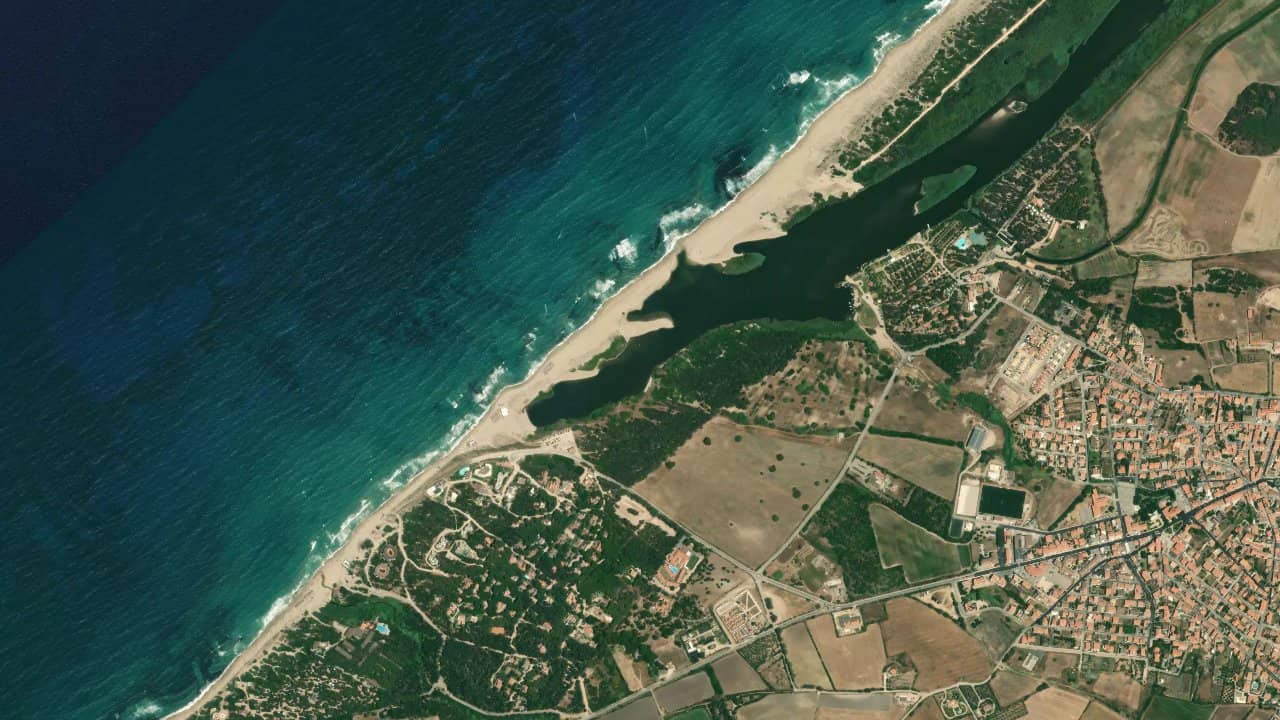
San Pietro Beach, at the mouth of the Coghinas, is a long stretch of light sand that extends for several kilometers facing the Gulf of Asinara. You can navigate between the open sea and the lagoon formed by the river, with a true nature spot atmosphere, far from the crowds.
The spot of Coghinas / San Pietro a Mare is well known among riders in Sardinia for its large rigging area and very versatile water conditions. You can find both flat water in the lagoon area and waves offshore, allowing for a mix of freestyle, freeride, and surfkite in a single session.
Les données de vent affichées ici proviennent d’ERA5 (via Open-Meteo) sur 4 ans, retraitées pour refléter des conditions réalistes.
👉 Le vent moyen a été calibré pour éviter la sous-estimation habituelle des modèles.
👉 Les rafales ont été corrigées par un ratio médian afin d’éviter des valeurs extrêmes irréalistes.
👉 Chaque jour est résumé par le vent médian (P50) observé pendant les heures utiles (8h–20h), puis classé dans des plages de vent.
👉 Le mode pondéré mélange vent moyen et rafales pour refléter au mieux le vent ressenti.
The spot is located at the mouth of the Coghinas River, with the open sea on one side and a lagoon area inside the sandbanks on the other. The beach is wide, sandy, with plenty of space to rig and launch, which is comfortable even when there are several kites in the air. The water entry is directly from the beach, without major obstacles, and specific accesses are often used by schools to organize entries and exits.
With wind from the W to NW, the wind is generally side-on shore from the right, providing good safety conditions for all levels. With NE wind, it becomes rather side-shore or slightly side-off depending on the area, which is interesting for freestyle in the lagoon but requires more vigilance. In summer, a thermal regularly strengthens the forecast wind, allowing for frequent navigation in the early or mid-afternoon.
The water surface is very adaptable: in the lagoon formed by the river, there are large areas of flat water, ideal for practicing maneuvers, transitions, and freestyle. As you head out to sea, the water surface becomes choppy and then forms into small to medium waves depending on the wind strength and swell, with sets that can reach about 2 to 3 meters on the windiest days. You can choose to stay inside for flat water or go out to catch waves for surfkite.
Tides have little influence on this Mediterranean area, so the spot generally works the same way regardless of the time. However, the lagoon level can vary slightly depending on the river flow and prevailing winds, which slightly modifies the extent of the flat water area. Navigation can be done either in the lagoon part along the sandy cordon or in the open sea by exiting through the natural passes between the sandbanks.
It should be noted that there are submerged rocks in the sea area, offshore in certain sectors, usually identifiable by the waves breaking over them. The depth increases quite rapidly outside the lagoon, but near the shore, there is still an area where you can stand, which is practical for water starts and supervised beginners. The width of the beach and the organization of schools facilitate take-offs/landings, but it remains important to respect navigation corridors and areas dedicated to swimming in high season.
The ideal conditions for this spot are generally found with a wind from the W to NW of moderate to strong force, arriving side-on shore and offering good safety. In these configurations, the lagoon provides flat water perfect for freestyle, while the sea forms a nice chop with clean waves further out.
A well-established NE wind can also be very interesting for those looking for a smoother water surface and long trajectories along the beach. To fully enjoy the spot, a wind around 18 to 25 knots suits most riders, with medium-sized kites.
The water surface on the lagoon side is often flat to slightly choppy, with large areas sheltered from the wind and swell, highly appreciated for freestyle, transitions, and supervised learning. The further you move away from the shore towards the opening to the sea, the more the chop increases, but it remains a manageable water surface for most levels.
On the sea side, the water surface becomes choppy to formed with small to medium waves depending on the wind strength and swell. On well-winded days, you can find waves around 1 to 2 meters, or even more in strong winds, providing good surfkite conditions. In lighter winds, you navigate on organized chop, pleasant for freeride. The combination of flat water in the lagoon and waves offshore makes this spot very versatile.
The sea current is generally weak in this area, making navigation quite comfortable for most levels. The influence of the Mediterranean and the absence of significant tides limit longitudinal currents along the beach.
However, near the mouth of the Coghinas, the river flow can create more pronounced water movements, especially after periods of rain or when the flow is high. In some narrow areas between the sandbanks, you may feel a slight outgoing or incoming current that accelerates the rider's movement. In the lagoon itself, the current remains generally moderate, but there may be areas where the water circulates more, particularly near the natural channel to the sea.
For an average build of about 75 to 80 kg, the most commonly used kite sizes at this spot during windy season are around 8 m² to 11 m². Classic thermal days are well managed with a 9 m² or 10 m², while lighter days will require a 11 m² or 12 m² for the same builds.
Lighter riders can go down to 7 m² to 9 m² as soon as the wind exceeds 20 knots, while heavier builds will opt for slightly larger kites in the same conditions. As the spot works over a wide wind range, it is useful to have at least two kite sizes to cover most situations.
The spot of Coghinas / San Pietro a Mare benefits from a mix of dominant winds and local thermals. In summer, a thermal from the W to NW often sets in early afternoon, strengthening the weather wind and providing regular conditions for freeride. The NE wind (type Grecale) can also come in well in this area, offering cooler and often quite steady wind.
The most interesting wind directions for kitesurfing are generally W and NE, which come in well on the beach and allow for a choice between lagoon and open sea. The spot can work year-round, with winter depressions sometimes bringing stronger winds and more significant waves. Overall, the wind is frequent enough to consider navigating for a large part of the year, with a slight peak in late spring and summer.
The climate in Valledoria is typically mediterranean, with hot, dry summers and mild winters. In summer, air temperatures generally range between 25 and 35 °C, with many sunny days and little rain. Winter remains relatively mild, with lows around 10 °C and often usable days for equipped riders.
Spring and autumn offer very pleasant conditions for kitesurfing, with moderate air temperatures, fewer people on the beach, and still good wind performance. The beach is usable year-round, but the period from May to October concentrates the majority of sessions for most practitioners due to stable weather conditions and higher water temperatures.
The water depth is gradual on San Pietro Beach, with a mostly sandy bottom. In the lagoon area, there are sections where you can stand for a good distance, alternating with deeper areas, which is practical for teaching and progression.
As you head out to sea, the depth increases more quickly, but there remains a band near the shore where you can still stand depending on the swell. The bottom is generally sandy, with some areas of submerged rocks further out that should be avoided. This configuration allows for comfortable navigation for most levels.
The water temperature in northern Sardinia hovers around 18–20 °C in spring, making a light wetsuit advisable. In mid-summer, it often rises to 23–25 °C, allowing for navigation in a shorty or even in lycra for the more resilient.
In autumn, the water remains warm for a long time, generally around 20–22 °C in September-October, then gradually drops in winter to around 14–16 °C. With an appropriate wetsuit, navigation remains possible year-round for motivated riders.