Italie
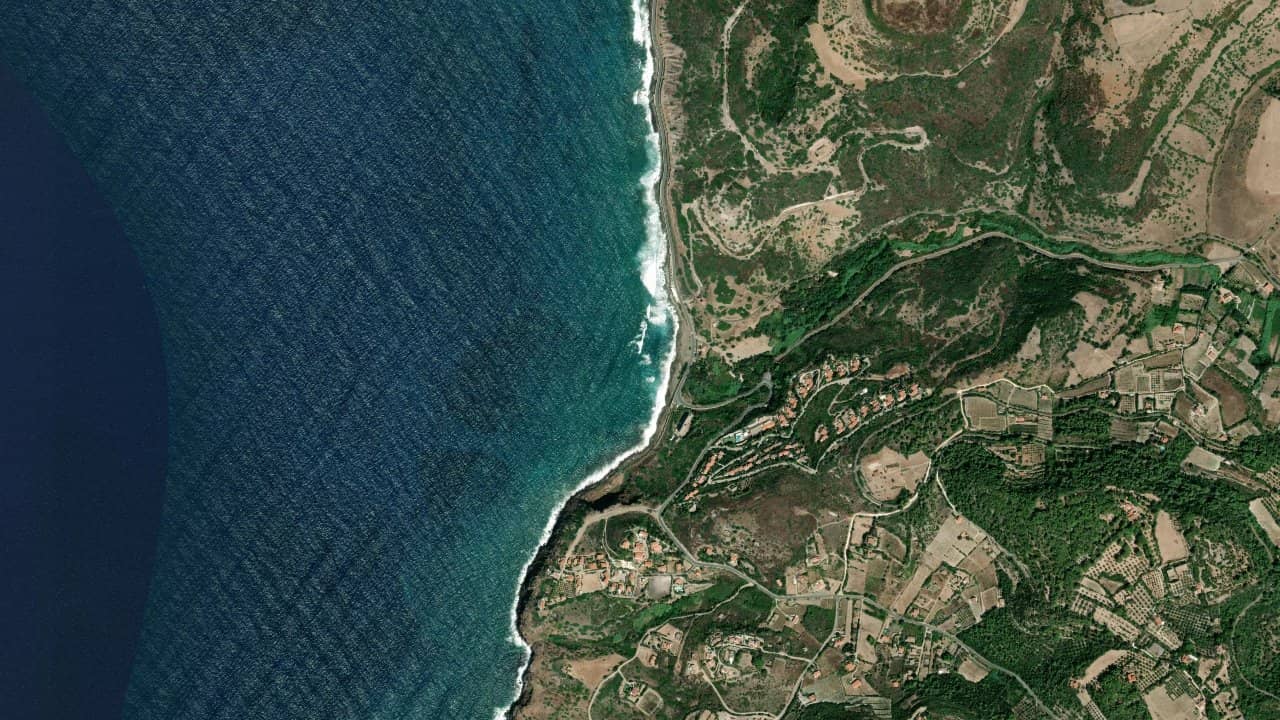
Spiaggia di Turas, in Bosa, is a spot on the west coast of Sardinia, known for its rather coarse sandy beach and exposure to swell. It is a place appreciated by riders looking for a simple setting, with direct access to the water and few people off-season.
The spot is especially interesting when the wind is good and the sea is clean. There is a rather calm atmosphere, with a water surface that can become sporty depending on the wind direction and sea state.
Les données de vent affichées ici proviennent d’ERA5 (via Open-Meteo) sur 4 ans, retraitées pour refléter des conditions réalistes.
👉 Le vent moyen a été calibré pour éviter la sous-estimation habituelle des modèles.
👉 Les rafales ont été corrigées par un ratio médian afin d’éviter des valeurs extrêmes irréalistes.
👉 Chaque jour est résumé par le vent médian (P50) observé pendant les heures utiles (8h–20h), puis classé dans des plages de vent.
👉 Le mode pondéré mélange vent moyen et rafales pour refléter au mieux le vent ressenti.
Spiaggia di Turas mainly works with a wind from the W to NW sector, which arrives from the side or very slightly from the side on this stretch of beach. In these conditions, there is often a fairly clean water surface offshore, with an easy launch area from the sand. The spot is not really a technical beach break, but it can offer a little short chop as soon as the sea rises.
The launch is done directly from the beach. The takeoff must be prepared properly, as space remains limited on a beach of about a few hundred meters. One must keep space for other beach users and for potential swimmers in season. The spot is more comfortable when the wind is regular and the swell remains moderate, as the area close to the edge can quickly become choppy.
Depending on the state of the sea, Turas can offer a choppy water surface with some relief, especially when the wind is strong. Riders comfortable with rail control and navigation in chop will be more at ease than absolute beginners. The spot remains interesting for free navigation, with enough space to loop, go upwind, and exit the edge if conditions are good.

The best sessions occur with a well-established, clean, and regular wind from W to NW, around 18 to 25 knots. In this range, the spot offers the best compromise between power, control, and comfort of navigation.
A stable north-west flow often provides the cleanest conditions to exploit the beach without too many disturbances at the edge. If the sea remains moderate, Turas then becomes a very pleasant spot for chaining runs.
The water surface is often a mix of small chop and smoother areas offshore. When the wind blows consistently, there are fairly clean edges for practicing turns, jumps, and long return runs.
When the sea comes in more, the spot can take on a more physical aspect, with short waves and relief on the edge. It is not a big wave spot, but it can become lively and demanding depending on the swell and wind strength.
Currents are generally moderate, but they can become more noticeable near the coastline when the sea rises. One must keep an eye on lateral drift if the wind is side-on or if the swell pushes out to sea.
The tide plays a limited role compared to other Atlantic spots, but it can still modify the comfort at launch and the shape of the edge. At high tide, the launch area is often more comfortable. At low tide, the edge can become more irregular and require a bit more attention.
With a wind around 22.9 knots, the most useful sizes are often between 7 and 9 m2 for an average build. In lighter wind, it is often necessary to go up to 10 to 11 m2, especially if the swell or chop reduces the usable power.
Heavier riders may sometimes keep a 10 m2 where others will switch to an 8 m2. It is better to plan for a fairly wide range of sails, as local variations can be sharp on the Bosa coast.
The useful wind at this spot is often from the W, NW sector, sometimes reinforced by breezes and local effects from the west coast of Sardinia. In the Bosa region, riders mainly watch for thermal wind episodes and more established flows coming from the northwest. When it comes in well, it can be very rideable and last for several hours.
With a wind forecast around 22.9 knots, you are on a session that already requires good control of the sail. The cleanest days are often those when the flow remains stable, without too many lulls or sudden shifts. The spot then takes on a true character of sporty navigation.
The climate in Bosa is typically Mediterranean, with hot and dry summers and milder winters. During the peak season, air temperatures are often high, making sessions more comfortable in boardshorts or a light wetsuit depending on the time of day.
Spring and autumn are often the most pleasant times to ride, with more stable temperatures and winds that are often more exploitable. Winter can also offer nice sessions, but with cooler water and conditions that can be more irregular depending on the depressions coming from the west of Sardinia.
The bottom consists of a mix of sand and small rocky elements depending on the areas, with a depth that quickly becomes more serious offshore. Local sources also indicate that the bottom drops quite quickly, which enhances the spot's appeal for swimmers but requires more attention from beginners.
You can stand near the edge on a limited strip, then the depth increases quite rapidly. The edge remains mainly practical for direct water entry, but one must keep in mind that there is not a long shallow area to reassure or easily retrieve one's board.
The water is generally cooler in spring and winter, with conditions that often require a suitable wetsuit. In summer, the temperature becomes much more comfortable, although a shorty or a thin wetsuit may still be useful depending on the period.
In the intermediate season, a 3/2 mm wetsuit is often suitable, while in winter many riders prefer a 4/3 mm or thicker. The feeling of comfort also depends on the wind, as the flow can significantly cool the sessions.