Italie
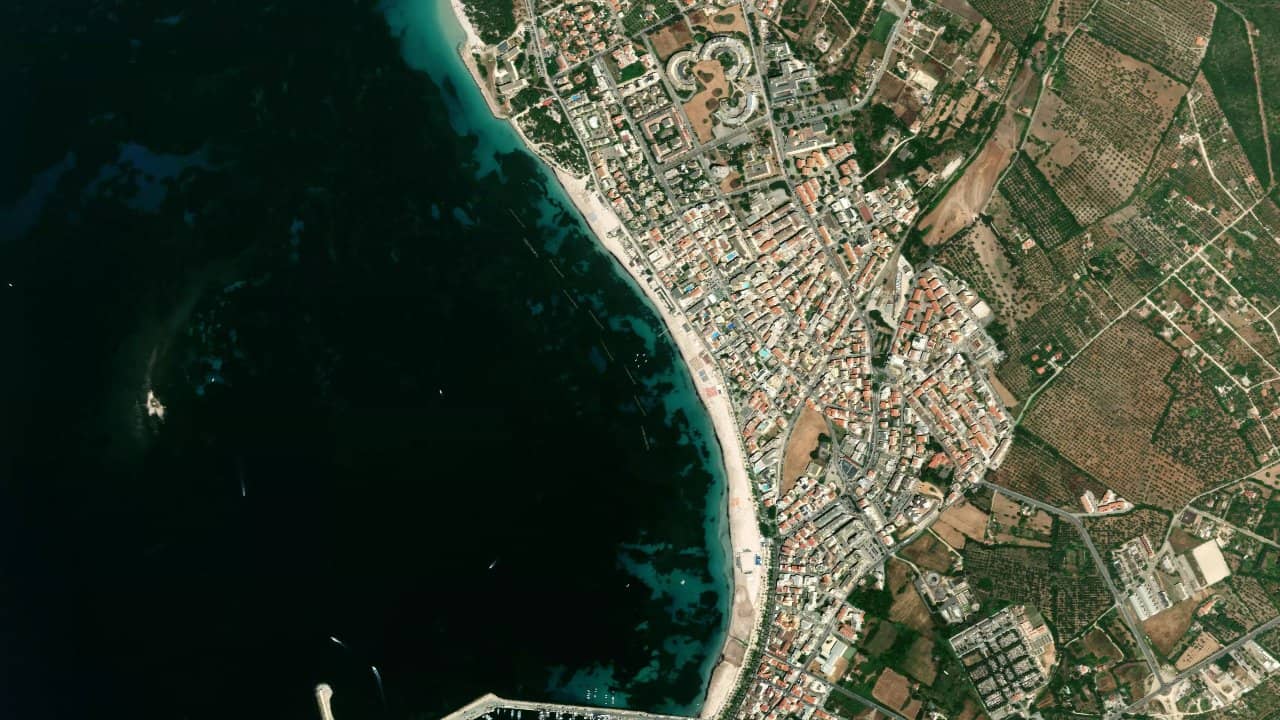
Lido di Alghero Beach, in Alghero, Sardinia, is an easily accessible beach located near the city center and the promenade. It is a popular spot due to its proximity to services, schools, and launch areas.
The spot attracts mainly when the wind is well established, but it remains quite exposed to summer crowds. One can kitesurf in a pleasant urban setting, with a more comfortable experience when the beach is not too crowded.
Les données de vent affichées ici proviennent d’ERA5 (via Open-Meteo) sur 4 ans, retraitées pour refléter des conditions réalistes.
👉 Le vent moyen a été calibré pour éviter la sous-estimation habituelle des modèles.
👉 Les rafales ont été corrigées par un ratio médian afin d’éviter des valeurs extrêmes irréalistes.
👉 Chaque jour est résumé par le vent médian (P50) observé pendant les heures utiles (8h–20h), puis classé dans des plages de vent.
👉 Le mode pondéré mélange vent moyen et rafales pour refléter au mieux le vent ressenti.
The spot mainly works with a wind from NW to NE, with an orientation often side-shore to side-on depending on the beach axis. Available sources on Alghero indicate good potential with the Mistral and Grecale, which fits well with a spot that receives flows from northwest to northeast. The water surface can be decent along the beach edges, but it is not as smooth as a closed lagoon.
At low tide as well as at high tide, the spot remains navigable, but the urban beach configuration requires monitoring the available space for takeoff and landing. Launching is done directly from the beach, with a navigation area to organize while keeping distance from swimmers, bathers, and schools during the season. When the wind comes in cleanly, one can settle into fairly simple navigation, but the beach demands discipline during preparation phases.
The most interesting conditions are often around 15 to 20 knots, with an established wind that can rise further. The spot is more enjoyable when the swell remains moderate and coastal traffic decreases. In summer, navigation is often more constrained by the influx of people than by the wind itself.

The best sessions occur with a well-established and regular wind from NW to SW, around 15 to 20 knots. With a bit more intensity, the spot remains navigable, but it becomes more demanding. A clean wind from the north is clearly what to look for here.
The water surface is most often flat to slightly choppy when the wind is clean and the sea remains organized. With more wind or some residual sea, chop can form quickly on this exposed spot. One does not come here for perfectly smooth water like in a lagoon, but rather for simple and direct navigation along an open coastline.
When the wind is well oriented, conditions remain pleasant for freeride. However, if the sea forms or if the wind becomes irregular, the water surface can become more physical. The spot remains more consistent in flat or light chop depending on the state of the open sea.
Currents are generally weak to moderate on the beach, but they can strengthen locally depending on the state of the sea and the presence of boat traffic. One must remain attentive near swimming areas and around passage points. The spot being close to the waterfront, vigilance is important during departure and return phases.
The tide mainly influences the width of the available beach and the comfort of launching. It does not turn the spot into a high-current area, but it can make organization more delicate if the beach is already crowded.
The most suitable sizes often range between 7 and 10 m². With the wind forecasted around 22 knots, an 8 m² or 9 m² will often be the best choice for an average build. Below that, 7 m² is reserved for stronger days, while 10 m² is used when the wind drops towards the lower end of the range.
The dominant wind in Alghero is the Mistral, which is a flow from the NW, often accompanied by the Grecale from the NE. Spot sources report a regular regime with intensities that generally vary between 10 and 25 knots, with a comfort zone around 15 to 20 knots.
The weather data provided for this beach indicates a wind around 22.3 knots, which corresponds to a well-established session, especially if the flow remains stable. On this type of urban spot, the quality of the wind depends a lot on the entry angle and the absence of too irregular gusts. When the northwest sets in, the session is generally the most reliable.
Alghero enjoys a Mediterranean climate, with hot and dry summers and milder winters. The summer period brings long days, but also more people on the beach. Spring and early autumn often provide a good compromise between temperature, wind, and crowding.
The best months indicated for the spot are April, January, February, and December, confirming a marked orientation towards windy seasons. In the cold season, the air generally remains more bearable than in mid-summer, and sessions often gain in comfort.
The depth increases quite gradually from the beach, with a generally sandy bottom in the usable area. It remains a classic seaside spot, without particular difficulties related to a very technical plateau. Reading the bottom is quite simple from the beach.
The depth is not a blocking issue for everyday navigation, but one must keep a margin during departures and returns, especially when the beach is occupied. The site remains accessible, but it requires clean navigation from the shallow water area.
The water remains rather cool in winter, around 14 to 16°C, which often requires a warmer wetsuit. In spring and autumn, it generally rises to 18 to 21°C, with already good comfort for many riders.
In summer, the temperature can reach 21 to 26°C, which often allows for navigation with lighter protection. The contrast between warm air and cooler water remains frequent in this Mediterranean area.