
Israël
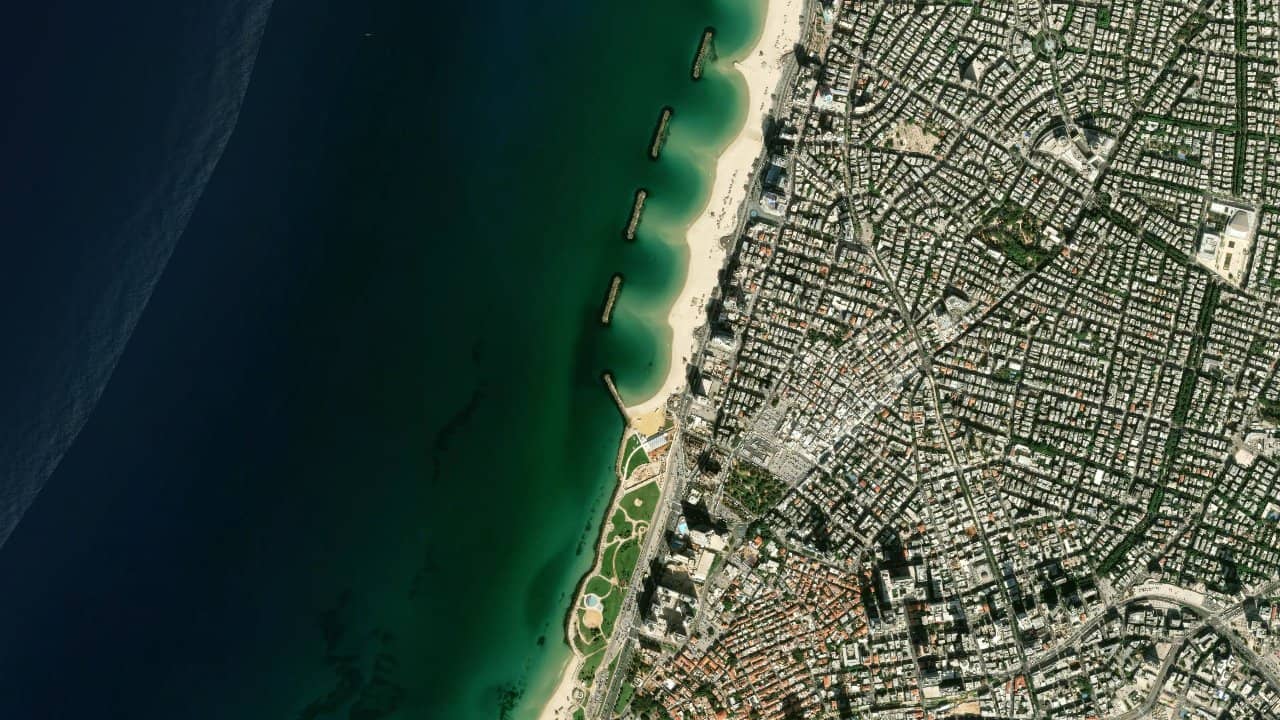
Tupim Beach, also known as Banana Drum Beach, is one of the most well-known urban beaches in Tel Aviv for local surfers and kitesurfers. It is a convenient, lively spot with easy access from the city and a very local atmosphere.
On site, there is mainly a body of water suitable for riders looking for simple and effective navigation when the conditions are right. The spot works well in line with the beaches of Tel Aviv, with consistent wind during the right season and a fairly straightforward navigation area.

Les données de vent affichées ici proviennent d’ERA5 (via Open-Meteo) sur 4 ans, retraitées pour refléter des conditions réalistes.
👉 Le vent moyen a été calibré pour éviter la sous-estimation habituelle des modèles.
👉 Les rafales ont été corrigées par un ratio médian afin d’éviter des valeurs extrêmes irréalistes.
👉 Chaque jour est résumé par le vent médian (P50) observé pendant les heures utiles (8h–20h), puis classé dans des plages de vent.
👉 Le mode pondéré mélange vent moyen et rafales pour refléter au mieux le vent ressenti.
The spot most often works with a side-shore to side-on wind depending on the dominant orientation, allowing for clean navigation along the beach. The launch area is urban and busy, so it is important to stay organized during rigging and takeoff. The space remains usable, but one must deal with the density of bathers and the shared uses of the beach.
The water is generally more pleasant when the swell is low to moderate, with a rendering often chop to small swell depending on the season. When the wind picks up, navigation becomes more physical and more irregular, with short chop typical of the Tel Aviv coast. The best sessions occur when the wind is stable and the beach is less crowded.
As with the rest of the Tel Aviv waterfront, it is important to check local rules before heading out. In the summer season, some central beaches may be subject to restrictions, while cooler periods generally offer more freedom. The spot remains particularly interesting for riders capable of managing an urban environment and sometimes technical launches.
The best sessions occur with a well-established north to northwest wind, around 15 to 25 knots depending on the level and season. When the depression is well placed, the spot can offer more, but the urban beach then becomes more physically demanding to manage. The ideal slot remains one of clean, consistent wind sufficient to secure navigation.
The state of the water is often a mix of chop and small waves, with a flatter surface when the sea is calm and the wind is well positioned. In winter, the spot can take on a real wave texture, making navigation more physical. In spring and autumn, sessions are often cleaner and more comfortable.
When the wind is stable, the spot is well-suited for riders who enjoy chaining runs without seeking perfectly smooth water. It is not a lagoon, but a simple urban coastal spot that is easy to read and quite direct for progressing in realistic conditions.
Currents are generally moderate, with no major difficulties most of the time. However, it is important to remain attentive to local variations related to the shape of the coastline and maritime activity in the urban area. Departures and returns should preferably be made while maintaining good control of drift.
Tides have little influence on daily practice compared to other spots with a large amplitude. The site can be navigated overall in a wide range of conditions, but vigilance is still necessary near the swimming area and in the most crowded parts of the waterfront.
In typical conditions, the most useful sizes often range between 7 m² and 10 m². Heavier riders or on lighter wind days may go up to 11 m², while winter gusts sometimes require 6 m² to 8 m². It is better to plan for a versatile quiver to adapt to the rapid variations of the spot.
The local wind regime is dominated by winds from the north to northwest on the best days, with thermal and synoptic winds that can establish well in spring and autumn. In winter, episodes of strong wind are more frequent and can exceed 25 to 30 knots during good depressions. This is when the spot shows its best potential.
In summer, the wind is often more irregular and less reliable in this urban area. When it comes in properly, it provides clean navigation, but one must accept that the useful window is shorter and more variable than in the interseason.
The climate of Tel Aviv is mediterranean, with hot and dry summers and mild winters. In summer, the heat is pronounced and the sea remains pleasant, but the wind can be less consistent on certain days. In winter, depressions more often bring episodes of strong wind and a choppier body of water.
The best windows for kitesurfing often occur in spring and autumn, when temperatures are more bearable and the wind is cleaner. The air generally remains mild for a large part of the year, allowing for riding with a light suit or without neoprene depending on the season.
The depth is gradual and the bottom is generally sandy. You can stand near the shore in an area useful for preparing equipment and managing the launch. This is an advantage in an urban environment, although vigilance remains important during departures.
The water remains mild to warm for a large part of the year. In the height of summer, temperatures are pleasant and often allow for light navigation. In winter, the water drops significantly, and a warmer suit becomes necessary for long sessions.
In spring and autumn, conditions are often the most comfortable, with an intermediate water temperature that makes navigation easy without overly heavy gear.