Israël
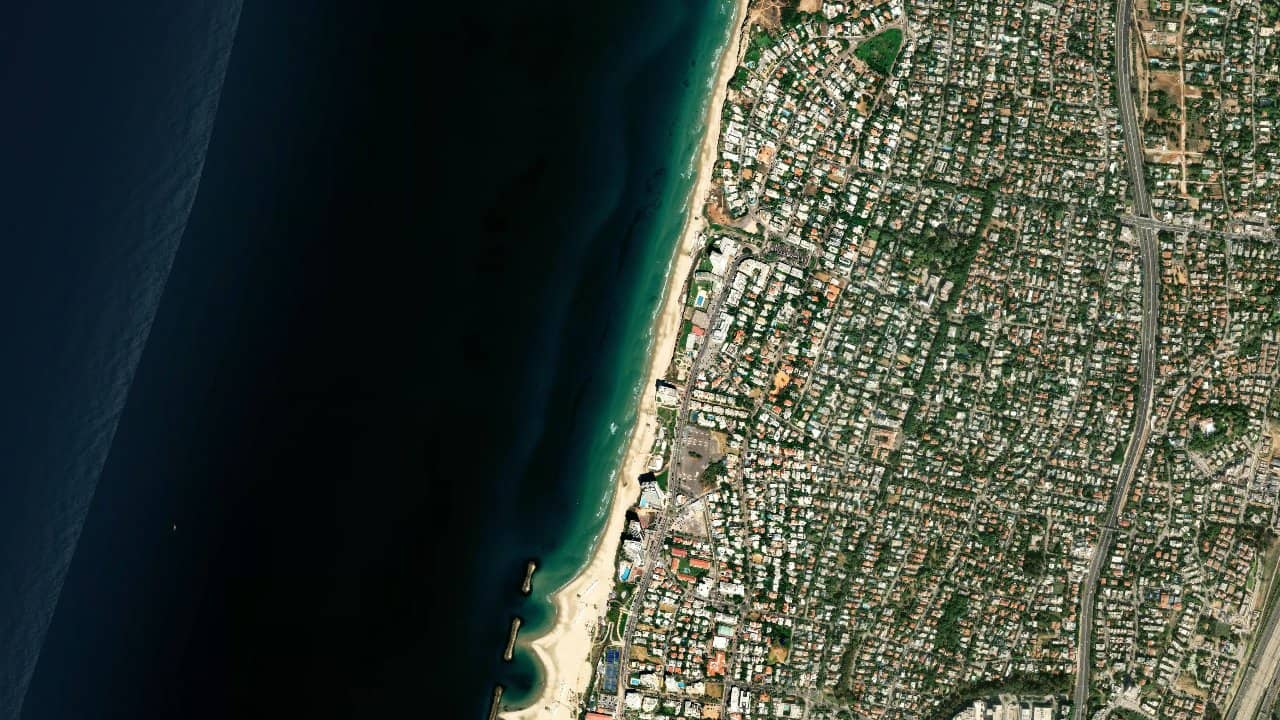
Zvulun Beach, in Herzliya in the Tel Aviv region, is an urban beach known for its easy access and sometimes playful water. It is a spot that mainly works with west swell and well-placed wind, featuring a fairly classic beach break atmosphere.
The spot is appreciated when conditions align, but it remains irregular. Kitesurfing takes place on an open beach, with peaks that shift according to the swell and wind, making it a rather interesting place for riders already comfortable on changing water.
Les données de vent affichées ici proviennent d’ERA5 (via Open-Meteo) sur 4 ans, retraitées pour refléter des conditions réalistes.
👉 Le vent moyen a été calibré pour éviter la sous-estimation habituelle des modèles.
👉 Les rafales ont été corrigées par un ratio médian afin d’éviter des valeurs extrêmes irréalistes.
👉 Chaque jour est résumé par le vent médian (P50) observé pendant les heures utiles (8h–20h), puis classé dans des plages de vent.
👉 Le mode pondéré mélange vent moyen et rafales pour refléter au mieux le vent ressenti.
Zvulun Beach is an exposed beach break that mainly reacts to west swells. According to surf sources, the spot can take quality waves when a west swell meets an east-southeast wind or more broadly from the east, resulting in cleaner conditions. In kitesurfing, this corresponds to a wind often side-off to offshore relative to the main beach, making it quite good for riding when it remains stable, but with necessary vigilance on the return to shore.
The water surface varies greatly depending on the swell and the presence of breaking waves. In calm seas, one can have a relatively flat to slightly choppy water surface, while with more swell, the spot quickly becomes choppy with short waves and shifted peaks. Sand dominates, but the area can be crowded when it works, and one must carefully identify entry and exit zones before rigging.
Launching is done directly from the beach, with space to take off, but one must stay organized as the site is urban and frequented. The best kiting areas are often a bit away from the most exposed sectors to waves and swimmers. When the wind turns too onshore, the spot becomes less clean and more physical.

The best sessions occur with a west wind. For kiting, a wind around 15 to 22 knots is often the most interesting range depending on the kite size and sea state.
The protected area near the jetty can work better when the wind is a bit stronger or when it comes slightly from the side, while the center of the beach becomes more suitable when the sea is less formed.
Sea conditions are often irregular. When the swell comes in, the spot offers short waves with shifting peaks, and when it's smaller, you get a flatter water surface but rarely perfectly smooth. The sandy bottom helps maintain a fairly readable behavior, but the shapes of the water change quickly.
The site can become crowded on good days, as it is easily accessible and known to locals. Therefore, one must kite cleanly and avoid obstructing the launch area or surfers when they are present.
The site is known for its rip currents, especially when there is swell. Sources mention strong rips, so one must remain vigilant at all times, especially during launches and returns to shore.
The tide has little effect on the overall quality of the spot according to surf reports, but the current can change locally around the peaks and breaking zones. For kiting, this means keeping a good safety margin and avoiding staying too long downwind of the most active area.
With the average wind observed at the spot, one usually kites with 8 to 10 m² for a standard size. On lighter days, a 11 m² can be useful, especially if the sea is cleaner. When the wind picks up well, a 7 to 8 m² is often sufficient.
For heavier riders or on an irregular session, it is advisable to have a quiver covering 7, 8, 9, 10, and 11 m² to adapt to the rapid variations of the spot.
The most interesting wind at Zvulun Beach is generally an east to east-southeast wind, blowing offshore or side-offshore relative to the beach. Local surf sources also indicate that the spot can remain usable with other directions, but quality quickly decreases if the wind goes too far out to sea.
In practice, one often finds moderate to strong winds, with days when the spot handles well up to about 20 knots in the area protected by the jetty. Beyond that, one must monitor the sea closely, as the water can become more technical.
The local climate is mediterranean, with hot and humid summers and mild winters. During the hot season, the water is very pleasant, and air temperatures are often high, allowing for light kiting. In winter, the period remains kiteable, but there is a more frequent need for a light to medium wetsuit depending on the days.
The best period for surfable swell is often winter, but for kiting, the spot can work for a large part of the year depending on weather systems. Transition months are often interesting, as they still combine mild weather and exploitable winds.
The depth is related to a sandy beach with a sandy and relatively easy-to-read bottom. You can generally stand quite far from the shore in calm areas, but the breaking waves and bottom holes can alter the feeling of depth near the shorebreak.
The area remains generally usable for kiting, with a depth that quickly becomes sufficient for kiting after launching. However, one must remain cautious in the wave banks and near current zones.
The water is very warm in summer, with temperatures often around 26°C according to satellite readings. During this period, a lycra or light shorty is often sufficient. In the transitional season, the water remains pleasant for several weeks.
In winter, the temperature drops significantly, and a wetsuit becomes necessary. However, the spot remains usable for a large part of the year thanks to the mild climate of the Israeli coast.