Plage du Goulet
France · Pays de la Loire
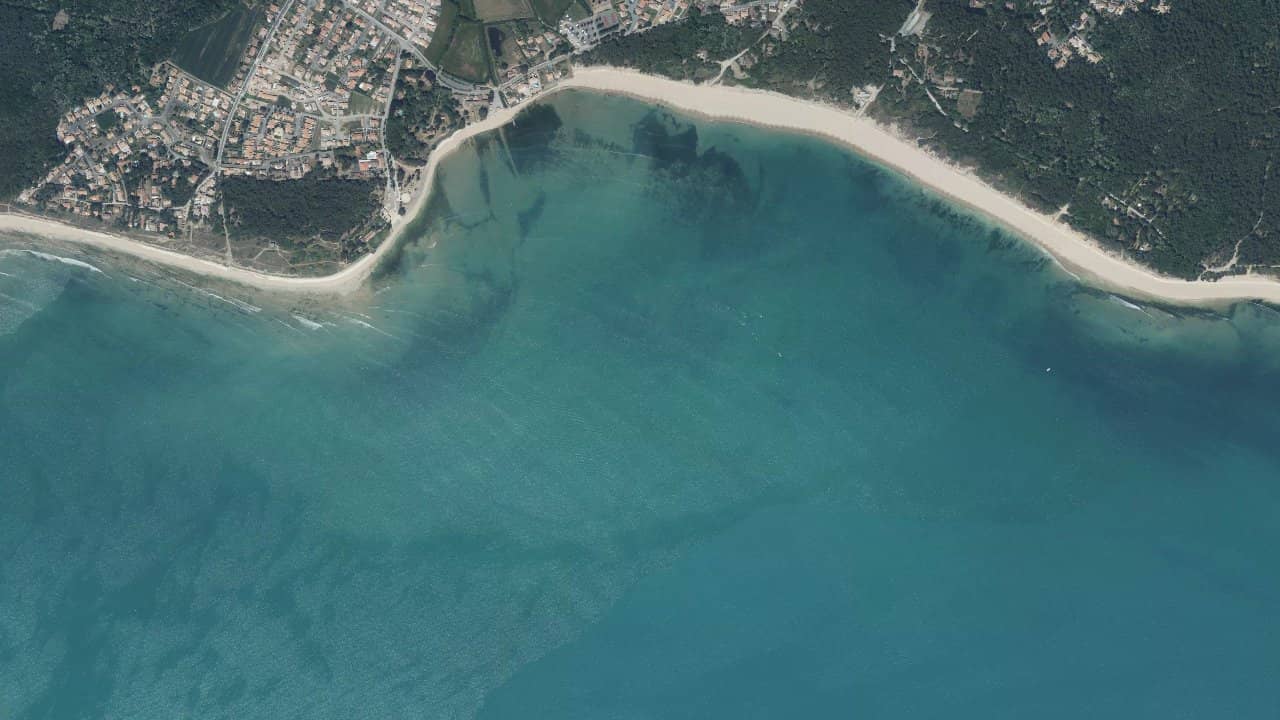
The Goulet beach, in Saint-Vincent-sur-Jard, is a sand spit at the eastern end of the resort, nestled between Clemenceau Bay and Longeville-sur-Mer. At low tide, the intertidal zone reveals a vast flat area ideal for walking, shore fishing, or preparing for a kitesurfing session.
The atmosphere is quite calm, with a somewhat concrete environment near the dyke but direct access to the sea and several convenient ramps for launching. It is a spot frequented by surf and kitesurf enthusiasts, who come looking for a more sporty spot than the purely swimming beaches in the area.
Historical averages by month — not a live forecast.
Goulet beach faces the Atlantic Ocean, on a coast generally oriented west/southwest. With a wind from the W to NW sector, one rides in side-on or even side-shore from the right, which offers rather safe conditions with a natural return to the beach. With wind from the S or SE, the wind becomes more irregular and can be partially disturbed by the coast, while winds from NE to E are often gusty and less suitable for kitesurfing.
The spot is very dependent on tide. At high tide, the sandy beach is practically non-existent and one faces a concrete dyke, making launching and especially taking off/landing kites tricky, if not discouraged. At low tide and mid-outgoing tide, the intertidal zone reveals a vast sandy flat, allowing for plenty of space to prepare gear, launch, and land the kite safely. This is clearly the time to prioritize.
The water surface is typical of the Vendée coast: chop and small waves in moderate wind, and nice wave lines when the west swell comes in well. Depending on the tidal coefficient and swell, there can be a chop zone close to the shore and real waves further out. Waves often break on the rocky and sandy flat of the intertidal zone, offering some surfable sections but requiring careful scouting of areas where rocks surface.
The area is officially marked as a surf and kitesurf spot, with nearby parking, access ramps, and, in the summer season, a lifeguard station. However, it remains a more "sport" environment than purely family-friendly, especially due to the near absence of sand at high tide. For launching, one generally gears up on the sandy part revealed at low tide, then walks a few dozen meters to find enough depth to navigate without touching. Navigation mainly occurs in front of the seafront and towards the east, keeping a reasonable distance from the dyke and any potential swimmers during the season.
An important point: at low tide, the rocky flat and intertidal zone can be uneven, with some slabs or stones. It is advisable to navigate with shoes if planning to walk in the water or return via the beach. In summer, one must also contend with swimming markers and supervision, staying well outside swimming areas to avoid any conflict with lifeguards.
Sources :plages.tv · bord-de-mer.com · franceplages.fr · puitsrochais.com · merteo.fr


 Open Windguru forecast