
El Gouna - Riah Kite Academy Spot
Egypt
El Gouna
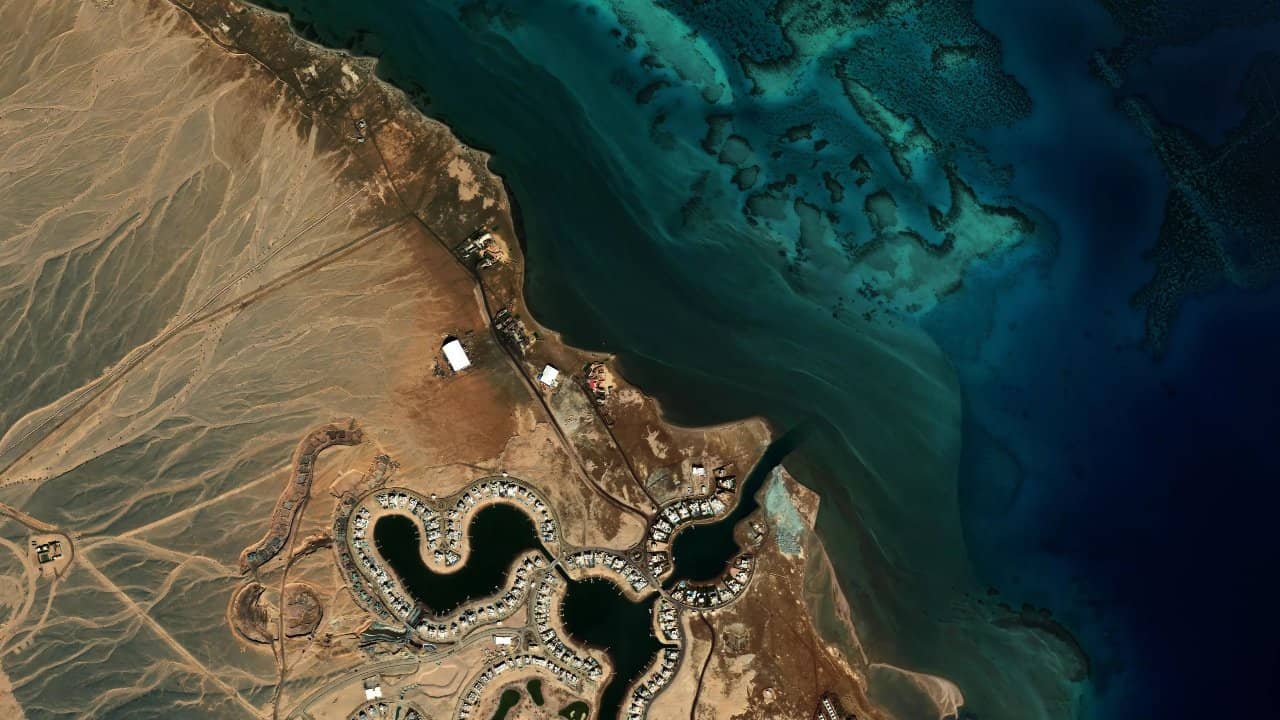
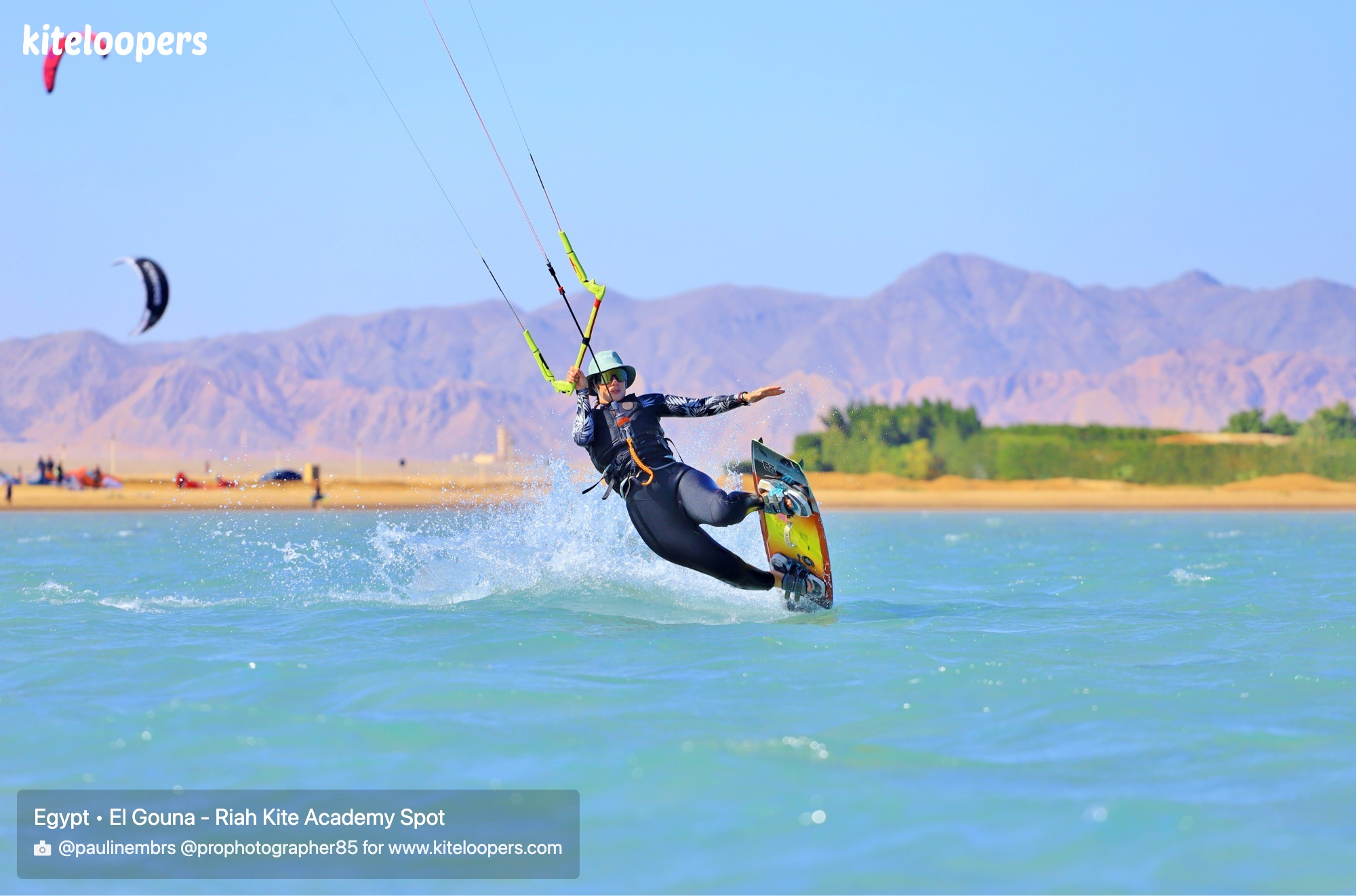
Riah Kite Academy is located on the edge of a vast shallow lagoon north of El Gouna, on the Red Sea coast. The setting is open, with turquoise water on one side and desert in the background, in an area still relatively calm compared to the larger centers further south.
The Riah lagoon offers a dedicated space for riders with a true modern kite station vibe: school, beach bar, well-organized launch areas, and a water plan perfectly suited for both beginner lessons and more engaged sessions.

The wind data shown here comes from ERA5 (via Open-Meteo) over 4 years, reprocessed to reflect realistic conditions.
👉 Average wind has been calibrated to avoid the usual underestimation of models.
👉 Gusts have been corrected by a median ratio to avoid unrealistic extreme values.
👉 Each day is summarized by the median wind (P50) observed during useful hours (8am–8pm), then classified into wind ranges.
👉 The weighted mode mixes average wind and gusts to best reflect felt wind.
- 🟢 10–16 kts: light but sailable wind (especially on foil).
- 🟡 16–22 kts: ideal range, comfortable conditions for most.
- 🔴 22–28 kts: strong wind, reserved for experienced riders.
- 🟣 28+ kts: extreme conditions, committed riding.
Location & Points of interest
Useful information
The spot is located on a large sandy lagoon open to the Red Sea, protected by an offshore reef that breaks the swell and keeps the water very flat. The prevailing wind generally blows from the N to NNW in El Gouna, which gives a side-onshore wind from the left here, ideal for safety and upwind navigation. In certain situations, the wind may shift more NW or NE, but most of the time we remain in a comfortable configuration for navigation.
Launching takes place in front of the station, on a wide area of hard sand with a clearly organized space for launching and landing kites. The beach team assists with launching, which is appreciated when there are many people or strong winds. Once in the water, one can stand for several hundred meters thanks to the shallow and regular depth, which is perfect for beginners, lessons, and maneuver work. Further out, the lagoon gradually deepens and allows more space for long runs and engaged jumps.
The water plan is generally flat inside the lagoon, especially at mid and low tide, with only a slight chop generated by the wind. The outer reef acts as a natural barrier and prevents the formation of significant waves in the main navigation area. At higher tide, a bit more chop may appear in the more exposed parts, but we remain largely in flat water conditions for freestyle and freeride.
The navigation area is long and wide, with a dedicated teaching corridor near the shore and more upwind and offshore sectors for independent riders. Beginners stay in the shallow area, while intermediate and advanced riders can venture out to enjoy a clearer water plan. The wind is known to be very steady, without strong gusts, allowing for calm navigation with a well-tuned kite.
In high season, the spot can become busy, but the size of the lagoon and the organization of the area reduce the risk of overcrowding. It is advisable to respect the entry and exit corridors, maintain a reasonable distance from the beach, and give priority to students in the school area. The spot operates all day long, often with full days of wind, but many riders prefer morning and late afternoon slots for softer light and a quieter atmosphere.
Ideal conditions at this spot are around 18 to 25 knots of wind from the N to NW sector, providing a regular side-onshore wind perfectly suited for all levels. For beginners and lessons, a rather steady wind around 15–20 knots is comfortable, while intermediate and advanced riders will appreciate days at 20–25 knots on this flat water, ideal for freestyle and big air.
The water plan of Riah is mostly flat thanks to the protection of the outer reef, making it a very good spot for freestyle, freeride, and learning. In the large inner part of the lagoon, the water remains smooth with only a small chop related to the wind, perfect for working on transitions, unhooked jumps, or simply progressing with confidence.
As one moves towards the more exposed edges or towards the lagoon's exit, a bit more chop can be encountered, especially on windy days, but it remains very reasonable compared to an open sea spot. There are practically no surfable waves in the main area, as the reef breaks the swell before it enters the lagoon. Water visibility is excellent, with clear turquoise water typical of the Red Sea.
Inside the lagoon, currents are generally weak due to the natural protection of the reef and the shallow depth. Only a slight water movement related to the wind is felt, which does not really impact navigation safety. Closer to the opening to the open sea, a bit of current can be felt, especially when the wind is strong and pushes water towards the shore.
There are no significant tidal variations like in the Atlantic, but water level variations can still slightly modify the depth in certain areas, without creating dangerous currents in the main part of the spot. Independent riders should remain vigilant if they venture towards the reef area or further out, where the current can be a bit stronger.
For an average build of about 75–80 kg, kites around 9 m² to 12 m² are most often used at this spot, considering the frequent wind between 15 and 25 knots. Lighter riders will often kite with 7 m² to 9 m² on windy days, while heavier builds can go up to 11 m² to 13 m² when the wind is a bit lighter.
The wind regime in El Gouna is characterized by thermal winds reinforced by the synoptic circulation of the Red Sea, resulting in an excellent number of rideable days. It is often mentioned that there are about 300 windy days per year in the lagoons of the area. The prevailing wind comes from the north/northwest, establishing itself in the late morning and maintaining a fairly regular flow until late afternoon.
At the Riah spot, this translates to predominantly left side-onshore wind around 15 to 25 knots for a large part of the year, with stronger gusts during reinforcement episodes. The best wind months are generally between March and May and then between September and November, but the region remains navigable almost all year round, including in mid-winter for those who accept slightly cooler temperatures.
El Gouna enjoys a dry desert climate with very little rain and sunshine almost all year round. Air temperatures hover around 20 °C in winter and can rise to 35–38 °C in summer, with an annual average close to 28 °C. The influence of the Red Sea limits extremes and brings a bit of freshness, especially in the afternoon when the wind picks up.
In winter (December to February), the days are pleasant but evenings can be cooler, necessitating a windbreaker or a sweatshirt after the session. In spring and autumn, conditions are particularly comfortable for kiting, with moderate temperatures and many navigable days. In the height of summer, the heat is stronger but the regular wind and proximity to water make sessions bearable, especially if one kites later in the day.
The lagoon has a very gradual depth with a mainly sandy bottom. One can generally stand in a large part of the area, which is ideal for learning and easily getting back on the board after a fall. As one moves further out, the depth gradually increases, without a sudden drop, allowing more experienced riders to enjoy a vast navigation space without the risk of hitting the bottom.
The water temperature in the Red Sea at El Gouna remains pleasant all year round, fluctuating approximately between 21 °C in mid-winter and 29–30 °C in summer. From December to February, a 3/2 mm long wetsuit is recommended to stay comfortable during long sessions. In spring and autumn, a shorty or a lycra may suffice depending on individual sensitivity. In summer, many riders kite in boardshorts and lycra without a wetsuit.