Danemark
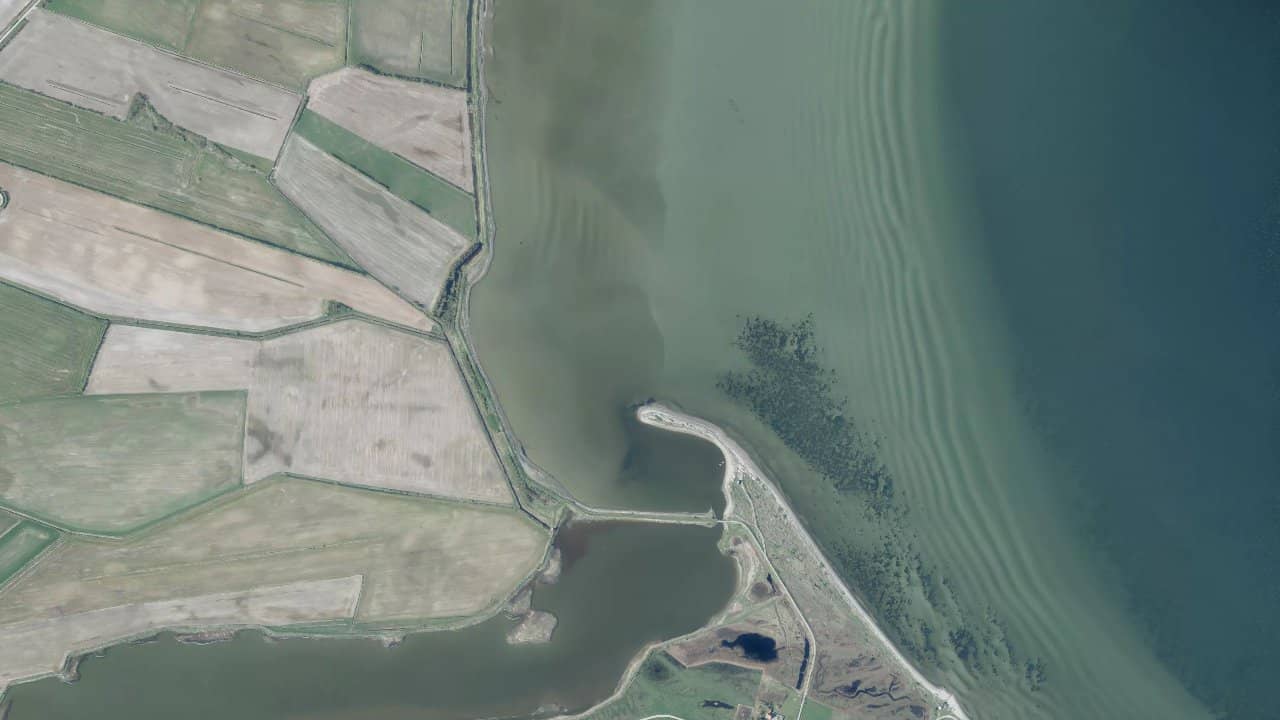
Ryletorv Strand, on the coast of Central Denmark Region, is a discreet beach favored by locals for its open space and sometimes generous wind. Located near the North Sea, it offers a simple setting with few people outside of summer.
It is a spot well-suited for riders accustomed to northern conditions, with easy access from the coastal road. The atmosphere is calm, perfect for pressure-free sessions.
The ground is scattered with stones, which requires some caution when launching.
The wind data shown here comes from ERA5 (via Open-Meteo) over 4 years, reprocessed to reflect realistic conditions.
👉 Average wind has been calibrated to avoid the usual underestimation of models.
👉 Gusts have been corrected by a median ratio to avoid unrealistic extreme values.
👉 Each day is summarized by the median wind (P50) observed during useful hours (8am–8pm), then classified into wind ranges.
👉 The weighted mode mixes average wind and gusts to best reflect felt wind.
The wind works mainly in side-shore or side-on when coming from NNE, ESE, ENE, E, N, NE, blowing along the northwest-oriented beach. The riding area is wide, with a generous downwind space towards the south, but caution is needed near the shore.
Launching is done directly from the beach, tricky due to the stones on the ground, especially at low tide. The launch area is on the sand south of the beach, sheltered from the few walkers. The water surface is generally chop to flat depending on wind strength, with little impact from tides.
In 15 kts wind, the score is average around 50/100, ideal for freeride. The best months vary, but autumn and spring work well with Atlantic depressions.

Ideal conditions are with wind from NNE, ESE, ENE, E, N, NE at 12-20 kts, in side-shore for a clean and rideable water surface.
The water surface ranges from flat to chop, with occasional small waves in strong wind. It is stable for freestyle or freeride, without large swells like further north.
Currents are generally weak along this exposed coast, but be cautious near channels where they can accelerate with the tide. Tides have a low impact on the spot.
For wind around 15 kts, opt for sizes 9 to 11m². In stronger sessions, go down to 7-9m².
The wind is frontal, linked to depressions, with variable strengths of 10 to 25 kts. The dominant directions are around west and northwest in the region, but here it is more east and northeast that work locally. Summer is lighter, autumn brings the best sessions.
The climate is typical of the North Sea, with cool temperatures year-round. In summer, the air rises to 20-25°C, while in winter it drops to around 0-10°C. A wetsuit is always necessary.
The depth is gradual with a bottom mixing sand and stones. You can stand a good distance from the shore, perfect for progression.
In spring 8-13°C, summer 18-23°C, autumn 8-14°C. A full wetsuit is mandatory year-round.