Danemark
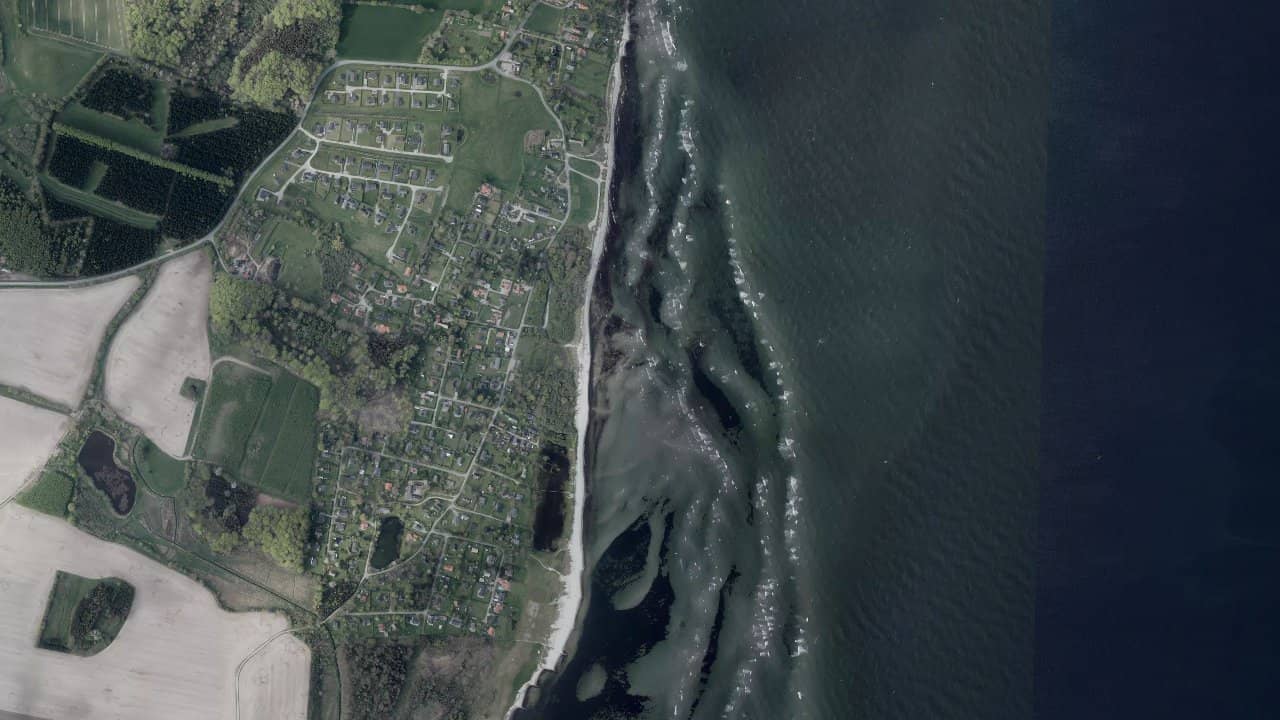
Drejet Strand in Spodsbjerg, on the east coast of Langeland, is a family-friendly beach known for its fine sand and shallow waters. It stretches 500 meters long and 25 meters wide, with complete facilities such as parking, restrooms, and a Blue Flag for water quality.
It is a kitesurfing spot accessible to all levels, with a calm atmosphere and on-site services like a café and picnic areas. Locals come for the glassy flatness and moderate chop.
Ideal by the Baltic Sea, it offers a clean and well-maintained setting, perfect for combining kite sessions and family relaxation.
The wind data shown here comes from ERA5 (via Open-Meteo) over 4 years, reprocessed to reflect realistic conditions.
👉 Average wind has been calibrated to avoid the usual underestimation of models.
👉 Gusts have been corrected by a median ratio to avoid unrealistic extreme values.
👉 Each day is summarized by the median wind (P50) observed during useful hours (8am–8pm), then classified into wind ranges.
👉 The weighted mode mixes average wind and gusts to best reflect felt wind.
The Drejet Strand spot works well with wind coming from NE, ENE, E, ESE, SE, SSE or S, which arrives side-on to side-shore relative to the east-facing beach. The local dominant wind is frontal, often from SW to NW, but the best sessions occur when it turns east for optimal power.
The navigation area is wide and shallow, with water up to the knees over a large part, ideal for tricks and freestyle. The launch area is spacious due to the 25-meter width, and there are no major obstacles, with easy parking and direct access, perfect for full days on the water.
The water surface alternates between glassy flat in light onshore winds and chop with small waves in stronger winds. Be cautious of the piles at the edge, to be avoided for safety.
Ideal conditions are a side-shore wind from NE to SE between 15 and 25 knots, for a flat to light chop water surface perfect for freestyle and wake style.
The water surface is generally shallow and flat, with moderate chop in sustained winds and occasional small waves. The bottom is fine sand mixed with medium stones, but remains navigable.
Currents are weak to negligible at this Baltic Sea spot, with no marked channels. Tides have no influence on navigation conditions.
Opt for 9 to 12 m² sizes in moderate winds of 15-20 knots, and go down to 7-9 m² for busier days around 25 knots.
The wind regime is frontal, with typical gusts of 20-30 km/h on average during the season. It often blows from SW, WSW, W, WNW, NW, but directions east to southeast provide the best kite sessions.
No specific local name, but Baltic winds are consistent in spring and autumn, with reliable forecasts to anticipate good days.
The climate of Langeland is temperate oceanic, with mild summers around 20°C and cool winters around 0-5°C. Rainfall is regular, but the best months for kite are May to September, with more stability.
In autumn and winter, the winds are more consistent but temperatures drop, requiring a full suit. Spring and autumn offer a good compromise of warmth/wind.
The depth is very gradual, with water up to the knees over a long distance from the shore. The bottom is sandy with some stones, providing ample footing for safe practice.
In summer (June-August), the water reaches 18-22°C. In spring and autumn, expect 10-15°C, and 4-8°C in winter.